Best Automation Companies: Industrial, AI & Local Providers 2026
An automation company is an organization that designs, implements, or sells technologies to automate tasks, reducing manual effort and improving operational efficiency across industries.
Key Takeaways
- These providers offer diverse solutions from robotic arms to AI-driven software platforms
- Choosing the right partner requires assessing your specific operational needs and budget
- Global leaders like Siemens, ABB, and Rockwell dominate industrial automation while AI-focused firms are rapidly growing
- Regional firms can provide tailored services with faster response times for local businesses
- Costs range from under $10,000 for small robotic systems to over $1 million for full plant automation
- No-code platforms now make automation accessible to small businesses without technical expertise
What Is an Automation Company?
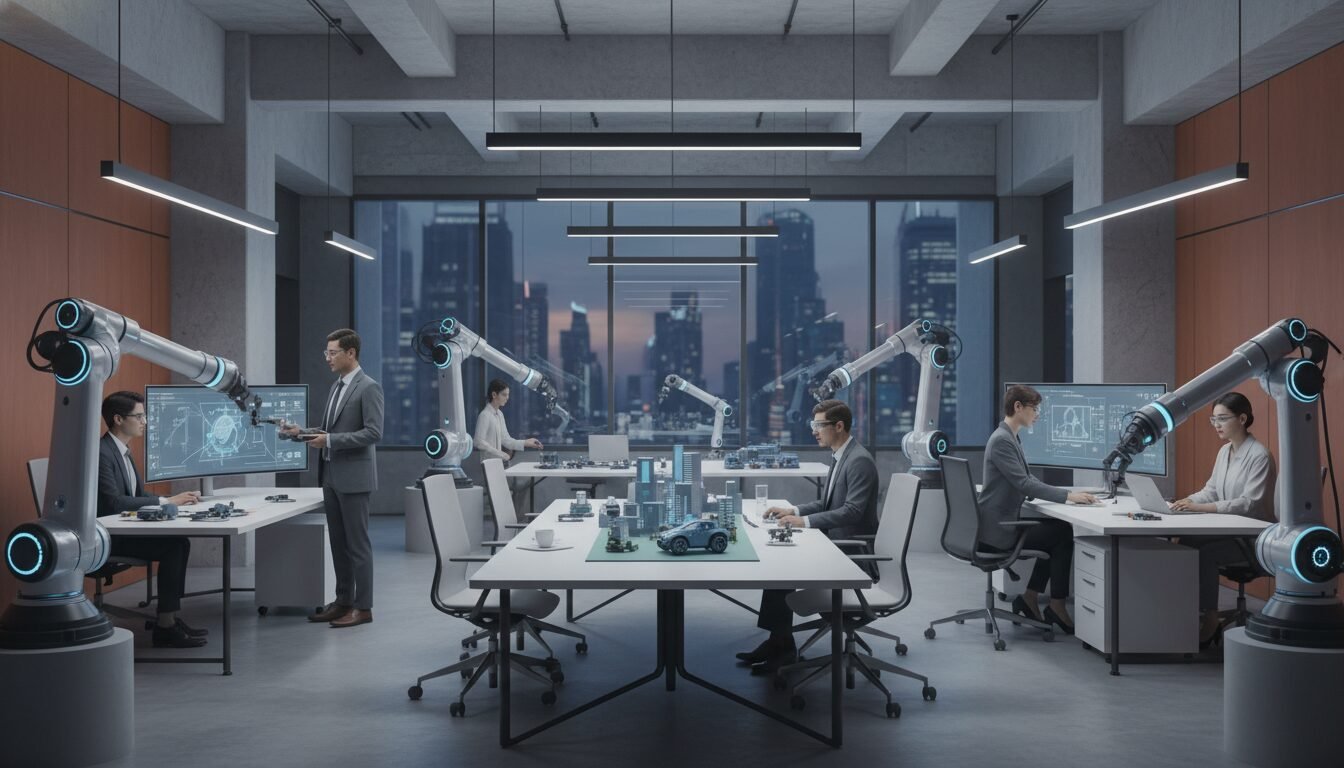
These organizations provide systems, software, or services that replace or streamline manual processes. The goal is to increase productivity, consistency, and safety while cutting operational costs. Companies may focus on physical machinery like robotic arms or digital tools like business process management software.
Core Functions of Automation Providers
These firms typically perform three core functions: engineering custom solutions, integrating existing equipment, and supplying ready-to-deploy products. For example, an industrial provider might design a palletizing system for a warehouse, while a business automation firm offers software to handle invoice processing.
Industries Served by Automation Providers
These businesses operate across manufacturing, healthcare, finance, retail, and logistics. Built In Colorado lists 32 such companies in the state alone, ranging from AI waste-sorting robotics to enterprise software platforms. ServiceNow, with 29,000 employees, exemplifies how automation extends into IT and HR workflows.
How Automation Companies Drive Business Value

The central promise of any provider is measurable improvement. Whether deploying a single robot or an entire software suite, businesses report gains in speed, accuracy, and scalability. Below are the primary value drivers.
Efficiency Gains Through Automation
These solutions reduce cycle times and eliminate idle periods. Rockwell Automation highlights how its FactoryTalk Analytics PavilionX model predictive control stabilizes dryer operations in food manufacturing, directly increasing throughput. Such tools often yield 24/7 operation without fatigue-related slowdowns.
Cost Reduction and Error Minimization
Automation providers help cut labor costs and material waste. AMP Robotics, a Colorado-based firm with 170 employees, uses AI-powered sortation to modernize recycling, reducing manual sorting expenses and increasing resource recovery rates. In office settings, robotic process automation (RPA) can slash invoice processing costs by up to 30-50% according to industry-wide observations.
Understanding Different Types of Automation Providers

Not all providers are alike. They differ by technology stack, target industry, and deployment model. Below are the main categories.
Industrial Automation Companies
These firms concentrate on manufacturing and production. Examples include Siemens and ABB, which offer control systems, robotics, and energy solutions. ABB operates in over 100 countries and employs 132,000 people. Such companies build large-scale machinery, like steam turbines and high-voltage switchgear, for sectors ranging from automotive to data centers.
Business Process Automation Companies
This category focuses on digitizing administrative workflows. Intellistack, with 203 employees, serves 25,000 organizations with no-code tools for forms, documents, and eSignatures. Automation Anywhere, a leader in agentic process automation, uses AI agents to handle tasks like accounts payable and customer support autonomously.
AI-Native and Agentic Automation Companies
The newest entrants build around artificial intelligence. Automation Anywhere’s platform includes a Process Reasoning Engine that orchestrates across teams and systems. ServiceNow integrates AI across IT, HR, and operations, aiming to become the defining enterprise software platform of the century. These companies often reduce manual intervention by 70% or more in targeted processes.
Top Automation Companies to Know

Here is a comparison of notable providers, ranging from industrial giants to specialized AI firms. The data draws from public profiles and company websites.
| Company | Primary Focus | Employees | Notable Fact |
|---|---|---|---|
| Siemens | Industrial automation, energy | ~303,000 | One of Europe’s largest engineering firms |
| ABB | Robotics, power grids | 132,000 | Operates in 100+ countries |
| Rockwell Automation | Industrial automation, IoT | ~27,000 | Brands: Allen-Bradley, FactoryTalk |
| Automation Anywhere | Agentic process automation | ~2,900 | 7-time Gartner Magic Quadrant Leader |
| ServiceNow | Enterprise AI platform | 29,000 | 76 offices worldwide |
| Intellistack | No-code workflow automation | 203 | Trusted by 25,000+ organizations |
| AMP Robotics | AI for recycling | 170 | Deployments across 3 continents |
“We meet you where you are in your journey with market leading hardware, software, and services to make you more resilient, agile, and sustainable.” , Rockwell Automation
For businesses evaluating potential partners, the table highlights that scale varies enormously. A regional provider might offer more personalized service than a multinational, while global players bring vast R&D resources and support networks.
Key Services Offered by Automation Firms
These companies deliver a spectrum of services, from off-the-shelf software to fully customized machinery. Understanding these services helps align them with business needs.
Robotic Process Automation (RPA)
RPA uses software bots to mimic human actions on digital systems. Automation Anywhere’s platform enables bots to log into applications, move files, and fill forms. This is distinct from physical robotics. Gartner recognized the firm as a Leader in its Magic Quadrant for the seventh consecutive year in 2025, reflecting the growing adoption of RPA across industries.
Custom Machine Design and Integration
For physical processes, these providers design bespoke equipment. Star Automation, serving Colorado, builds injection molding robots and automated conveyors. Allied Technology in Broomfield creates palletizing and vision-guided picking systems. These solutions are engineered to fit specific throughput, space, and product requirements.
System Integration and Consulting
Many firms act as integrators, combining hardware, software, and controls into a cohesive operation. They also offer consulting to align automation strategy with business goals. Rockwell Automation emphasizes digital transformation consulting to shift manufacturers from manual to fully connected operations.
How to Select the Right Automation Partner
With dozens of providers on the market, a structured evaluation process is essential. Follow these steps to match a provider to your organization’s maturity and ambitions.
Step 1: Define Your Automation Goals
Start by listing processes that are repetitive, error-prone, or high-cost. A small manufacturer might target packaging, while a logistics firm may focus on truck unloading. Clarity on the problem prevents overspending on unnecessary features.
Step 2: Assess Industry Experience
Look for a provider with proven work in your sector. For instance, food and beverage processors benefit from partners like Rockwell, which has case studies in advanced process control for dryers. Recycling companies would review AMP’s deployments across North America, Asia, and Europe.
Step 3: Validate with References and Demos
Request case studies, site visits, or live demonstrations. Automation Anywhere offers a free Community Edition for hands-on testing. Local firms like Allied Technology in Colorado provide client references from nearby manufacturers, ensuring you can verify reliability firsthand.
Pros and Cons
Pros
- Significant reduction in manual labor costs and operational expenses
- Improved accuracy and consistency in repetitive tasks
- 24/7 operation capability without breaks or fatigue
- Faster processing times and increased throughput
- Better safety by removing humans from dangerous tasks
- Scalable solutions that grow with your business
Cons
- High upfront investment costs for implementation
- Potential job displacement requiring workforce retraining
- Complex integration with existing legacy systems
- Ongoing maintenance and technical support requirements
- Risk of over-automation leading to inflexibility
- Dependence on technology vendors for updates and support
Automation Companies in Colorado
Colorado has emerged as a hub for both industrial and AI-driven automation. The state’s blend of engineering talent and diverse industries creates a fertile market.
Colorado’s Growing Automation Scene
Built In Colorado lists 32 such providers, including Dynatrace, Intellistack, AMP, and Apryse. These firms span AI observability, document processing, waste robotics, and more. Bet365 even maintains a technology office in the state, working on esports and platform automation.
Notable Local Automation Providers
Among the standouts, Dynatrace employs 5,200 people globally and delivers intelligent monitoring; Apryse (formerly PDFTron) leads document SDKs; Hudson River Trading applies automation to quantitative trading. Star Automation focuses on plastic injection molding robots, while Allied Technology custom-builds palletizers and conveyor systems for Colorado manufacturers.
Why Choose a Colorado-Based Provider
Local providers offer shorter lead times, on-site support, and familiarity with regional regulations. For businesses in Denver, Broomfield, or Thornton, partnering with a nearby firm reduces travel costs and speeds up problem resolution.
“We’re putting AI to work across organizations , freeing people for work that matters.” , ServiceNow
The Future of Automation Technology
These companies are rapidly evolving, driven by AI, sustainability goals, and the convergence of IT and OT. Here’s what lies ahead.
AI-Driven and Autonomous Operations
Agentic automation, software that makes decisions without human input, will define the next wave. Rockwell Automation’s 2025 sustainability report underscores the shift from automation to autonomy, while Automation Anywhere’s Process Reasoning Engine exemplifies AI-agent orchestration. These systems are projected to handle 80% of routine business processes within five years, according to technology analysts.
Sustainable Manufacturing Through Automation
Providers are incorporating energy-efficient designs. ABB’s drives and high-voltage products help industries reduce carbon footprints. AMP’s recycling robots directly support circular economy goals. Sustainability is no longer an add-on but a core requirement for new automation projects.
Hyper-Automation and the Connected Enterprise
The blending of RPA, AI, IoT, and low-code tools creates hyper-automation. ServiceNow’s platform connects 29,000 employees across 76 offices, demonstrating how enterprise-wide automation scales. For smaller businesses, platforms like Intellistack democratize automation through no-code interfaces, enabling citizen developers to build solutions without IT.
Frequently Asked Questions
What do automation companies do?
These providers design, build, and deploy systems to reduce manual work. They offer physical robots, software bots, and integration services to make operations faster and more reliable.
What are the biggest automation companies in the world?
Siemens, ABB, and Rockwell Automation lead in industrial automation. In software, Automation Anywhere, UiPath, and ServiceNow are major players. Siemens alone earned over $60 billion in revenue in recent years.
How much does it cost to hire an automation company?
Costs vary widely. Small robotic arms start under $10,000, while full plant automation can exceed $1 million. Many providers offer free assessments to scope your project.
Can a small business use an automation company?
Yes. No-code platforms like Intellistack and community editions from Automation Anywhere allow small businesses to automate paperwork and customer emails at low cost.
How do I find an automation company near me?
Directories such as Built In Colorado list local providers. For Colorado, you can search for “automation company near Denver” or visit specific firm websites like Star Automation or Allied Technology.
What is the difference between RPA and industrial automation?
RPA uses software to automate digital tasks, while industrial automation controls physical machinery. Companies often require both; for example, a factory might use robots for assembly and RPA for inventory management.
Ready to see how automation can transform your business operations? Book a free demo at digimeapp.com to discover AI-powered solutions tailored to your industry.