Warehouse automation is the use of technology to perform warehouse tasks like receiving, picking, packing, and shipping with minimal human assistance. It combines software, hardware, and robotics to boost efficiency and accuracy.
Key Takeaways
- Warehouse automation uses technology to handle inventory tasks from receiving to shipping with minimal human help
- It splits into two main types: physical automation (robots, conveyors) and digital automation (WMS software, data analytics)
- Core technologies include AS/RS, AMRs, AGVs, goods-to-person systems, and pick-to-light solutions
- Benefits span lower costs, faster throughput, fewer errors, improved safety, and easier scaling
- Implementation follows a clear step-by-step path: assess needs, choose the right mix, pilot, train, integrate, and scale
- AI, machine learning, and Robotics-as-a-Service are reshaping the landscape in 2026
What is Warehouse Automation?
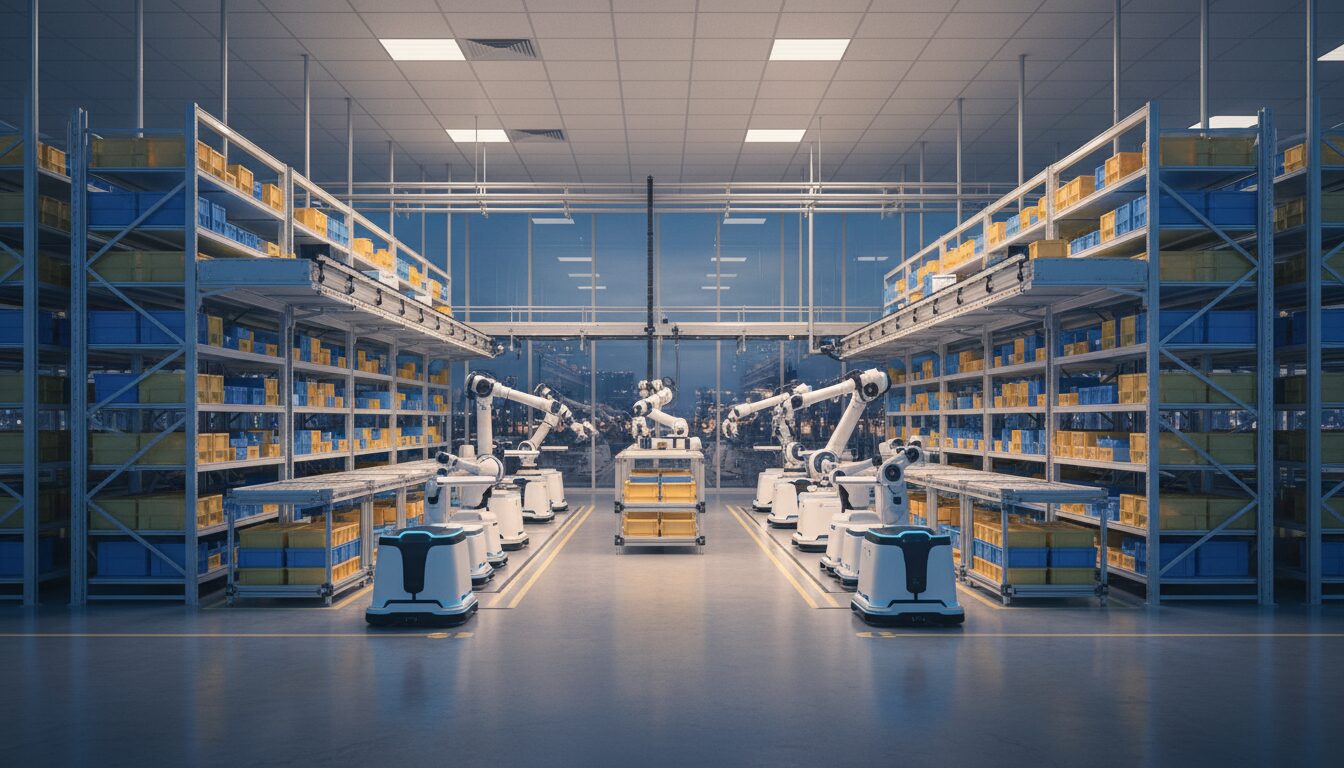
The term warehouse automation covers a broad set of tools and systems that replace or support manual work. At its core, it streamlines how inventory moves through a facility, from the moment a pallet arrives until orders leave the dock. As SAP notes, the process spans “receiving to picking, packing, and shipping.” Instead of people walking miles each day to locate items, automated systems bring goods to them or handle the transport entirely. This shift is not just about machinery; modern digital platforms coordinate workflows in real time, giving managers accurate data to make faster decisions.
“Warehouse automation is the process of automating the movement of inventory in a warehouse, from receiving to picking, packing, and shipping.” , SAP
The Evolution from Manual to Automated Operations
Decades ago, warehouses were labor-intensive spaces where workers used paper lists and forklifts. The first wave of automation introduced conveyors and barcode scanning, cutting down on walking time and data entry errors. Today, fully integrated systems use sensors, IoT connectivity, and artificial intelligence to orchestrate hundreds of tasks simultaneously. This progression is not all-or-nothing; many facilities adopt warehouse automation in phases, often beginning with a warehouse management system (WMS) before adding physical equipment like automated storage and retrieval systems. The result is a smarter, safer environment where human effort is reserved for oversight and problem-solving.
Why Warehouse Automation Matters in 2026
Three forces make warehouse automation critical this year: ongoing labor shortages, e‑commerce growth, and rising customer expectations for speed. Finding and keeping skilled warehouse staff is harder than ever, while order volumes keep climbing. These systems help absorb these pressures by running longer hours with consistent output. Furthermore, the data generated by automated systems feeds into machine learning models that predict demand and spot bottlenecks before they cause delays. Companies that delay adoption risk falling behind competitors that can fulfill orders in hours rather than days.
Types of Warehouse Automation: Physical and Digital
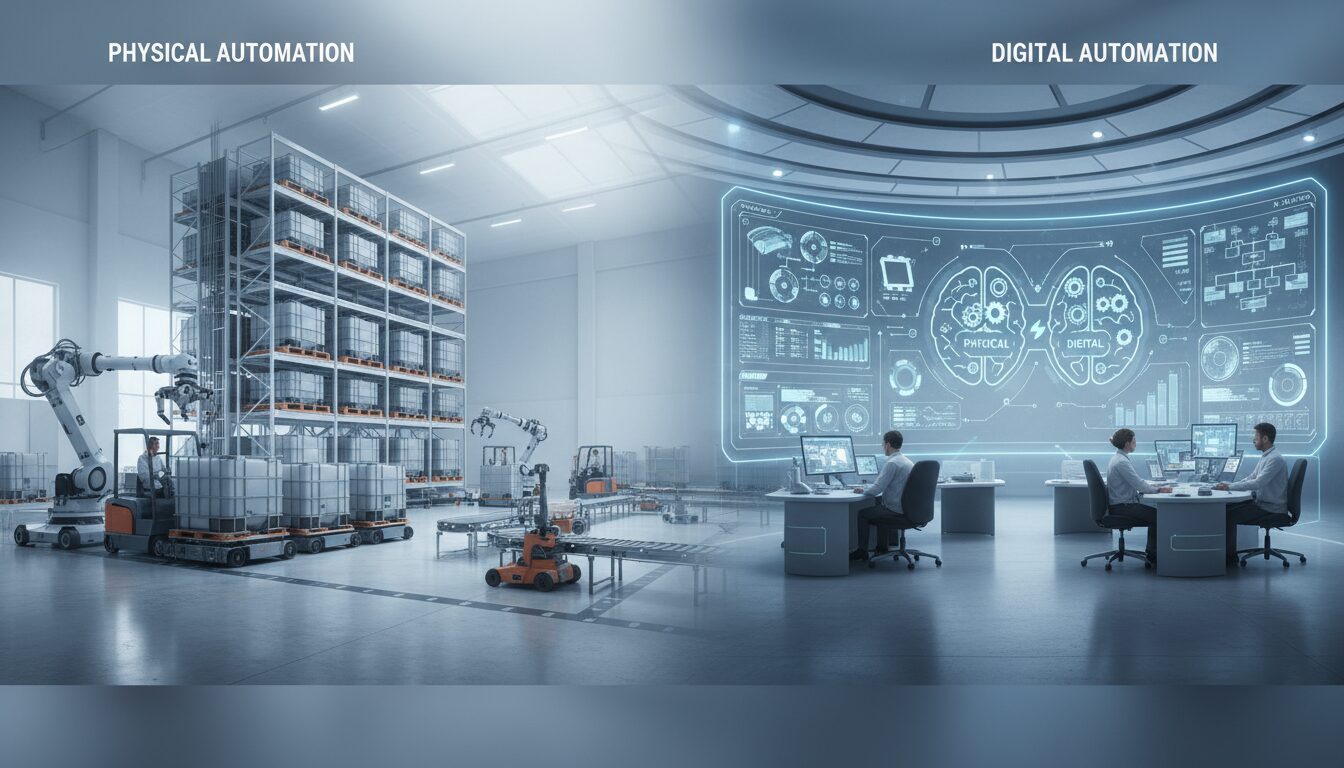
All warehouse automation falls into two categories: the hardware that physically moves goods and the software that directs every action. Most operations blend both to create a unified, high‑performing whole.
Physical Automation: Hardware and Machinery
Physical automation includes conveyors, autonomous mobile robots (AMRs), automated guided vehicles (AGVs), robotic arms, and automated storage and retrieval systems (AS/RS). These machines handle the heavy lifting, sorting, and transporting. For example, an AS/RS can store and retrieve totes in a fraction of the floor space needed for manual shelving, while AMRs navigate freely using onboard cameras and sensors to deliver items to packing stations. By eliminating miles of daily travel for workers, physical systems sharply increase throughput.
Digital Automation: Software and Data Systems
Digital automation is the brain behind the brawn. A modern WMS tracks inventory in real time, optimizes slotting, and directs picking sequences. Advanced systems incorporate warehouse execution system (WES) features that orchestrate the flow between manual and automated zones. On top of that, AI analytics tools process terabytes of operational data to fine-tune replenishment schedules, predict maintenance needs, and route orders through the most efficient paths. Without digital coordination, physical automation would operate in silos, missing the efficiency gains that come from a single, data‑driven control layer.
Key Warehouse Automation Technologies
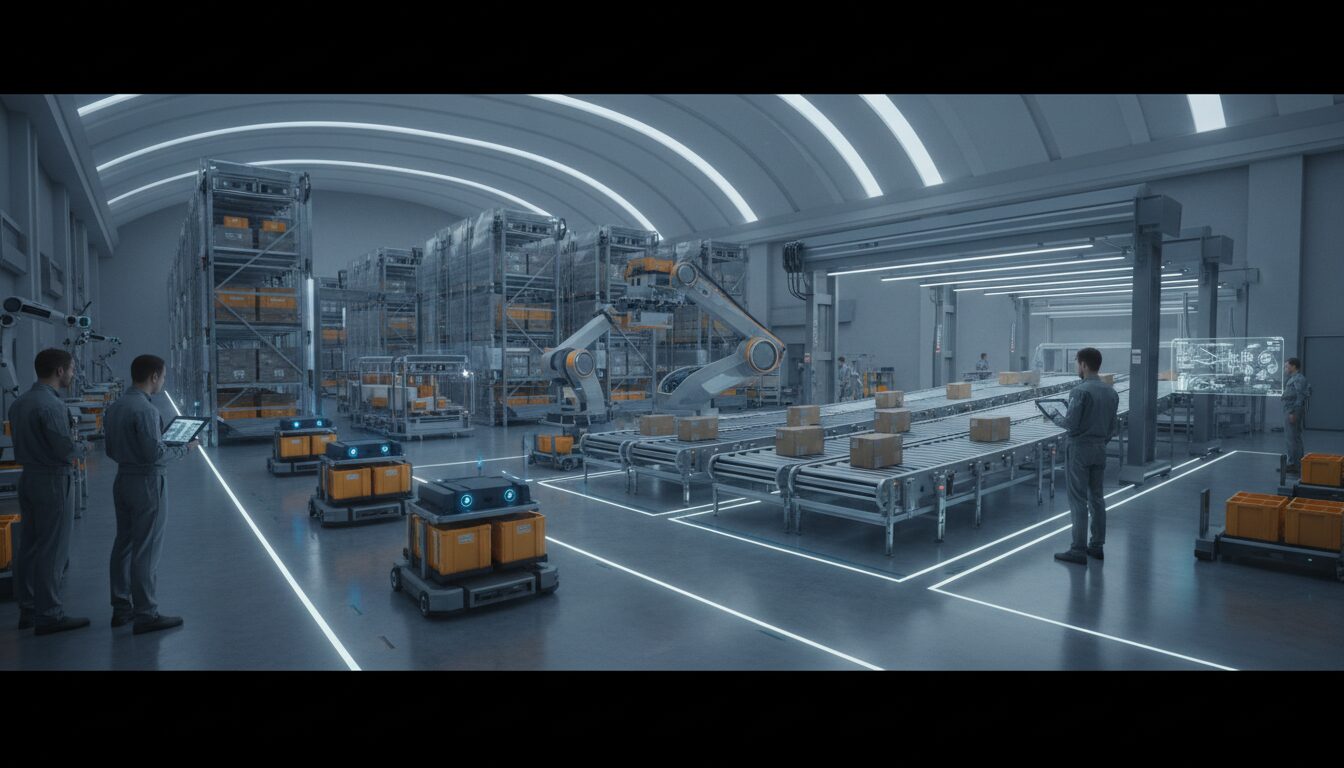
Several core technologies power today’s automated warehouses. They can be combined in countless ways to match a facility’s layout, product mix, and volume.
Automated Storage and Retrieval Systems (AS/RS)
AS/RS solutions store items in dense racks and use cranes, shuttles, or lifts to retrieve them on demand. Variants range from unit‑load machines for full pallets to mini‑load systems for totes and cartons. By utilizing vertical space, AS/RS can significantly reduce a warehouse footprint compared with traditional shelving. These systems integrate directly with a WMS, so when an order drops, the nearest unit is dispatched instantly.
Autonomous Mobile Robots (AMRs) and Automated Guided Vehicles (AGVs)
AMRs and AGVs move goods around without human drivers. AGVs follow fixed routes using magnetic tape or wires, making them reliable for repetitive long‑haul transport. AMRs, by contrast, use lidar, cameras, and AI to navigate dynamically, re‑routing around obstacles in real time. Both reduce travel time for staff and are often deployed to shuttle parts from storage to packing stations. In busy e‑commerce warehouses, a fleet of AMRs can significantly boost picking speed over manual methods.
Goods-to-Person and Picking Technologies
Goods-to-person (GTP) systems flip the traditional model: instead of workers walking to shelves, the shelves (or totes) come to them. This is achieved with vertical lift modules, carousels, shuttles, or robot‑driven mobile racks. Workers stay at ergonomic stations where lights, screens, and voice prompts guide every pick. This approach slashes travel time, cuts error rates, and can dramatically increase productivity. Supporting tools like pick‑to‑light and voice picking further streamline the process by giving instant, hands‑free instructions.
Warehouse Processes That Can Be Automated
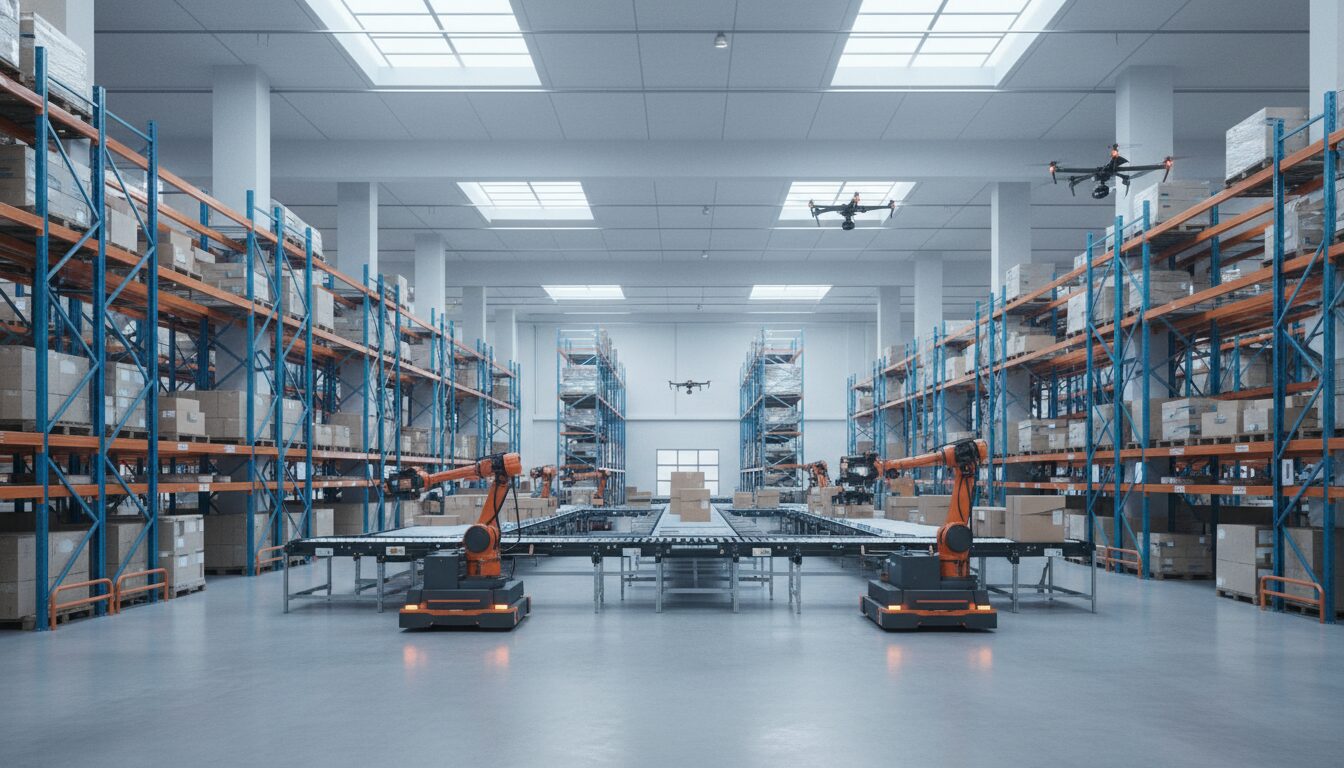
Nearly every stage of material flow can benefit from warehouse automation. The most common starting points are receiving, picking, packing, and shipping.
Receiving, Sortation, and Put‑Away
When a truck arrives, automated unloaders and conveyor systems can scan barcodes, check item integrity, and sort goods by size or destination. High‑speed sortation lanes use diverters, pop‑up wheels, and sliding shoes to route cartons to the correct pallet, zone, or storage location. Automated put‑away then directs AGVs or AS/RS to store items in the optimal slot, updating inventory records in real time. This cuts dock-to-stock time from hours to minutes.
Picking, Packing, and Shipping
Picking is the most labor‑intensive activity in most warehouses. Warehouse automation options include zone routing (conveyors move totes between stations), goods‑to‑person stations, and robotic piece‑picking arms. Once items are collected, automated packing machines can construct custom‑sized boxes, insert dunnage, and print shipping labels. Finally, sortation systems consolidate orders by carrier and load them directly onto outbound vehicles. The result is faster throughput and far fewer mis‑ships.
Inventory Management and Returns
Cycle counting and inventory tracking are dramatically improved by drones, barcode rigs on AMRs, and sensor‑laden shelves that weigh or count items in real time. Returns processing, a growing pain point, can be automated via reverse logistics sorters that inspect, grade, and re‑inventory items within minutes of arrival. This not only restores value faster but also frees up staff for more strategic work.
Benefits of Warehouse Automation
The advantages of warehouse automation extend far beyond simply doing things faster. They touch every key performance metric.
Operational Efficiency and Cost Reduction
Labor is typically the largest expense in a warehouse. These systems can handle repetitive tasks 24/7, reducing overtime and the need for seasonal temp workers. Storage density improves, cutting real estate costs per unit stored. According to Supply Chain Management Review, warehouse automation is “one of the last areas where long-term costs can be significantly reduced.” Even partial automation often yields a payback period of two years or less when factoring in error reduction and higher throughput.
“Warehouse automation encompasses a range of technologies, including robots, computer systems, and automated material handling equipment, to automate and optimize various warehouse processes and tasks.” , Modula
Accuracy, Safety, and Scalability
Human error in manual picking can run as high as 1–3%. Automated systems regularly achieve much higher accuracy rates, virtually eliminating mispicks and returns. Safety improves as heavy lifting and long‑distance travel are transferred to machines, reducing strain injuries and forklift incidents. Scalability is also built in: modular systems like AMRs let you add units during peak seasons and dial back when demand dips, giving unprecedented flexibility.
Pros and Cons
Pros
- Dramatically reduces labor costs and overtime expenses
- Operates 24/7 with consistent performance and minimal downtime
- Significantly improves picking accuracy and reduces shipping errors
- Enhances worker safety by eliminating heavy lifting and repetitive strain
- Provides real-time data and analytics for better decision-making
- Scales easily during peak seasons without hiring temporary staff
Cons
- High upfront capital investment for physical systems like AS/RS
- Complex integration with existing WMS and ERP systems
- Requires specialized technical staff for maintenance and troubleshooting
- May face employee resistance or require extensive retraining programs
- Technology can become obsolete, requiring future upgrade investments
How to Implement Warehouse Automation Step by Step
Adopting warehouse automation is a major operational decision. A structured approach minimizes risk and speeds time‑to‑value.
Step 1: Assess Your Needs and Current State
Start by mapping every process from receiving to shipping. Identify bottlenecks, error hotspots, and tasks that consume the most labor hours. Set clear goals: cut order cycle time by 30%, reduce picking errors to 0.1%, handle 50% more volume without adding staff. Baseline your current metrics so you can prove the return later.
Step 2: Choose the Right Technology Mix
Match solutions to your pain points. If storage space is the issue, an AS/RS may be the answer. For travel time, AMRs or conveyor systems work well. For picking accuracy, goods‑to‑person stations with lights and voice are ideal. Most operations end up with a hybrid of digital and physical tools. Involve frontline workers in the selection, their insights prevent expensive mismatches.
Step 3: Plan, Pilot, and Train
Design a detailed implementation schedule that includes IT integration, floor layout changes, and staff training. Run a small‑scale pilot in one zone before rolling out company‑wide. Use the pilot to fine‑tune workflows and fix integration snags. Training is crucial; employees need to feel confident operating and troubleshooting the new systems. A well‑executed pilot builds buy‑in and generates early success stories.
Step 4: Integrate, Optimize, and Scale
Connect all automation equipment to your WMS or a unified control platform. Use the analytics dashboard to monitor performance against your baseline. Continuous improvement is key: adjust slotting, reroute AMRs based on demand patterns, and refine packing algorithms. Once the first zone is stable, replicate the success in other areas or facilities. Regular audits and employee feedback loops keep the system evolving.
2026 Trends in Warehouse Automation
The warehouse automation landscape is advancing rapidly. Three trends are defining the current year.
AI and Machine Learning for Smarter Decisions
Artificial intelligence now touches every layer. Demand forecasting models ingest external data (weather, social trends) along with order history to predict spikes days in advance. Natural language processing lets supervisors query systems via voice or chat for real‑time inventory updates. Machine vision guides robotic pickers to handle items they have never seen before, learning on the fly. These capabilities shift automation from reactive to predictive.
The Rise of Robotics‑as‑a‑Service (RaaS)
Instead of large capital outlays, many vendors now offer robots on a subscription basis. This lowers the barrier for small and mid‑size warehouses, allowing them to add warehouse automation during peak periods and only pay for what they use. RaaS also covers maintenance and software updates, simplifying operations. By turning a fixed cost into a variable one, companies can experiment with automation without long‑term risk.
Hyper‑Automation and Fully Autonomous Warehouses
The most advanced facilities now run almost entirely without human touch. Drones scan barcodes from the air, robotic arms pack boxes, AMRs load trucks, and all data flows to a central AI orchestrator. While still rare, these “lights‑out” warehouses are becoming more viable as sensor technology improves and robot dexterity advances. Companies like Amazon and Ocado have already built scaled versions, and the lessons learned are trickling down to mainstream operations.
Choosing the Right Warehouse Automation Solution
Not every business needs the same level of warehouse automation. Matching the technology to your specific environment is the difference between a money‑saving tool and a costly misstep.
Key Factors to Consider
Start with your throughput volume, SKU variety, and order profile. A facility shipping 10,000 e‑commerce orders daily needs a different setup than one handling 200 pallet-sized shipments. Evaluate integration with your existing ERP and WMS, the total cost of ownership (including maintenance and software licenses), and scalability. Also consider the physical space: can you add mezzanines or drop AS/RS into an existing building, or will you need a new construction?
Comparing Automation Technologies
| Technology | Primary Function | Best For | Complexity | Relative Cost |
|---|---|---|---|---|
| AS/RS | High-density automated storage & retrieval | High SKU counts, limited floor space | High | High |
| AMRs | Flexible intra‑facility transport | Dynamic environments, e‑commerce | Medium | Medium–High |
| AGVs | Fixed‑route goods movement | Repetitive long‑haul, mixed manual zones | Low | Medium |
| Goods‑to‑Person | Deliver items to stationary picker | High pick rates, ergonomic priority | Medium–High | High |
| Pick‑to‑Light | LED‑guided manual picking | Medium volume, quick ROI | Low | Low–Medium |
| Voice Picking | Hands‑free, voice‑directed picking | Perishables, cold storage | Low | Low–Medium |
| Conveyor & Sortation | Automated item routing and sorting | High volume, consistent product shape | Low–Medium | Medium–High |
Book a free demo at digimeapp.com to see how AI can transform your practice.
Frequently Asked Questions
What exactly is warehouse automation?
Warehouse automation is the use of technology, software, robots, conveyors, and sensors, to move inventory through a warehouse with minimal human intervention. It covers digital systems like WMS as well as physical equipment like AMRs and AS/RS.
How much does warehouse automation cost?
Costs vary widely. A basic WMS might start under $10,000, while a full AS/RS installation can run into millions. Robotics‑as‑a‑Service models now offer monthly subscriptions that lower upfront expenses. A thorough cost‑benefit analysis should include labor savings, error reduction, and increased throughput.
Can small warehouses benefit from automation?
Yes. Many solutions are modular and can start small, laptops with barcode scanners, pick‑to‑light arrays, or a single AMR. Even basic digital automation like inventory management software delivers immediate ROI through better accuracy and less paperwork.
What is the difference between AGVs and AMRs?
AGVs follow fixed routes using magnetic tape or wires and stop when blocked. AMRs use onboard sensors and AI to navigate freely, re‑routing around obstacles. AMRs are more flexible but typically cost more upfront; AGVs suit stable environments with predictable paths.
How long does it take to implement warehouse automation?
A simple digital upgrade can go live in weeks. Physical systems require 3–12 months for planning, installation, and integration. Phased rollouts, starting with one zone, often deliver initial results within 3–6 months while building toward full deployment.
Will automation replace human workers?
These systems take over repetitive, physically demanding tasks, not human judgment. Workers shift to roles like control room monitoring, maintenance, and process improvement. In many cases, headcount remains stable as operations scale up, with employees enjoying safer, less strenuous jobs.