Key Takeaways
- AI mode isn’t just Google’s search feature , it’s a business operating philosophy that can transform local service companies
- Local businesses can implement AI-powered workflows to save 15-20 hours per week on routine tasks
- Smart automation handles appointment scheduling, follow-ups, and customer service without losing the personal touch
- The biggest ROI comes from AI handling the repetitive work so you can focus on high-value patient/client interactions
- Implementation doesn’t require technical expertise , the right tools make AI accessible for any local business owner
When Google launched AI mode in their search platform, most local business owners saw it as just another tech feature they’d never use. We get it. Between managing appointments, handling customer complaints, and trying to squeeze in some marketing, who has time to learn about AI search modes?
But here’s what caught our attention: the concept behind AI mode , intelligent, context-aware responses that understand complex, multi-part questions , is exactly what local service businesses need for their daily operations. Not for search, but for running their business.
The dental practice that spends 2 hours daily on appointment confirmations. The MedSpa fielding the same pricing questions 50 times a week. The HVAC company losing leads because nobody answers the phone during service calls. These aren’t search problems. They’re workflow problems that AI mode thinking can solve.
Understanding AI Mode Beyond Search Engines

Google’s AI mode processes complex queries and provides intelligent responses with follow-up capabilities. Strip away the search context, and you’ve got a blueprint for how AI should work in local businesses: understanding detailed requests, providing relevant responses, and maintaining conversation flow.
The Core Principles That Matter for Local Business
Traditional business software forces you to adapt to rigid workflows. AI mode flips this relationship. Instead of training your staff to use complicated systems, you train AI to understand your business language.
When a patient calls asking, “Do you take my insurance, what’s the earliest appointment, and can I get a cleaning and filling in the same visit?” , that’s a multi-part query that requires context, reasoning, and personalized response. Exactly what this topic was designed to handle.
Most local businesses handle these complex requests manually, which works until you’re successful enough that volume becomes overwhelming. The dental office that books 40 new patients monthly can handle individual calls. At 120 new patients monthly, manual processes break down.
Why Traditional Automation Falls Short
Basic automation tools give you rigid if-then logic. Patient asks about pricing, send pricing sheet. Customer complains, forward to manager. These systems work for simple scenarios but fail when real people ask real questions.
AI mode thinking handles the gray areas. When someone asks, “I’m interested in Botox but I’ve never done anything like this and I’m worried about looking fake,” a traditional chatbot sends a Botox brochure. this topic understands this is really a trust and education conversation, not a pricing inquiry.
The Business Intelligence Layer
The most powerful aspect of AI mode isn’t the responses , it’s the reasoning process. Google’s system analyzes queries, creates search plans, and adjusts based on findings. Your business needs the same intelligent approach to customer interactions.
When a potential HVAC customer says their system “makes weird noises sometimes,” this topic thinking doesn’t just book a service call. It asks clarifying questions, provides immediate troubleshooting tips, and schedules appropriately based on urgency indicators. This approach converts more leads and creates better customer experiences.
Practical AI Mode Applications for Service Businesses
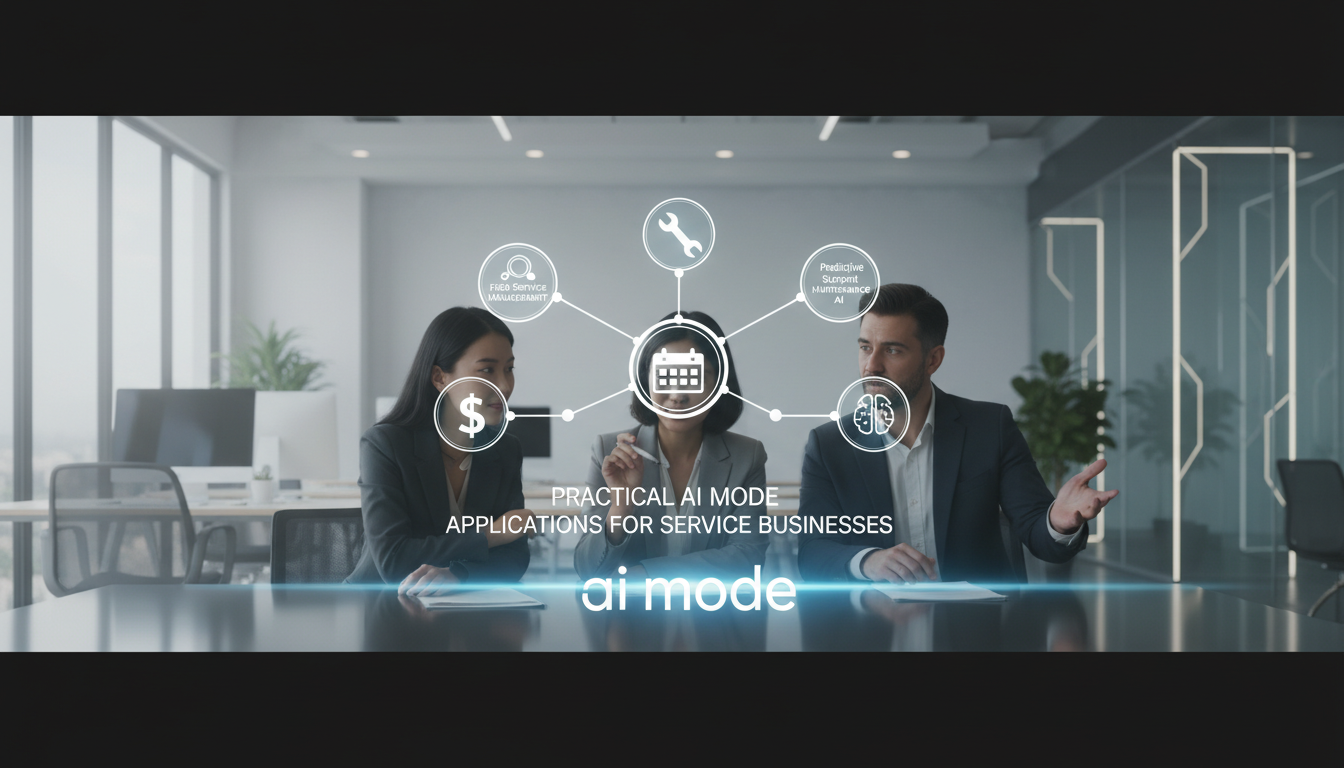
The gap between this topic as a search feature and AI mode as a business tool becomes clear when you see practical applications. We’ve worked with local businesses to implement AI-powered workflows that mirror Google’s intelligent response system.
Intelligent Appointment Management
Most scheduling systems are digital versions of paper appointment books. this topic thinking transforms scheduling into intelligent conversation. When someone requests “an appointment next week,” the system considers their service history, provider preferences, and optimal scheduling patterns.
A MedSpa client implemented AI-powered scheduling that handles complex requests like, “I need a consultation for lip filler, but I can only come during lunch breaks, and I don’t want to see Dr. Smith because my friend had a bad experience.” The system processes multiple constraints and provides appropriate options without human intervention.
The time savings are significant. Their front desk staff went from spending 3 hours daily on scheduling coordination to 45 minutes on exception handling. That’s 2+ hours daily freed up for higher-value patient interactions.
Dynamic Customer Service Responses
Traditional customer service scripts assume every interaction fits predetermined categories. AI mode handles the reality that customer questions are rarely straightforward.
An HVAC company we work with receives calls ranging from “My heat isn’t working” to “I think there’s a gas smell but I’m not sure and my husband says I’m overreacting.” this topic thinking processes context, urgency, and appropriate response protocols automatically.
The system recognizes safety keywords and immediately escalates while providing interim guidance. For routine issues, it troubleshoots intelligently, often resolving problems without dispatching technicians. Service call volume decreased 30% while customer satisfaction scores improved.
Personalized Follow-Up Sequences
Most businesses send generic follow-up messages. AI mode creates personalized communication based on individual customer journeys and responses.
After a dental cleaning, instead of sending everyone the same “thanks for visiting” email, this topic considers the patient’s treatment plan, concerns expressed during the visit, and historical engagement patterns. Someone who asked about whitening gets different follow-up than someone who needs periodontal work.
This personalization drives results. Email engagement rates typically improve 40-60% when messages feel relevant rather than automated.
Setting Up AI Mode Workflows in Your Business

Implementation doesn’t require technical expertise, but it does require strategic thinking. The businesses that succeed with this topic focus on workflows, not features.
Identifying High-Impact Automation Opportunities
Start with repetitive tasks that require some intelligence but not expertise. Appointment confirmations, basic customer questions, and follow-up scheduling are ideal candidates.
Document your current processes first. How does your team handle new patient inquiries? What questions do customers ask repeatedly? Where do conversations get stuck waiting for information?
One dental practice discovered they spent 45 minutes daily explaining insurance coverage for different procedures. AI mode now handles these explanations consistently, with escalation to human staff only when coverage is unclear or disputed.
Training AI to Understand Your Business Language
this topic works best when it understands your industry terminology and customer communication patterns. This requires feeding the system examples of good interactions, not just data.
Collect transcripts of successful customer conversations. What questions led to bookings? How did your best team members handle objections? These become training examples for AI responses.
The key is teaching AI to match your business personality. A high-end MedSpa communicates differently than a family dental practice. AI mode should reflect your brand voice, not sound like generic customer service.
Integration with Existing Systems
this topic workflows need to connect with your current software stack. Appointment systems, customer databases, and communication tools should work together smoothly.
Most local businesses use 3-5 different software tools. AI mode acts as the intelligent layer that coordinates between systems, ensuring information flows correctly without manual data entry.
For example, when this topic books an appointment, it should update your practice management software, send calendar invites, trigger reminder sequences, and note any special requirements in the patient file. This coordination eliminates the administrative overhead that typically comes with automation.
Measuring ROI from AI Mode Implementation

The value of this topic isn’t just time savings , it’s business transformation. But you need concrete metrics to justify the investment and optimize performance.
Time Savings and Efficiency Gains
Track hours saved on routine tasks, but also measure quality improvements. AI mode should handle more inquiries correctly, not just faster.
Before implementation, measure how long staff spend on appointment scheduling, customer service calls, and follow-up tasks. After this topic deployment, track both time reduction and accuracy improvements.
A typical local service business saves 15-20 hours weekly on administrative tasks. At $25/hour for administrative staff time, that’s $19,500-26,000 annually in direct labor savings. But the real value comes from redirecting that time to revenue-generating activities.
Customer Experience Metrics
AI mode should improve customer satisfaction, not just internal efficiency. Monitor response times, resolution rates, and customer feedback scores.
Key metrics include: average response time to inquiries, percentage of issues resolved without human intervention, customer satisfaction scores, and conversion rates from inquiry to appointment.
Businesses typically see 25-40% improvement in response times and 15-20% increase in conversion rates when this topic handles initial customer interactions effectively.
Revenue Impact Analysis
The ultimate measure is business growth. AI mode should help you serve more customers better, leading to increased revenue and profitability.
Track new patient/client acquisition rates, average transaction values, and customer lifetime value. this topic often improves all three by ensuring consistent, professional interactions and better follow-up processes.
One MedSpa client saw 35% increase in consultation bookings after implementing AI mode for initial inquiries. The system qualified leads better and scheduled appointments more efficiently, resulting in higher show rates and conversion to treatment.
| Metric | Manual Process | this topic | Improvement |
|---|---|---|---|
| Average Response Time | 4-6 hours | 2-5 minutes | the vast majority faster |
| After-Hours Inquiries Handled | 0% | most | most more coverage |
| Appointment No-Shows | 15-about one in five | 8-around one in ten | roughly a third reduction |
| Staff Time on Admin Tasks | 25-30 hours/week | 8-12 hours/week | over half reduction |
Common Implementation Challenges and Solutions
Every business faces obstacles when implementing AI mode workflows. Understanding common challenges helps you prepare and avoid typical pitfalls.
Staff Resistance and Training Concerns
Team members often worry AI will replace their jobs or make their skills irrelevant. Address these concerns directly by positioning this topic as a tool that handles routine work so staff can focus on complex, rewarding tasks.
The dental hygienist who spends 30 minutes daily confirming appointments can redirect that time to patient education and care planning. The MedSpa coordinator who answers the same pricing questions repeatedly can focus on consultation preparation and treatment planning.
Provide clear training on how AI mode works and when to intervene. Staff should understand they’re supervising intelligent automation, not being replaced by it. Most team members appreciate having routine tasks handled automatically once they see the benefits.
Customer Acceptance and Trust Issues
Some customers prefer human interaction and may resist AI-powered communication. The solution isn’t to hide AI usage but to demonstrate value through better service.
this topic should feel helpful, not robotic. When customers receive faster responses, more accurate information, and better follow-up, they care less about whether AI was involved in the process.
Always provide easy escalation to human staff when customers prefer personal interaction. The goal is enhancing service, not forcing AI on reluctant customers.
Technical Integration Complexity
Local businesses often struggle with connecting AI mode to existing software systems. Choose solutions that integrate easily with your current tools rather than requiring complete system overhauls.
Start with simple implementations and expand gradually. Begin with this topic handling basic inquiries and appointment confirmations before moving to complex workflows.
Work with providers who understand local business needs and offer ongoing support. Technical challenges are easier to overcome when you have knowledgeable assistance available.
Industry-Specific AI Mode Strategies
While this topic principles apply across industries, implementation details vary significantly between different types of local service businesses.
Healthcare and Dental Practices
Medical practices face unique challenges with patient privacy, insurance verification, and clinical protocols. AI mode must handle these requirements while improving patient experience.
HIPAA compliance is non-negotiable. AI systems must protect patient information and maintain audit trails for all interactions. Choose solutions designed specifically for healthcare environments.
Insurance verification represents a major opportunity for this topic implementation. Patients frequently ask about coverage for specific procedures, and AI can provide accurate information by accessing real-time insurance databases.
Appointment scheduling becomes more complex with provider preferences, treatment requirements, and medical protocols. AI mode can manage these constraints while optimizing schedule efficiency.
Beauty and Wellness Services
MedSpas and beauty services benefit from this topic’s ability to handle detailed consultation requests and treatment explanations.
Customers often have multiple questions about procedures, recovery time, and results. AI mode can provide complete information while identifying good candidates for specific treatments.
Photo analysis capabilities allow AI to provide preliminary assessments for cosmetic procedures, helping customers understand treatment options before consultation appointments.
Seasonal demand fluctuations require intelligent scheduling that balances availability with customer preferences. this topic can optimize booking patterns to maximize revenue during peak periods.
Home Services and Contractors
HVAC, plumbing, and electrical contractors face emergency calls, seasonal demand, and complex diagnostic requirements.
Emergency vs. routine service classification is critical for proper response. AI mode can assess urgency based on customer descriptions and route calls appropriately.
Seasonal scheduling requires balancing emergency calls with routine maintenance. this topic can predict demand patterns and optimize technician schedules accordingly.
Parts availability and service complexity affect scheduling and pricing. AI mode can check inventory and provide accurate time estimates for different types of service calls.
Future-Proofing Your this topic Investment
AI technology evolves rapidly, but smart implementation principles remain consistent. Focus on building adaptable systems rather than chasing the latest features.
Scalable Architecture Planning
Design AI mode workflows that grow with your business. Systems that work for 100 customers monthly should adapt when you’re serving 500 customers monthly.
Choose platforms that offer expansion capabilities without requiring complete reimplementation. Your this topic investment should support business growth, not limit it.
Plan for increased complexity as your business grows. Simple appointment scheduling becomes multi-location coordination. Basic customer service becomes specialized support for different service lines.
Continuous Learning and Optimization
AI mode systems improve through use, but only with proper feedback loops and optimization processes.
Regular performance reviews help identify areas for improvement. Which customer interactions succeed? Where does this topic struggle? Use this data to refine responses and workflows.
Customer feedback provides valuable insights into AI mode effectiveness. Survey customers about their experience with automated interactions and use feedback to improve system performance.
Staying Current with Technology Advances
AI capabilities expand rapidly, but avoid chasing every new feature. Focus on improvements that solve real business problems rather than implementing technology for its own sake.
Monitor industry developments and evaluate new capabilities based on potential business impact. Features that reduce costs, improve customer experience, or increase revenue deserve consideration.
Maintain relationships with AI solution providers who understand local business needs and can guide strategic technology decisions.
Real Example: A multi-location dental group implemented this topic gradually, starting with appointment confirmations at one office. After seeing roughly a third reduction in no-shows and 2 hours daily time savings, they expanded to all locations and added insurance verification and treatment follow-ups. The system now handles most of routine patient interactions across 6 offices.
AI mode represents more than a technological upgrade , it’s a fundamental shift in how local service businesses can operate. The practices that embrace intelligent automation while maintaining personal service will dominate their markets.
The question isn’t whether AI will transform local businesses, but whether you’ll lead the transformation or react to competitors who implement it first. Start with simple workflows, measure results carefully, and expand based on proven success.
Ready to see how this topic can transform your practice? Book a free demo to discover which workflows offer the biggest ROI for your specific business.