Key Takeaways
- Generic digital marketing courses miss the unique needs of local service businesses
- Focus on practical skills like local SEO, reputation management, and automated follow-up systems
- ROI-focused training beats theoretical knowledge for small business owners
- AI-powered tools can automate 70% of routine marketing tasks
- Choose courses that include industry-specific examples and templates
Why Most Digital Marketing Courses Miss the Mark for Local Businesses

We’ve watched hundreds of local business owners complete expensive digital marketing courses, only to struggle with implementation. The problem isn’t their intelligence or dedication , it’s that most courses teach enterprise-level strategies to small business owners who need practical, revenue-focused solutions.
The Generic Course Problem
Traditional digital marketing courses focus on broad concepts like brand awareness and engagement metrics. That’s fine for Fortune 500 companies with dedicated marketing teams. But when you’re running a dental practice or HVAC company, you need systems that generate appointments and service calls.
Most courses spend weeks on social media theory while glossing over local search optimization. They’ll teach you to create buyer personas but won’t show you how to set up automated appointment reminders that reduce no-shows by 40%.
The Implementation Gap
Even well-designed courses often fail at the execution stage. You’ll learn about email marketing best practices but won’t get templates for patient recall campaigns or seasonal HVAC maintenance reminders. The gap between theory and practice leaves business owners frustrated and their marketing budgets wasted.
Industry-Specific Challenges Ignored
A MedSpa’s marketing needs differ dramatically from an auto dealer’s approach. Yet most digital marketing courses use one-size-fits-all examples. They don’t address compliance requirements for healthcare practices or the seasonal nature of HVAC marketing.
What Local Service Businesses Actually Need to Learn

After working with service-based businesses across multiple industries, we’ve identified the core skills that actually move the revenue needle. These aren’t the flashy tactics taught in most courses , they’re the fundamentals that keep your phone ringing.
Local SEO That Actually Works
Forget about ranking for “digital marketing” nationally. Local businesses need to dominate searches like “emergency HVAC repair near me” or “dental implants [city name].” This means understanding Google My Business optimization, local citation building, and review generation strategies.
The most valuable skill? Setting up automated systems that request reviews from satisfied customers while you sleep. One HVAC company we work with generates 15-20 new Google reviews monthly through automated follow-up sequences.
Reputation Management Systems
Your online reputation directly impacts your bottom line. Studies show that businesses with 4+ star ratings receive 3x more clicks than those with lower ratings. But most courses treat reputation management as an afterthought.
Effective reputation management involves proactive review solicitation, rapid response protocols for negative feedback, and systems that showcase positive testimonials across all marketing channels.
Automated Patient/Client Communication
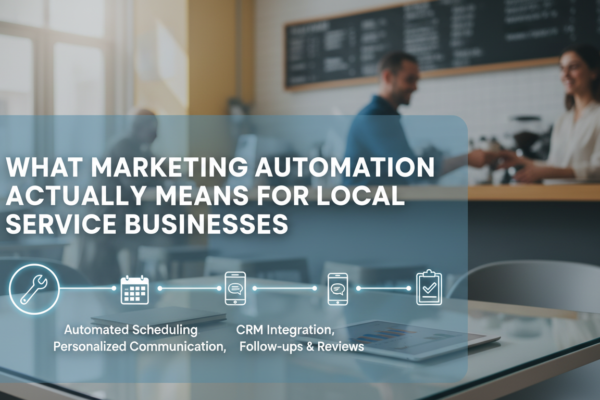
Manual follow-up kills profitability. The most successful local businesses automate routine communications: appointment confirmations, post-service follow-ups, seasonal maintenance reminders, and reactivation campaigns for dormant clients.
These systems don’t just save time , they increase revenue. Automated recall campaigns can boost repeat business by 25-30% while reducing staff workload.
The AI Revolution in Local Business Marketing

While most digital marketing courses are still teaching manual processes, AI has fundamentally changed what’s possible for small businesses. The tools available today can automate tasks that previously required dedicated marketing staff.
Content Creation at Scale
AI can generate months of social media content, blog posts, and email campaigns in hours, not weeks. But the key is training these systems with your brand voice and industry expertise. A well-configured AI system can produce patient education content for dental practices or seasonal maintenance tips for HVAC companies.
The time savings are substantial. Tasks that once took 10-15 hours weekly can be reduced to 2-3 hours of review and customization.
Intelligent Lead Qualification
Not all leads are created equal. AI-powered systems can score incoming leads based on likelihood to convert, allowing you to prioritize follow-up efforts. High-intent prospects get immediate attention, while lower-quality leads enter nurture sequences.
This intelligent routing can improve conversion rates by 40-50% while ensuring no opportunities fall through the cracks.
Predictive Customer Insights
AI analyzes customer behavior patterns to predict optimal timing for marketing messages. It identifies which patients are due for cleanings, which HVAC customers need seasonal tune-ups, or which MedSpa clients are ready for additional treatments.
These insights enable proactive marketing that feels helpful rather than pushy, increasing both customer satisfaction and revenue per client.
“The biggest mistake I see local business owners make is trying to learn everything about digital marketing instead of focusing on the 20% of activities that drive most of their results. Master local SEO, automate your follow-up, and manage your reputation. Everything else is secondary.” , Marketing Consultant with 15+ years in local business growth
Choosing the Right Digital Marketing Course for Your Business

Not all courses are created equal, especially when you’re running a service-based business. The right program should feel like it was designed specifically for your industry challenges and growth goals.
Industry-Specific Content Requirements
Look for courses that include examples from your industry. Healthcare practices need HIPAA-compliant marketing strategies. Home service businesses require seasonal campaign planning. Financial advisors must navigate strict compliance requirements.
Generic examples don’t translate well to real-world implementation. You need templates, workflows, and case studies that match your business model.
Practical Tools and Templates
The best courses provide ready-to-use assets: email templates for different customer journey stages, social media content calendars, review request scripts, and automated workflow blueprints.
These resources should save you weeks of development time while ensuring professional execution from day one.
Ongoing Support and Updates
Digital marketing evolves rapidly. Courses that provide ongoing updates and community support offer better long-term value than one-time training programs.
Look for programs that include regular webinars, updated templates, and access to other business owners facing similar challenges.
Building Your Marketing Skills vs. Outsourcing Strategy
Every business owner faces this decision: invest time learning digital marketing or hire experts to handle it. The answer depends on your business size, budget, and growth stage.
When DIY Makes Sense
Smaller practices often benefit from owner-driven marketing, especially in the early stages. You understand your customers better than any outside agency. Plus, marketing skills become valuable business assets that compound over time.
DIY works best when you can commit 5-10 hours weekly to marketing activities and have systems in place to maintain consistency.
The Hybrid Approach
Many successful businesses combine internal oversight with external execution. You maintain strategic control while outsourcing time-intensive tasks like content creation, ad management, or technical SEO.
This approach requires enough marketing knowledge to evaluate vendor performance and make strategic decisions, but not necessarily hands-on execution skills.
Full Outsourcing Considerations
Complete outsourcing can work for established businesses with predictable revenue streams. However, you still need enough marketing literacy to choose good partners and evaluate results.
The worst scenario is blind outsourcing where you can’t distinguish between effective strategies and expensive busy work.
Measuring ROI from Your Digital Marketing Education
Marketing education should pay for itself through improved business results. Here’s how to track whether your investment in learning is generating returns.
Revenue-Based Metrics
Track new customer acquisition costs before and after implementing new strategies. Monitor average customer lifetime value improvements. Measure conversion rate increases from website visitors to appointments or consultations.
The most successful businesses see 2-3x returns on their marketing education investment within 6-12 months of implementation.
Efficiency Improvements
Calculate time savings from automated processes. If you’re spending 15 hours weekly on marketing tasks and reduce that to 5 hours through better systems, you’ve gained 40 hours monthly for revenue-generating activities.
Value this time at your effective hourly rate to quantify the operational benefits of improved marketing skills.
Long-Term Asset Building
Marketing skills compound over time. Systems you build today continue generating value for years. A well-optimized Google My Business profile or automated review generation system provides ongoing benefits with minimal maintenance.
Consider these long-term assets when evaluating the total return on your marketing education investment.
Common Pitfalls in Digital Marketing Course Selection
We’ve seen business owners make expensive mistakes when choosing marketing education. These common pitfalls can waste both time and money while delaying real business growth.
Chasing Shiny Objects
New marketing tactics emerge constantly, but fundamentals remain consistent. Courses that promise “secret strategies” or “modern hacks” often distract from proven basics like local SEO and customer retention.
Focus on mastering core skills before exploring advanced tactics. A solid foundation in local search optimization will generate more revenue than the latest social media trend.
Ignoring Implementation Support
Knowledge without implementation equals zero results. Many courses provide excellent information but no guidance on execution. Look for programs that include step-by-step implementation guides, templates, and ongoing support.
The best courses feel more like consulting engagements than traditional education programs.
Underestimating Time Requirements
Effective marketing requires consistent effort over time. Courses that promise quick fixes or minimal time investment usually disappoint. Plan for 5-10 hours weekly of focused marketing work, especially during the initial implementation phase.
Realistic expectations prevent frustration and increase your chances of long-term success.
The Future of Local Business Marketing Education
Marketing education is evolving rapidly, driven by AI capabilities and changing consumer behaviors. Understanding these trends helps you choose courses that will remain relevant as the space shifts.
AI Integration Becomes Standard
Future marketing courses will assume AI tool proficiency rather than treating it as advanced content. Basic skills like prompt engineering and AI workflow design will become as fundamental as email marketing knowledge.
Businesses that embrace AI-powered marketing tools now will have significant competitive advantages as these capabilities become mainstream.
Hyper-Local Targeting Advances
Location-based marketing will become increasingly sophisticated. Courses will need to cover micro-targeting strategies, local event marketing integration, and community-specific content creation.
The businesses that master hyper-local marketing will dominate their geographic markets regardless of larger competitors’ advertising budgets.
Privacy-First Marketing Strategies
Increasing privacy regulations require new approaches to customer data collection and usage. Future courses must address compliant lead generation, first-party data strategies, and consent-based marketing systems.
Early adoption of privacy-compliant marketing practices will become a competitive advantage as regulations tighten across industries.
The right digital marketing course should feel like a roadmap specifically designed for your business challenges. It should provide practical tools, industry-specific examples, and ongoing support that helps you build sustainable growth systems.
Most importantly, it should focus on the fundamentals that actually drive revenue: local search visibility, automated customer communication, and reputation management. These core skills, enhanced with AI-powered tools, can transform your marketing effectiveness while reducing the time you spend on routine tasks.
Ready to see how AI can automate your marketing while you focus on serving customers? Book a free demo to discover how successful local businesses are using intelligent systems to grow revenue without increasing workload.