The digital marketing industry has exploded beyond traditional advertising into something much more strategic and data-driven. We’ve watched countless professionals transition from unrelated fields into thriving digital marketing careers , and the opportunities keep expanding.
What makes digital marketing jobs particularly attractive isn’t just the growth potential. It’s the variety. One day you’re analyzing conversion data, the next you’re crafting content strategy, and by Friday you’re optimizing ad campaigns. The field rewards both creative thinking and analytical problem-solving.
Most people think digital marketing jobs require a computer science degree or years of agency experience. They don’t. We’ve seen successful transitions from teachers, retail managers, and even HVAC technicians who understood customer psychology and weren’t afraid to learn new tools.
Understanding the Digital Marketing Job Space

Core Digital Marketing Roles
Digital marketing jobs span multiple specializations, each requiring different skill sets. Content marketing managers focus on creating valuable, engaging content that drives organic traffic and builds brand authority. They typically earn between $45,000-$75,000 annually, depending on experience and location.
Social media managers handle brand presence across platforms like Facebook, Instagram, LinkedIn, and TikTok. Their responsibilities include content creation, community management, and social advertising. Entry-level positions start around $35,000, while experienced social media managers can earn $60,000 or more.
SEO specialists optimize websites to rank higher in search results. This technical role requires understanding keyword research, on-page optimization, and link building strategies. SEO professionals typically earn $50,000-$80,000, with senior specialists commanding higher salaries.
Emerging Specializations
Marketing automation specialists are increasingly in demand as businesses seek to simplify their customer acquisition processes. These professionals set up email sequences, lead scoring systems, and customer journey mapping. The role combines technical skills with marketing strategy, often paying $55,000-$85,000.
Conversion rate optimization (CRO) specialists focus on improving website performance and user experience to increase sales. They run A/B tests, analyze user behavior, and implement changes that directly impact revenue. CRO roles typically offer $60,000-$90,000, reflecting their direct contribution to business growth.
AI marketing specialists represent the newest frontier in digital marketing jobs. They implement AI tools for content creation, customer segmentation, and predictive analytics. As AI adoption accelerates, these roles command premium salaries of $70,000-$120,000.
Industry-Specific Opportunities
Healthcare marketing specialists work with medical practices, dental offices, and MedSpas to navigate HIPAA compliance while driving patient acquisition. These roles often pay 10-20% above general marketing positions due to specialized knowledge requirements.
Local service marketing focuses on businesses like HVAC companies, law firms, and auto dealers. Specialists in this area understand local SEO, Google My Business optimization, and reputation management. The demand for local service marketers continues growing as more traditional businesses recognize the need for digital presence.
E-commerce marketing specialists work with online retailers to optimize product listings, manage Amazon advertising, and implement conversion tracking. With e-commerce growth showing no signs of slowing, these positions offer strong job security and advancement opportunities.
Entry-Level Digital Marketing Jobs and Requirements
Breaking Into Digital Marketing
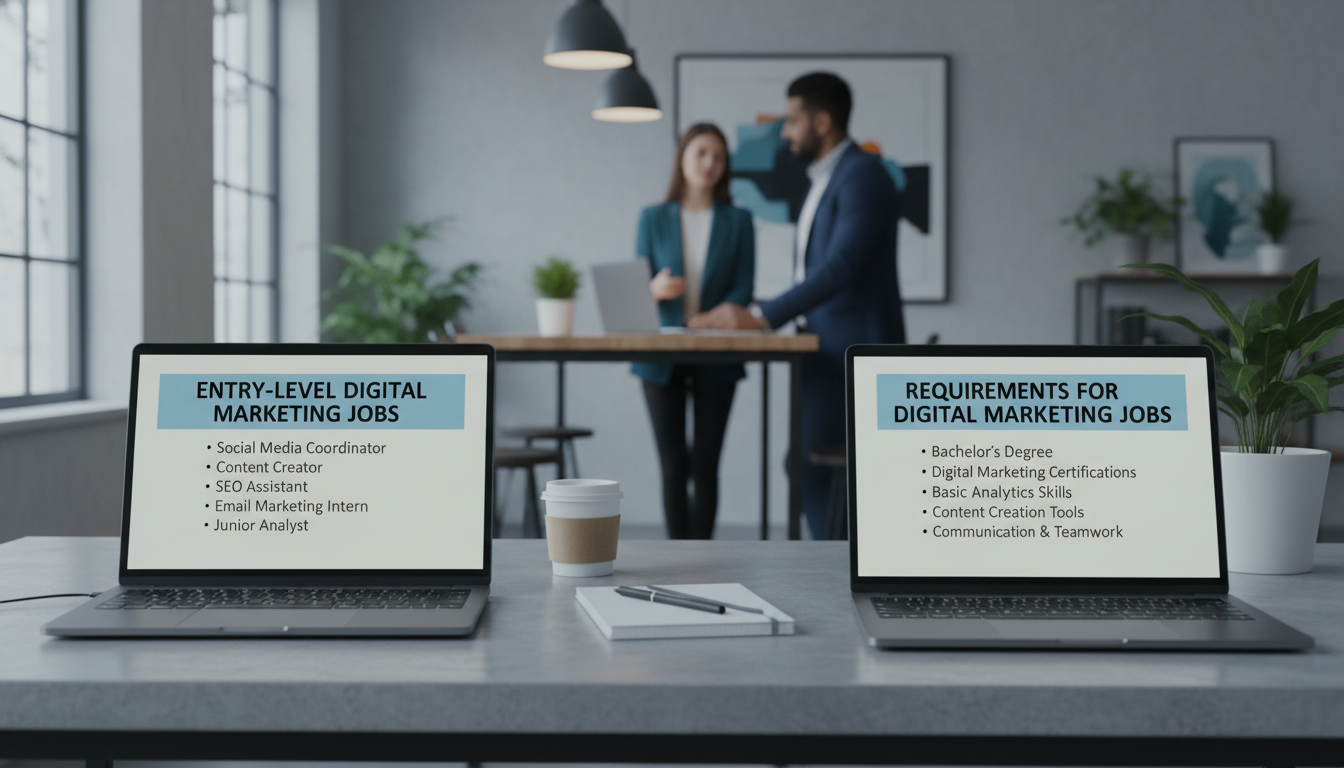
Entry-level digital marketing jobs typically require more enthusiasm than experience. Marketing coordinator positions serve as excellent starting points, involving tasks like social media posting, basic content creation, and campaign assistance. Most employers value demonstrated interest over formal education , a personal blog, volunteer social media management, or completed online courses can open doors.
Digital marketing assistants support senior team members with research, data entry, and campaign execution. These roles teach fundamental skills like Google Analytics, basic graphic design, and email marketing platforms. Starting salaries range from $30,000-$40,000, but the learning curve is steep and advancement opportunities are plentiful.
Content creation roles offer another entry point, especially for those with writing or design backgrounds. Many businesses need help with blog posts, social media graphics, and email newsletters. Freelance content creation can build a portfolio while providing income during the job search process.
Essential Skills for Beginners
Google Analytics proficiency is non-negotiable for most digital marketing jobs. Understanding how to track website traffic, conversion rates, and user behavior provides the foundation for data-driven marketing decisions. The free Google Analytics certification demonstrates commitment and basic competency.
Social media platform knowledge extends beyond personal use. Employers expect familiarity with business features like Facebook Ads Manager, LinkedIn Campaign Manager, and Instagram for Business. Understanding organic reach limitations and paid promotion options shows strategic thinking.
Basic graphic design skills using tools like Canva or Adobe Creative Suite help candidates stand out. Even simple abilities like creating social media graphics, resizing images, and maintaining brand consistency add significant value to entry-level applications.
Building Your First Marketing Portfolio
Personal projects demonstrate initiative and practical skills better than theoretical knowledge. Create a blog about a topic you’re passionate about, then optimize it for search engines and promote it on social media. Document your results , traffic growth, engagement rates, and lessons learned.
Volunteer marketing work for local nonprofits or small businesses provides real-world experience and testimonials. Many organizations need help with social media, email marketing, or website updates but lack budget for professional services. These partnerships often lead to paid opportunities or valuable references.
Online course certifications from platforms like Google, HubSpot, and Facebook Blueprint cost nothing but time. While certifications alone don’t guarantee jobs, they demonstrate commitment to learning and provide structured knowledge that employers value.
Mid-Level and Senior Digital Marketing Positions

Career Progression Paths
Digital marketing specialists typically emerge after 2-3 years of experience, focusing on specific channels like paid advertising, email marketing, or content strategy. These roles require deeper analytical skills and the ability to manage campaigns independently. Salaries range from $50,000-$70,000, with performance bonuses common.
Marketing managers oversee multiple channels and team members, requiring both strategic thinking and leadership skills. They develop campaign strategies, manage budgets, and report results to senior leadership. The transition from specialist to manager often involves taking on project management responsibilities and mentoring junior team members.
Senior marketing managers and directors handle department-wide strategy, budget allocation, and cross-functional collaboration. These positions require 5-7 years of experience and deep understanding of how marketing contributes to overall business objectives. Compensation typically ranges from $80,000-$120,000, plus equity or profit-sharing in many companies.
Specialized Senior Roles
Growth marketing managers focus specifically on customer acquisition and retention metrics. They run sophisticated A/B tests, implement referral programs, and optimize the entire customer journey from awareness to advocacy. This data-driven role appeals to analytically-minded marketers and often pays premium salaries.
Marketing operations specialists manage the technology stack that powers modern marketing departments. They implement and maintain CRM systems, marketing automation platforms, and analytics tools. As marketing becomes increasingly technical, these roles bridge the gap between marketing strategy and technical execution.
Brand managers develop and maintain consistent messaging across all marketing channels. They work closely with creative teams, manage brand guidelines, and ensure all communications align with company values and positioning. Brand management roles exist primarily in larger companies with established products or services.
Leadership and Strategy Positions
Chief Marketing Officers (CMOs) represent the pinnacle of marketing careers, responsible for overall marketing strategy and its alignment with business goals. CMO positions require extensive experience, proven results, and the ability to communicate marketing’s value to boards and investors.
VP of Marketing roles exist in mid-sized companies, combining strategic oversight with hands-on involvement in major campaigns. These positions require both marketing expertise and general business acumen, as VPs often contribute to product development, sales strategy, and company positioning decisions.
Marketing consultants represent an alternative career path, offering specialized expertise to multiple clients rather than working for a single employer. Successful consultants typically have 7+ years of experience and deep expertise in specific areas like conversion optimization, marketing automation, or industry-specific marketing challenges.
Remote and Freelance Digital Marketing Opportunities

The Remote Work Revolution
Remote digital marketing jobs have become mainstream, not just a pandemic-era accommodation. Many companies discovered that marketing work translates perfectly to distributed teams , campaigns can be managed from anywhere with reliable internet and the right tools.
Fully remote positions often pay competitively with office-based roles, sometimes offering location-independent salaries that benefit workers in lower cost-of-living areas. Companies like Buffer, Zapier, and GitLab have proven that remote marketing teams can be highly effective when supported with proper communication tools and processes.
Hybrid arrangements combine office collaboration with remote flexibility. Many marketing departments find that creative brainstorming benefits from in-person interaction, while campaign execution and analysis work well remotely. This model appeals to professionals who want flexibility without complete isolation.
Freelance Marketing Specializations
Freelance digital marketing offers flexibility and potentially higher hourly rates, but requires strong self-management and business development skills. Successful freelancers typically specialize in high-value services like conversion rate optimization, marketing automation setup, or industry-specific campaign management.
Content marketing freelancers can build sustainable businesses by developing expertise in specific industries or content types. Technical writing for SaaS companies, healthcare content creation, or video marketing services command premium rates due to specialized knowledge requirements.
Paid advertising specialists often transition to freelance work because their skills directly impact client revenue. Managing Google Ads, Facebook campaigns, or Amazon advertising for multiple clients can generate substantial income while providing schedule flexibility.
Building a Freelance Marketing Business
Successful freelance marketers treat their practice as a business, not just a collection of projects. This means developing standard processes, creating service packages with clear deliverables, and building systems for client communication and project management.
Pricing freelance services requires balancing competitive rates with sustainable income. Many freelancers start with hourly billing but transition to project-based or retainer pricing as they gain experience and can better estimate time requirements.
Client acquisition for freelance marketers often begins with network connections and referrals. Platforms like Upwork and Fiverr can provide initial projects, but long-term success typically comes from direct relationships and word-of-mouth recommendations.
Digital Marketing Salary Expectations and Negotiation
Salary Ranges by Experience Level
Entry-level digital marketing jobs typically start between $35,000-$45,000 annually, with significant variation based on location and company size. Major metropolitan areas like New York, San Francisco, and Chicago offer higher starting salaries but also higher living costs. Remote positions often fall somewhere in the middle of this range.
Mid-level professionals with 3-5 years of experience can expect $50,000-$75,000, depending on specialization and results achieved. Specialists in high-demand areas like marketing automation, conversion optimization, or AI implementation often command the higher end of this range.
Senior marketing professionals and managers typically earn $75,000-$120,000, with additional compensation through bonuses, equity, or profit-sharing arrangements. Leadership roles in larger companies or specialized consulting positions can exceed these ranges significantly.
Factors Affecting Digital Marketing Compensation
Geographic location remains a significant salary factor, though remote work has somewhat reduced these disparities. San Francisco and New York still offer the highest base salaries, but companies increasingly offer location-independent compensation for remote roles.
Industry specialization can add 15-25% to base salaries. Healthcare marketing, financial services, and B2B SaaS typically pay premium rates due to regulatory complexity or high customer lifetime values. Local service marketing for industries like dental or HVAC also commands specialized rates.
Company size and stage affect both salary and growth opportunities. Startups might offer lower base salaries but significant equity upside. Established corporations provide stability and structured advancement paths. Mid-sized companies often offer the best balance of competitive compensation and growth opportunities.
Negotiating Your Marketing Salary
Salary negotiation in digital marketing should focus on measurable results and specialized skills. Document specific achievements like conversion rate improvements, cost-per-acquisition reductions, or revenue growth attributed to your campaigns. Quantified results provide strong negotiation use.
Professional development investments demonstrate commitment and justify higher compensation. Certifications from Google, Facebook, or HubSpot show current skills. Advanced training in areas like data analysis, marketing automation, or AI tools positions you for premium roles.
Alternative compensation structures can benefit both employers and employees. Performance bonuses tied to specific metrics, additional vacation time, professional development budgets, or flexible work arrangements might be easier for companies to approve than straight salary increases.
Skills and Qualifications for Digital Marketing Success
Technical Skills That Matter
Data analysis capabilities separate good digital marketers from great ones. Understanding how to extract insights from Google Analytics, social media analytics, and email marketing platforms enables data-driven decision making. Basic knowledge of Excel or Google Sheets for data manipulation is essential, while SQL skills provide significant advantages.
Marketing automation platforms like HubSpot, Marketo, or Pardot are increasingly central to digital marketing operations. Professionals who can set up lead scoring, email sequences, and customer journey mapping become invaluable to their organizations. These technical skills often justify salary premiums.
Basic HTML and CSS knowledge helps marketers work more efficiently with websites, landing pages, and email templates. While deep programming skills aren’t necessary, understanding how web pages work enables better collaboration with development teams and more effective campaign implementation.
Creative and Strategic Abilities
Content creation skills remain fundamental to digital marketing success. This includes writing compelling copy, basic graphic design, and understanding visual hierarchy. Even technical marketers benefit from being able to create clear, engaging presentations and reports for stakeholders.
Strategic thinking involves understanding how individual tactics contribute to broader business objectives. Successful digital marketers can connect campaign metrics to revenue impact and customer lifetime value. They think beyond individual channels to create integrated marketing experiences.
Customer psychology knowledge helps marketers create more effective campaigns. Understanding buyer personas, decision-making processes, and emotional triggers leads to better targeting and messaging. This soft skill often distinguishes senior marketers from junior practitioners.
Emerging Skill Requirements
AI tool proficiency is becoming increasingly valuable as artificial intelligence transforms marketing operations. Familiarity with AI writing assistants, automated design tools, and predictive analytics platforms positions marketers for future opportunities. Early adopters of AI marketing tools often become internal experts and training resources.
Privacy and compliance knowledge grows more important as regulations like GDPR and CCPA affect marketing practices. Understanding consent management, data retention policies, and privacy-compliant tracking methods helps organizations avoid legal issues while maintaining effective marketing.
Cross-functional collaboration skills become more critical as marketing integrates with sales, customer success, and product development. Marketers who can work effectively with diverse teams and translate marketing concepts for non-marketing stakeholders advance more quickly in their careers.
Industry Trends Shaping Digital Marketing Careers
AI and Automation Impact
Artificial intelligence is reshaping digital marketing jobs rather than eliminating them. Routine tasks like basic content creation, ad optimization, and data reporting are increasingly automated, freeing marketers to focus on strategy, creativity, and relationship building.
AI-powered personalization enables marketers to create more targeted, relevant experiences at scale. Professionals who understand how to implement and optimize AI-driven personalization systems become valuable strategic assets. This trend creates new roles like AI marketing specialists and marketing technologists.
Marketing automation continues expanding beyond email sequences to encompass entire customer journeys. Marketers who can design, implement, and optimize complex automation workflows find themselves in high demand across industries.
Privacy and Data Changes
Third-party cookie deprecation and iOS privacy updates are forcing marketers to develop new measurement and targeting strategies. First-party data collection and customer relationship management become increasingly important skills.
Privacy-compliant marketing requires understanding consent management, data minimization, and transparent communication with customers about data usage. Marketers who can navigate these requirements while maintaining campaign effectiveness have significant competitive advantages.
Server-side tracking and advanced analytics implementations help marketers maintain measurement capabilities in a privacy-focused world. Technical marketing skills become more valuable as traditional tracking methods become less reliable.
Channel Evolution and New Platforms
Social commerce integration blurs the lines between social media marketing and e-commerce. Marketers need to understand how to optimize for platform-specific shopping features on Instagram, TikTok, and Pinterest.
Voice search optimization requires new SEO strategies focused on conversational queries and local intent. As smart speakers become more prevalent, marketers must adapt content and optimization strategies accordingly.
Video content continues growing in importance across all marketing channels. Marketers with video creation and optimization skills find opportunities in everything from social media to email marketing to website optimization.
How to Land Your First Digital Marketing Job
Building Relevant Experience
Personal projects demonstrate practical skills better than theoretical knowledge. Start a blog, grow a social media following, or create and promote a simple online course. Document your process, results, and lessons learned to showcase during interviews.
Volunteer marketing work provides real-world experience and professional references. Local nonprofits, small businesses, and community organizations often need marketing help but lack budget for professional services. These partnerships can lead to testimonials, case studies, and networking opportunities.
Internships and entry-level positions at marketing agencies provide exposure to multiple clients and campaign types. Agency experience teaches project management, client communication, and diverse marketing strategies that benefit long-term career development.
Networking and Professional Development
Industry events, both virtual and in-person, offer networking opportunities and insights into current trends. Local marketing meetups, digital marketing conferences, and webinar series help build professional connections and stay current with industry developments.
Online communities like marketing subreddits, LinkedIn groups, and Slack channels provide ongoing learning opportunities and peer support. Active participation in these communities can lead to job opportunities and mentorship relationships.
Professional certifications from Google, Facebook, HubSpot, and other platforms demonstrate commitment and provide structured learning paths. While certifications alone don’t guarantee jobs, they show initiative and provide talking points during interviews.
Interview Preparation and Portfolio Development
Digital marketing interviews often include practical exercises like campaign analysis, strategy development, or tool demonstrations. Prepare by practicing with real campaign data and being ready to explain your analytical process and recommendations.
Portfolio development should showcase both results and process. Include campaign screenshots, performance metrics, and explanations of strategy decisions. Even entry-level candidates can demonstrate thinking through personal projects or volunteer work.
Research potential employers thoroughly, understanding their target audience, current marketing strategies, and competitive space. Prepare specific suggestions for how you could contribute to their marketing efforts, demonstrating both knowledge and initiative.
Expert Insight: “The most successful digital marketing hires we’ve seen aren’t necessarily those with the most experience , they’re the ones who can demonstrate clear thinking about customer problems and show genuine curiosity about testing solutions. Technical skills can be taught, but strategic thinking and customer empathy are much harder to develop.” , Marketing Director at a leading SaaS company
Digital marketing jobs offer tremendous opportunities for career growth, creative expression, and direct business impact. The field rewards continuous learning, analytical thinking, and customer-focused problem solving. Whether you’re just starting out or looking to advance your marketing career, the key is combining technical skills with strategic thinking and genuine curiosity about what motivates customers to take action.
Ready to explore how AI can accelerate your marketing career? Book a free demo at digimeapp.com to see how modern marketing automation tools can enhance your skills and make you more valuable to employers.