Most local business owners think digital marketing is complicated, expensive, or only works for big companies. We’ve seen this assumption cost businesses thousands of customers and hundreds of thousands in revenue.
The truth? Digital marketing isn’t rocket science. It’s a collection of practical tools that help you reach more customers, book more appointments, and grow your business predictably. Whether you run a dental practice, MedSpa, HVAC company, or law firm, the fundamentals remain the same.
What Digital Marketing Actually Means for Local Businesses

Digital marketing is simply using online channels to attract, engage, and convert customers. For local service businesses, it’s about being found when people search for your services, building trust before they call, and staying top-of-mind when they’re ready to buy.
Beyond the Textbook Definition
Most definitions focus on channels and tactics. But for local businesses, digital marketing is really about solving three core problems: getting found by the right people, proving you’re trustworthy, and making it easy for customers to choose you over competitors.
Think about your last three customers. How did they find you? Chances are, at least two started their journey online , whether through Google search, Facebook, or a review site. That’s digital marketing at work, even if you didn’t plan it.
The Local Business Advantage
Local businesses have built-in advantages that national companies would kill for. You serve specific geographic areas, build real relationships, and can respond to customer needs quickly. Digital marketing amplifies these strengths rather than replacing them.
When a homeowner searches “emergency HVAC repair near me” at 10 PM, they want a local company that answers the phone. When someone needs a dentist, they want to see real patient reviews from their neighborhood. Digital marketing helps you be there for these moments.
Common Misconceptions That Cost Money
We’ve watched businesses waste their first year of digital marketing budget learning what doesn’t work. The pattern is predictable: someone spends $2,000 on Facebook ads with no pixel tracking, wonders why nothing converts, and concludes that “digital marketing doesn’t work for our industry.” It does. The targeting was wrong.
Another costly myth: “We need to be on every platform.” Wrong. Better to dominate Google My Business and one social platform than to spread thin across six channels you can’t manage properly.
Core Digital Marketing Channels That Drive Local Business Results
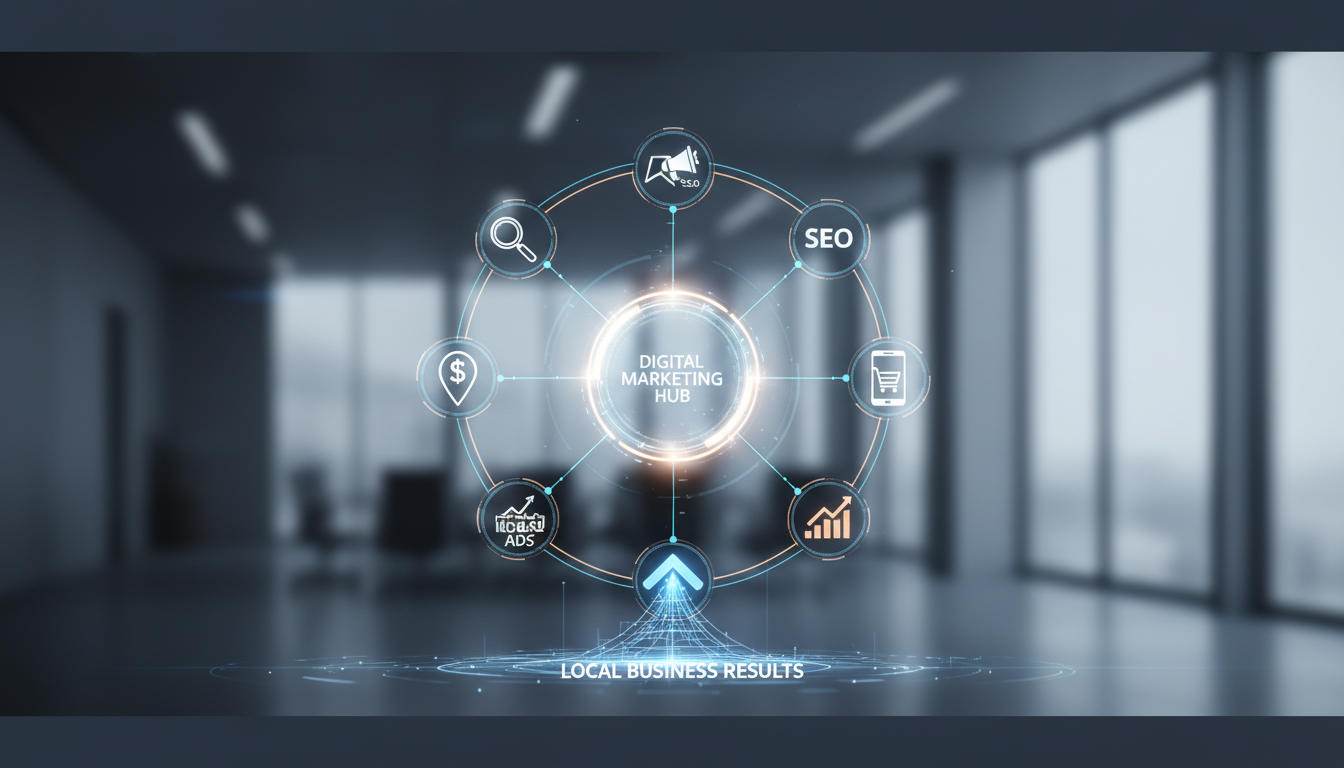
Not all digital marketing channels are created equal for local businesses. Some deliver immediate results, others build long-term value, and a few are complete wastes of time for service-based companies.
Search Engine Marketing: Your Digital Storefront
When someone searches “dentist near me” or “MedSpa treatments,” you want to appear at the top. This happens through two methods: search engine optimization (SEO) for organic results, and pay-per-click (PPC) advertising for immediate visibility.
SEO takes 3-6 months to show results but provides long-term value. A well-optimized website can generate dozens of leads monthly without ongoing ad spend. PPC delivers immediate traffic but requires continuous investment. Most successful local businesses use both.
The key is understanding search intent. Someone searching “Botox prices” is researching. Someone searching “Botox appointment today” is ready to book. Your content and ads should match where people are in their decision process.
Social Media: Building Trust and Community
Social media for local businesses isn’t about going viral. It’s about building trust with potential customers in your area. When someone considers your services, they’ll likely check your Facebook or Instagram to see if you’re legitimate and professional.
Facebook works well for most local businesses because it allows detailed geographic targeting and has strong review features. Instagram excels for visual businesses like MedSpas, dental practices, and home services that can showcase before/after results.
LinkedIn matters for B2B services like accounting, legal, and financial advisory. But don’t feel pressured to be everywhere. Pick one platform, do it well, then expand.
Email Marketing: The Overlooked Revenue Driver
Email marketing delivers the highest ROI of any digital channel, yet most local businesses ignore it. Why? Because they think it’s complicated or spammy. Done right, email marketing nurtures relationships and drives repeat business.
A dental practice might send quarterly cleaning reminders, oral health tips, and special offers for cosmetic procedures. An HVAC company could share seasonal maintenance checklists and early-bird specials for system replacements. The key is providing value, not just selling.
Modern email platforms make automation simple. Set up welcome sequences for new customers, birthday offers, and re-engagement campaigns for inactive clients. These systems work 24/7 to grow your business.
Building Your Digital Marketing Foundation

Before diving into tactics, you need solid fundamentals. Most local businesses skip this step and wonder why their marketing feels scattered and ineffective.
Website Optimization: Your Always-On Salesperson
Your website is often the first impression potential customers have of your business. It needs to load quickly, look professional on mobile devices, and make it easy for visitors to contact you or book appointments.
Key elements include clear service descriptions, prominent contact information, customer testimonials, and strong calls-to-action. If someone can’t figure out what you do or how to reach you within 10 seconds, they’ll leave.
Technical factors matter too. Google prioritizes fast-loading, mobile-friendly websites in search results. A slow website doesn’t just frustrate visitors , it hurts your search rankings and costs you customers.
Google My Business: Your Local Search Command Center
Google My Business is the most important digital marketing tool for local businesses, yet many treat it as an afterthought. Your GMB profile appears when people search for your business or services in your area.
Complete profiles with accurate hours, services, photos, and regular posts rank higher in local search results. Customer reviews on your GMB profile heavily influence both search rankings and customer decisions.
Respond to all reviews, both positive and negative. Thank customers for positive feedback and address concerns professionally. This shows potential customers that you care about service quality.
Content Strategy: Educating Your Way to More Customers
Content marketing for local businesses isn’t about creating viral blog posts. It’s about answering the questions your potential customers ask and positioning yourself as the trusted expert in your field.
A MedSpa might create content about different treatment options, recovery timelines, and what to expect during procedures. An HVAC company could share seasonal maintenance tips, energy-saving advice, and signs that indicate system problems.
This content serves multiple purposes: it helps with SEO, provides value to potential customers, and gives you material to share on social media and in email campaigns.
Measuring What Matters: Digital Marketing Analytics for Local Businesses

The beauty of digital marketing is that everything can be measured. The challenge is knowing which metrics actually matter for your business growth.
Revenue-Focused Metrics vs. Vanity Metrics
Many businesses get excited about vanity metrics like website traffic, social media followers, or email open rates. These numbers feel good but don’t directly correlate with business growth.
Focus on metrics that tie to revenue: leads generated, appointment bookings, customer lifetime value, and cost per acquisition. If your website traffic doubled but you didn’t get more customers, the traffic increase is meaningless.
Track the customer journey from first contact to completed sale. This helps you identify which marketing channels deliver the highest-quality leads and deserve more investment.
Setting Up Proper Tracking Systems
Most local businesses have no idea which marketing efforts actually drive customers. They might know that business is up, but they can’t pinpoint whether it’s from Google ads, Facebook posts, or word-of-mouth referrals.
Implement call tracking numbers for different marketing campaigns. Use unique landing pages for various ads. Set up conversion tracking in Google Analytics and Facebook Pixel. These tools show exactly which marketing efforts generate customers.
This data becomes invaluable for budget allocation. Instead of guessing where to spend your marketing dollars, you can invest more in channels that deliver results and eliminate those that don’t.
Regular Reporting and Optimization
Set up monthly reporting to review key metrics and identify trends. Are certain types of content generating more leads? Do specific ad campaigns perform better during certain times of year? This information guides future strategy.
Digital marketing isn’t “set it and forget it.” Successful campaigns require regular optimization based on performance data. Small improvements compound over time to deliver significantly better results.
Common Digital Marketing Mistakes That Waste Money
We’ve seen local businesses make the same expensive mistakes repeatedly. Learning from others’ errors can save you thousands of dollars and months of frustration.
Trying to Do Everything at Once
The biggest mistake is attempting to launch on every digital platform simultaneously. New business owners see successful companies with strong presences across multiple channels and assume they need the same thing immediately.
This approach spreads resources too thin and delivers mediocre results everywhere. Better to dominate one or two channels before expanding. A dental practice might focus exclusively on Google My Business and Facebook for six months, then add email marketing once those channels are optimized.
Start with the channels where your customers spend time and where you can create quality content consistently. Expansion comes after you’ve proven success with your initial focus areas.
Ignoring Mobile Optimization
Over 60% of local business searches happen on mobile devices, yet many businesses still have websites that look terrible on phones. This is particularly costly for service businesses where customers often search during emergencies or urgent situations.
Mobile optimization goes beyond responsive design. Forms should be easy to complete on small screens. Phone numbers should be clickable. Loading speed matters even more on mobile connections.
Test your website on various devices and connection speeds. If it takes more than three seconds to load or if the contact form is difficult to use, you’re losing potential customers.
Neglecting Customer Reviews and Reputation Management
Online reviews influence 90% of purchasing decisions, yet many local businesses have no system for generating positive reviews or responding to negative ones. This passive approach costs customers and revenue.
Implement a review generation system that asks satisfied customers to share their experience online. Make it easy by providing direct links to your Google My Business, Facebook, or industry-specific review sites.
Respond to all reviews professionally and promptly. Negative reviews aren’t disasters if handled well , they’re opportunities to demonstrate excellent customer service to potential customers reading the responses.
Digital Marketing Automation for Local Businesses
Automation isn’t about replacing human interaction , it’s about handling routine tasks so you can focus on serving customers and growing your business.
Lead Nurturing That Works While You Sleep
Most local businesses lose potential customers because they don’t follow up consistently. Someone requests information about your services, but you’re busy with current customers and forget to respond quickly. By the time you follow up, they’ve chosen a competitor.
Automated email sequences solve this problem. When someone downloads your service guide or requests a consultation, they immediately receive a welcome email with helpful information. Follow-up emails provide additional value and gently encourage them to book an appointment.
These sequences can run for weeks or months, staying in touch with potential customers until they’re ready to buy. The key is providing value in each email, not just pushing for a sale.
Appointment Booking and Customer Communication
Online appointment booking reduces phone tag and makes it convenient for customers to schedule services outside business hours. Many people prefer booking online, especially for routine services like dental cleanings or HVAC maintenance.
Automated appointment reminders reduce no-shows and give customers easy options to reschedule if needed. Post-appointment follow-ups can request reviews, offer related services, or schedule future appointments.
These systems handle routine communication automatically while maintaining a personal touch through customized messaging and timing.
Social Media and Content Automation
Consistent social media posting builds brand awareness and keeps your business top-of-mind, but manual posting is time-consuming and easy to forget during busy periods.
Social media scheduling tools allow you to plan and schedule posts weeks in advance. Batch content creation during slower periods, then let automation handle consistent posting.
However, automation shouldn’t replace all human interaction. Respond to comments and messages personally. Use automation for content distribution, but maintain authentic engagement with your audience.
Industry-Specific Digital Marketing Strategies
While digital marketing fundamentals apply across industries, each type of local business has unique considerations and opportunities.
Healthcare and Wellness Businesses
Dental practices, MedSpas, and other healthcare businesses face strict regulations around patient privacy and medical claims. Marketing must be compliant while still being effective at attracting new patients.
Educational content works particularly well for healthcare businesses. Patients want to understand procedures, recovery times, and expected results before booking consultations. Blog posts, videos, and social media content that answer common questions build trust and position you as an expert.
Before/after photos are powerful for cosmetic procedures, but ensure you have proper patient consent and follow HIPAA guidelines. Patient testimonials and reviews are valuable social proof, but they must be authentic and compliant with healthcare marketing regulations.
Home Services and Contractors
HVAC companies, plumbers, electricians, and other home service businesses often deal with emergency situations where customers need immediate help. Digital marketing strategy should account for both planned services and urgent needs.
Local SEO is important because customers typically search for services “near me” or in specific cities. Google My Business optimization, local directory listings, and location-specific content help you appear in local search results.
Visual content showcasing completed projects builds credibility. Before/after photos of installations or repairs demonstrate quality workmanship. Customer testimonials that mention specific problems solved and professional service help potential customers envision working with you.
Professional Services
Law firms, accounting practices, and financial advisors sell expertise and trust rather than tangible products. Digital marketing must establish credibility and demonstrate knowledge while navigating professional advertising regulations.
Content marketing is particularly effective for professional services. Regular blog posts about legal changes, tax strategies, or financial planning topics position you as a knowledgeable resource. This content also supports SEO efforts for relevant search terms.
LinkedIn often works better than Facebook or Instagram for B2B professional services. Share industry insights, comment on relevant discussions, and connect with potential referral sources and clients.
Getting Started: Your 90-Day Digital Marketing Action Plan
Starting digital marketing can feel overwhelming, but breaking it into phases makes it manageable and ensures you build a solid foundation before adding complexity.
Days 1-30: Foundation Building
Focus on the basics that every local business needs. Claim and optimize your Google My Business profile with complete information, high-quality photos, and regular posts. Ensure your website loads quickly, looks professional on mobile devices, and clearly communicates your services and contact information.
Set up basic analytics tracking with Google Analytics and Google Search Console. These free tools provide valuable insights into website performance and search visibility. Install Facebook Pixel if you plan to use Facebook advertising later.
Create accounts on relevant social media platforms, but don’t feel pressured to post daily yet. Focus on completing profiles with consistent branding and contact information.
Days 31-60: Content and Engagement
Develop a content calendar with topics that address common customer questions and concerns. Start with one blog post per week and one social media post every few days. Quality matters more than quantity in the beginning.
Implement a system for requesting reviews from satisfied customers. This might be as simple as sending follow-up emails with review links or asking in person after completing services.
Begin email list building by offering valuable content in exchange for email addresses. This could be a service guide, maintenance checklist, or industry report relevant to your customers.
Days 61-90: Optimization and Expansion
Review analytics data to identify what’s working and what isn’t. Double down on content topics and social media posts that generate engagement and leads. Eliminate or modify approaches that aren’t delivering results.
Consider paid advertising if organic efforts are showing promise. Start small with Google Ads or Facebook ads targeting your local area. Test different ad copy and targeting options to find what works best.
Explore automation opportunities for routine tasks like appointment reminders, welcome emails, or social media posting. This frees up time to focus on customer service and business growth.
| Manual Process | AI-Powered Alternative | Time Saved Weekly |
|---|---|---|
| Responding to common inquiries | Chatbot with FAQ automation | 8-12 hours |
| Social media posting | Scheduled content calendar | 3-5 hours |
| Review monitoring and responses | Automated review alerts and templates | 2-4 hours |
| Email follow-ups with leads | Automated nurture sequences | 5-8 hours |
| Appointment scheduling | Online booking system | 6-10 hours |