Key Takeaways
- Artificial intelligence is reshaping content creation, predictive analytics, and customer segmentation across all industries
- Voice search now accounts for nearly half of all online queries, demanding conversational SEO strategies
- Personalization leaders are 48% more likely to exceed revenue goals, making tailored experiences a strategic asset
- Micro-influencers and employee-generated content build deeper trust than traditional influencer campaigns
- First-party data strategies are essential as third-party cookies phase out, improving both ROI and privacy compliance
Understanding Digital Marketing Trends 2025
Digital marketing trends 2025 are the pivotal shifts in technology, consumer behavior, and strategic approaches that will define online brand success this year.
From AI-driven personalization to the rise of social search, marketers must adapt quickly to stay competitive. These digital marketing trends 2025 reflect a landscape where automation meets authenticity, and data privacy becomes a central concern for every business.
The digital marketing ecosystem continues to evolve rapidly. According to the Digital Marketing Institute, marketing budgets contracted in 2024, forcing teams to do more with less. Yet opportunities abound for those who embrace emerging technologies and changing consumer habits. Below, we break down the most impactful digital marketing trends 2025 has to offer, complete with actionable steps and expert insights.
Why 2025 Is a Turning Point for Digital Marketing
Several forces are converging this year. First, generative AI has moved from experimentation to core business operations. Second, younger audiences like Gen Alpha (born after 2010) require entirely new content strategies. Third, privacy regulations and the decline of third-party cookies demand a first-party data approach. Together, these factors make digital marketing trends 2025 a critical year for rethinking digital outreach.
The Role of Upskilling in Navigating Trends
The Digital Marketing Institute notes that soft skills, such as adaptability, storytelling, and cross-department collaboration, are gaining value alongside technical AI skills. Marketers who expand their knowledge beyond traditional marketing into data analytics and customer experience will be best equipped to harness digital marketing trends 2025 effectively.
AI and Marketing Automation: The New Normal

Artificial intelligence is no longer a futuristic concept; it is the backbone of modern marketing. AI-driven marketing enables hyper-personalization, real-time campaign optimization, and predictive analytics that were unimaginable a few years ago.
Investment in generative AI is surging. Deloitte Digital reports that 70% of marketing leaders are already allocating budget, with 56% actively investing. Companies that use digital marketing trends 2025 to their advantage gain a significant competitive edge, as these tools help reduce manual workloads and improve decision-making.
AI Agents and Chatbots Evolve
AI agents, autonomous software that can perform tasks like scheduling, customer support, and even content generation, are becoming mainstream. These agents go beyond simple chatbots by learning from interactions and executing multistep processes without human intervention. For example, an AI agent can handle a customer inquiry, check inventory, recommend a product, and process a transaction, all while maintaining a natural conversational tone.
Automating Content Creation and Testing
Tools like ChatGPT, Jasper, and Canva’s AI features are democratizing content production. Marketers can now generate blog drafts, social media posts, and video scripts in minutes. But 2025 is about using AI judiciously.
“AI will continue to evolve, but it’s about using the technology effectively to avoid AI fatigue.” , Digital Marketing Institute
Smart teams pair AI-generated drafts with human editorial oversight to maintain brand voice while speeding up production. Additionally, AI enables dynamic A/B testing of email subjects, ad creatives, and landing pages, optimizing performance in real time.
Voice and Social Search Redefine SEO
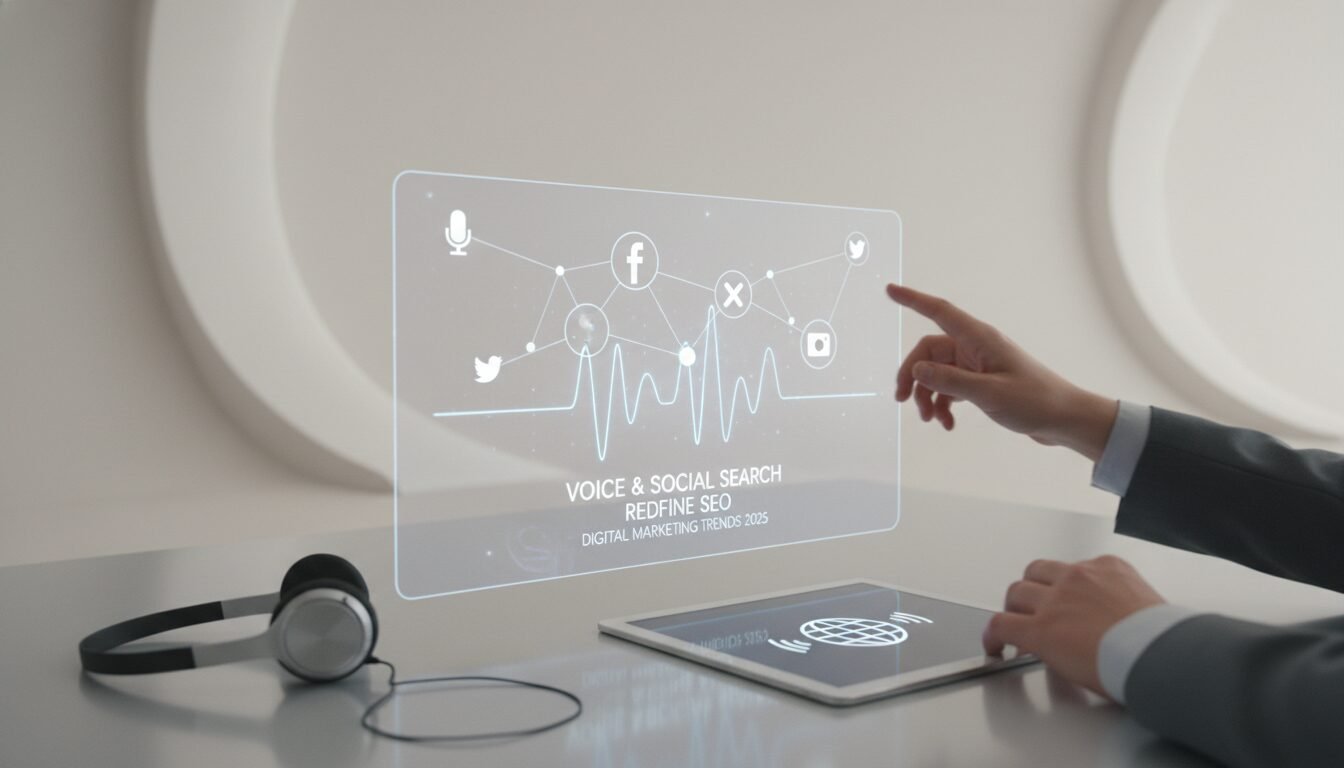
The way consumers find information is shifting. Traditional search engines still matter, but voice queries and social platforms are stealing significant share. Voice search optimization is no longer optional, voice search already accounts for nearly 50% of online queries, according to Faster Solutions.
Meanwhile, social search is gaining ground. Platforms like TikTok, Instagram, and Pinterest serve as discovery engines, especially for Gen Z. In fact, 29% of consumers find new brands via social media ads, and 52% still use search engines for brand research (GWI). Smart marketers optimize content for both traditional and emerging search behaviors that define digital marketing trends 2025.
Generative Engine Optimization (GEO)
Generative engine optimization (GEO) is the practice of structuring content so that AI-powered answer engines like ChatGPT, Google’s AI Overviews, and Perplexity cite your information. This involves using clear, definitional statements, structured data, and authoritative sourcing. GEO is a natural extension of SEO that focuses on being the source of truth for AI-generated responses.
Platform Showdown: BlueSky vs. Threads vs. X
| Platform | Monthly Active Users | Key Features | Ad Opportunities | Best For |
|---|---|---|---|---|
| X (formerly Twitter) | ~370 million | Real-time news, long-form posts, communities | Advanced ad platform with multiple formats | News-driven brands, B2B engagement |
| Threads | 275 million | Text-first discussions, fediverse integration, customizable feeds | No ads yet; future monetization planned | Organic community building, educational content |
| BlueSky | 24 million | Ad-free decentralized protocol, niche communities, chronological feed | No ads; ad-free experience prized by users | Niche audiences, content control, journalists |
Data sourced from Digital Marketing Institute analysis. Brands must evaluate where their audience is most active now; while X retains a large user base, Threads’ rapid growth and BlueSky’s ad-free environment offer unique, uncluttered engagement channels.
Personalization at Scale Drives Growth
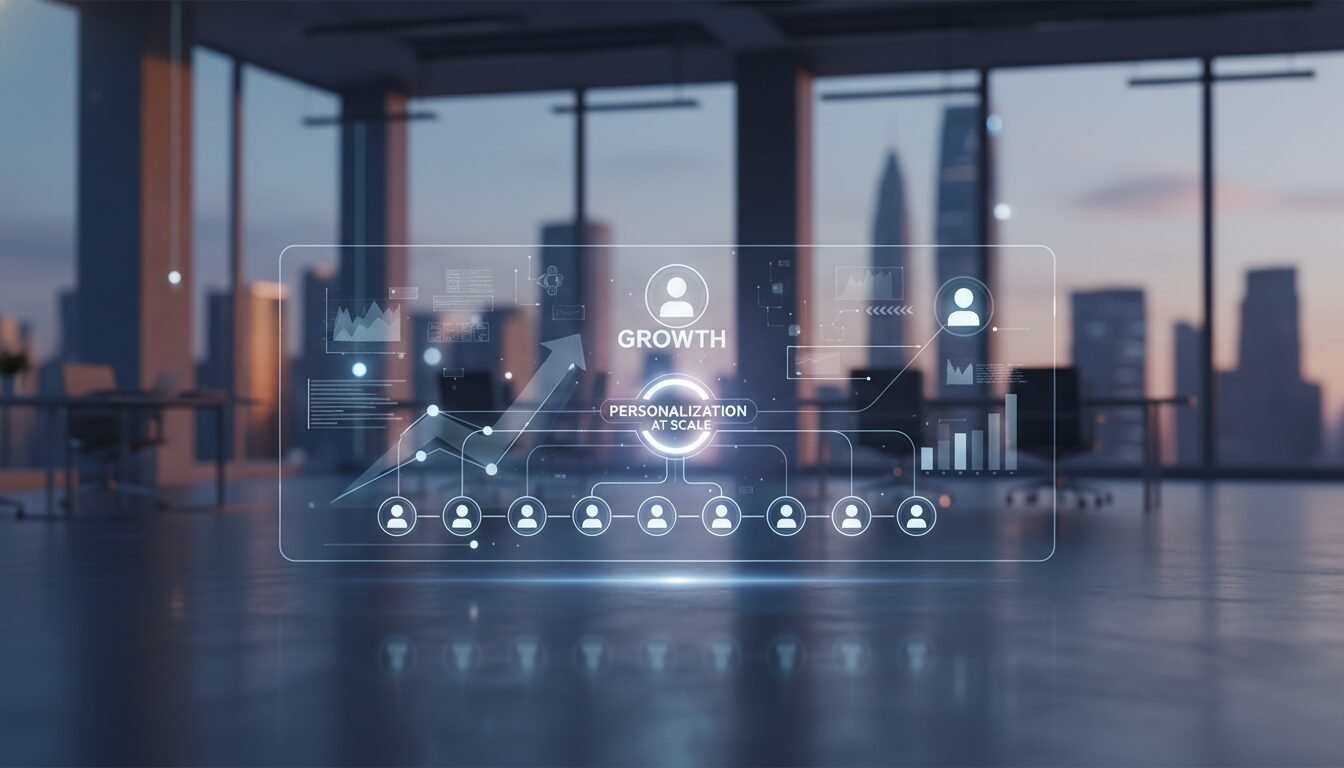
Personalization is no longer a nice-to-have, it directly impacts revenue. Deloitte’s research reveals that 75% of consumers are more likely to purchase from brands that deliver personalized content, and 48% of personalization leaders exceed their revenue goals. To achieve this at scale, marketers are turning to first-party data strategies that align with digital marketing trends 2025.
“Brands that excel in personalization are soaring past their revenue goals because their customers buy more, more often, and remain loyal over time.” , Deloitte Digital
First-Party Data and Privacy Compliance
With Google’s plan to phase out third-party cookies delayed but not abandoned, collecting first-party data ethically becomes critical. First-party data, information provided willingly by customers through website interactions, purchases, and surveys, powers accurate segmentation without privacy risks. Companies that invested early in first-party strategies report higher ROI because they can deliver relevant experiences without relying on intrusive tracking.
How to Implement a Personalization Strategy
- Audit your data sources. Inventory all customer touchpoints (website, email, social, in-store) and the types of data collected.
- Unify customer profiles. Use a customer data platform (CDP) to merge fragmented data into single, actionable profiles.
- Segment based on behavior. Move beyond demographics to behavioral segments, purchase history, content engagement, browsing patterns.
- Deploy AI for content recommendations. Use machine learning to serve personalized product recommendations, emails, and website experiences.
- Test and iterate. Continuously A/B test personalized elements and measure impact on conversion rates, average order value, and customer lifetime value.
This step-by-step process helps brands turn digital marketing trends 2025 from abstract concepts into measurable growth.
Video Content and the Rise of Gen Alpha
Video remains the dominant content format, but nuances are shifting. Short-form video (TikTok, Reels, Shorts) still captures attention, but long-form video is making a comeback with younger audiences. Gen Z are 17% more likely than the average person to watch long-form videos, according to GWI. This creates opportunities for deep-dive educational content, documentaries, and branded series.
Understanding Gen Alpha
Gen Alpha, the generation born after 2010, is the first truly digitally native cohort. They interact with content through voice assistants, augmented reality (AR), and interactive apps. To reach them, marketers must develop content that is immersive, bite-sized, and educational. AR ads, for example, let users virtually try on products or visualize items in their space, turning passive viewers into active participants.
Augmented Reality Ads Go Mainstream
AR advertising is moving from novelty to utility. Brands like IKEA and Sephora have pioneered virtual try-ons; in 2025, smaller businesses can access AR tools through platforms like Snapchat and Meta Spark. These ads boost engagement rates significantly compared to static formats, making them a key component of future digital marketing strategies.
Influencer Marketing Shifts to Authenticity
Influencer marketing continues to grow, but the focus has changed. Micro-influencers, content creators with 10,000 to 100,000 followers, are outperforming mega-celebrities in driving engagement and trust. According to the IAB Spain 2025 Digital Media Advertising Investment Study, influencer marketing investment grew 59% in Spain in 2024, reaching €125.9 million. This growth is fueled by the perceived authenticity of niche creators.
Why Audiences Prefer Micro-Influencers
Followers view micro-influencers as more relatable and knowledgeable about their specific topics. Their recommendations feel like advice from a friend rather than a paid endorsement. Brands are expanding partnerships to include dozens of micro-influencers instead of one celebrity, diversifying reach and reducing risk. Platforms like TikTok and Instagram Reels are the primary channels for these collaborations.
Measuring Influencer ROI
To justify spend, marketers use trackable links, unique promo codes, and social listening tools. Engagement rate, not just follower count, is the key metric. A small creator with a 5% engagement rate can deliver more conversions than a celebrity with 0.5%.
Employee-Generated Content Builds Trust
Employee-generated content (EGC) is content created by employees that showcases company culture, expertise, or behind-the-scenes moments. It is authentic by nature and resonates strongly with audiences. EGC boosts brand trust because 51% of consumers promote their favorite brands online when they perceive high-quality products and genuine company values (GWI).
Why EGC Outperforms Brand Content
People trust individuals more than corporations. An engineer sharing a technical tip on LinkedIn or a barista posting a latte art video on TikTok humanizes the brand. EGC also expands organic reach through employees’ personal networks, often at zero media cost. Companies like Adobe and Starbucks have formalized employee advocacy programs that encourage, but don’t force, content creation.
Getting Started with Employee Advocacy
To launch an EGC initiative, create a simple guideline document covering dos and don’ts, brand voice, and content ideas. Use an internal platform to share approved assets and track participation. Recognize top contributors publicly, this fuels momentum and builds a culture of advocacy.
Sustainability and Ethical Marketing Become Imperatives
Consumers increasingly vote with their wallets. 57% of consumers are willing to pay more for sustainable products, according to GWI. Digital marketing must reflect genuine environmental and social commitments, not just greenwashing. Brands that transparently report on sustainability efforts and tie them to marketing messages see higher loyalty and advocacy.
Communicating Sustainability Without Greenwashing
Greenwashing, making misleading claims about environmental practices, can backfire. Instead, back up claims with third-party certifications, share progress reports, and invite customer participation in sustainability programs. Use digital channels to tell authentic stories about sourcing, manufacturing, and community impact.
Aligning Values with Content
Ethical marketing extends to data privacy, inclusive representation, and fair labor practices. Consumers, especially Gen Z and Millennials, will abandon brands that violate their values. Therefore, integrate ethical considerations into every campaign, from the influencers you partner with to the ad placements you choose.
Pros and Cons
Pros
- AI automation reduces manual workload and improves campaign efficiency
- Voice search optimization captures growing mobile and smart speaker usage
- Personalization drives measurable revenue growth and customer loyalty
- Micro-influencers provide authentic engagement at lower costs than celebrities
- First-party data strategies improve privacy compliance while maintaining targeting accuracy
Cons
- AI tools require significant training and oversight to maintain brand voice quality
- Voice search optimization demands new content formats and keyword strategies
- Personalization at scale requires substantial technology investment and data management
- Managing multiple micro-influencer relationships is time-intensive compared to single celebrity partnerships
- First-party data collection may initially reduce audience reach compared to third-party targeting
How to Build a Future-Ready Marketing Strategy
With so many shifts happening, marketers need a practical framework to stay agile. Follow this step-by-step approach to future-proof your strategy around digital marketing trends 2025:
- Audit current capabilities. Assess your team’s proficiency in AI tools, data analytics, and content formats. Identify gaps in skills or technology.
- Invest in AI literacy. Provide training on generative AI tools and teach team members how to prompt effectively and review output critically.
- Diversify content formats. Develop a content plan that spans short-form video, long-form educational pieces, AR experiences, and GEO-optimized articles.
- Strengthen first-party data collection. Launch loyalty programs, gated content, and interactive tools that encourage users to share information voluntarily.
- Embrace an omnichannel mindset. Deliver consistent personalized experiences across web, social, email, and emerging platforms like AR and voice assistants.
- Measure what matters. Shift from vanity metrics (likes, followers) to engagement rates, conversion rates, and customer lifetime value. Use attribution models that account for multi-touch journeys.
By embedding these steps into your planning, you can convert digital marketing trends 2025 from abstract concepts into concrete growth.
Social Commerce Integration
Social commerce, the ability to purchase directly within social media platforms, is transforming how consumers shop. Platforms like Instagram Shopping, TikTok Shop, and Facebook Marketplace allow users to discover and buy products without leaving their social feeds. This seamless experience reduces friction and capitalizes on impulse purchasing behavior.
Brands implementing social commerce see higher conversion rates because they meet customers where they already spend time. The key is creating shoppable content that feels native to each platform rather than overtly promotional.
Conclusion: Staying Agile in Digital Marketing Trends 2025
Digital marketing trends 2025 highlight a clear imperative: blend technology with humanity. AI and automation free up time for creative, strategic work; authentic content from employees and micro-influencers builds trust; personalization at scale deepens customer relationships; and ethical practices ensure long-term viability. The brands that will thrive are those that experiment relentlessly, measure rigorously, and never lose sight of the real needs behind the data.
Book a free demo at digimeapp.com to see how AI can transform your practice.
Frequently Asked Questions
What are the top digital marketing trends 2025?
The top trends include AI-driven automation, voice and social search optimization, hyper-personalization, micro-influencer marketing, employee-generated content, and a focus on first-party data privacy. These trends emphasize authentic engagement and technology-driven efficiency.
How is AI changing digital marketing in 2025?
AI powers predictive analytics, content generation, chatbots, and real-time campaign optimization. It enables hyper-personalization and frees marketers to focus on strategy and creative work while automating routine tasks.
Why is voice search optimization important?
Voice search accounts for nearly 50% of online queries, requiring content that answers conversational, long-tail questions naturally to appear in voice assistant results. This shift demands new SEO strategies focused on natural language.
What is employee-generated content (EGC)?
EGC is content created by employees, such as behind-the-scenes photos, expert tips, or company culture videos. It builds authenticity and trust, as audiences perceive it as more genuine than branded posts.
How can marketers use first-party data effectively?
Marketers collect first-party data through website interactions, email sign-ups, and purchase history, then use it to segment audiences and deliver personalized experiences without violating privacy regulations. This approach improves both targeting accuracy and compliance.