Faceless digital marketing is a strategy where brands promote products and services without relying on a recognizable face or personal identity. It uses value-driven content, automation, and anonymous branding to build audiences and generate revenue. You never need to appear on camera.
Key Takeaways
- Faceless digital marketing builds brands through content and automation, without needing a personal spokesperson or on-camera presence.
- Creators have reported earning $3,000 in three months and six-figure incomes using structured faceless systems.
- With tools like Canva and LTX Studio, production time can drop from weeks to hours, cutting costs dramatically.
- Popular niches include personal finance, AI tools, travel inspiration, home decor, and digital product reviews.
- Success depends on strategic content, consistency, and genuine value delivery, not personal fame.
What Is Faceless Digital Marketing and Why It’s Growing

Defining the Approach
Faceless digital marketing removes the founder from the spotlight entirely. Instead of building a personal brand around your face and story, you build around a topic, a niche, or a problem you solve. From text-based reels and screen recordings to AI-generated visuals, the content itself becomes the identity of the business.
This approach resonates strongly with privacy-conscious entrepreneurs, introverts, and anyone who wants to keep their personal life separate from their business. By focusing on messaging and visual storytelling, faceless digital marketing removes the pressure of being on camera while still building a recognizable brand.
The Trend in Numbers
The rise of faceless digital marketing reflects a broader shift in how content is created and consumed. Content-first platforms like Instagram Reels and TikTok together reach billions of monthly active users, and a growing share of top-performing accounts on both platforms never show a human face. E-commerce marketplaces like Amazon and Etsy have long operated on this model, where sellers build profitable stores without any personal branding at all.
Digital products including e-books, templates, and online courses have accelerated this further. You can build a complete revenue system around a niche topic without ever attaching your name or face to it.
“The most durable online brands are often built around a topic, not a person. When the content is the brand, you can scale without limits.” DigiMe Content Strategy Team
Pros and Cons of Faceless Digital Marketing
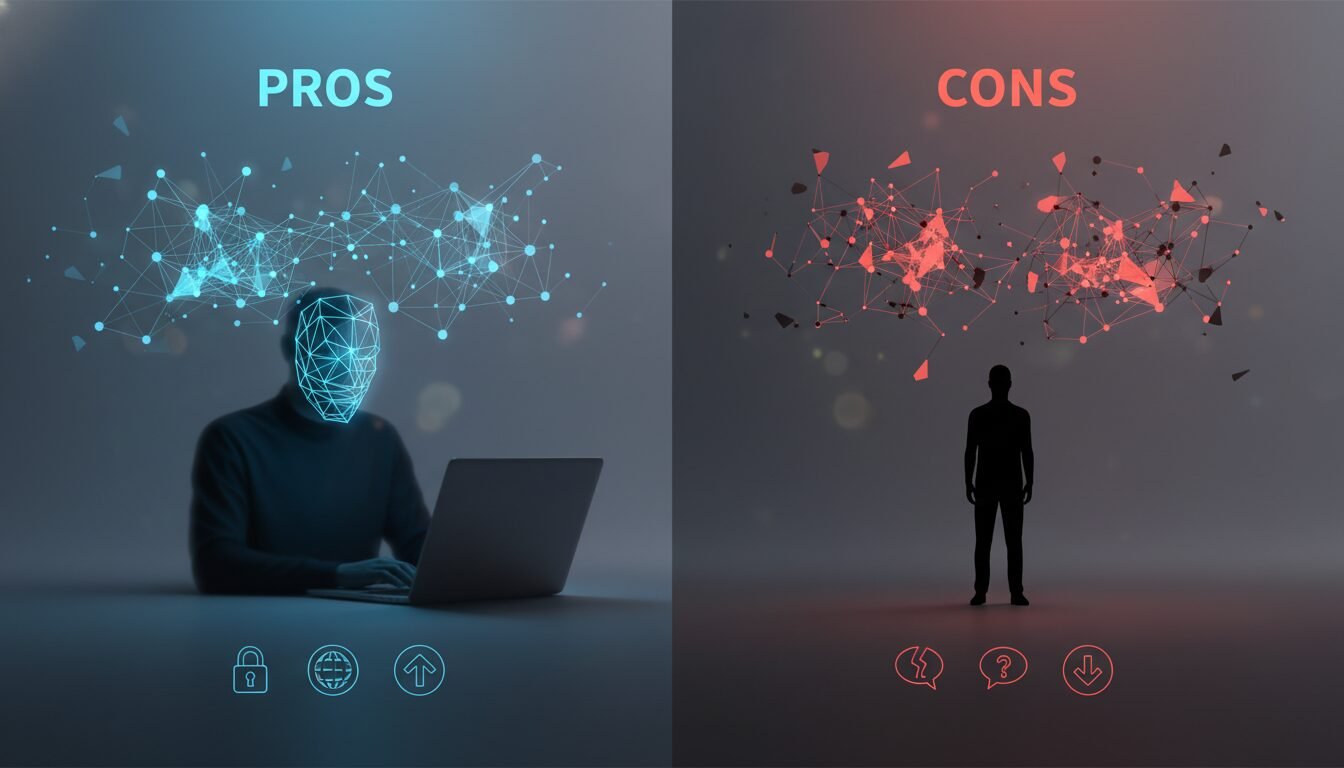
Pros
- Complete privacy: You control exactly how much of your identity is public, protecting you from personal scrutiny and the exhaustion of influencer culture.
- Lower production costs: No cameras, lighting rigs, or studio space required. Many creators launch with under $100 using free tools like Canva and CapCut.
- Faster content production: AI tools like LTX Studio can turn a script into a polished video in hours rather than weeks.
- Scalability: Because the brand does not depend on one person, multiple team members or freelancers can contribute under the same brand voice.
- Platform flexibility: The same content can be repurposed across Instagram, TikTok, YouTube Shorts, and Pinterest with minimal adaptation.
Cons
- Slower trust-building: Without a face or personal story, building audience trust takes longer and requires more consistent value delivery.
- Harder to stand out in saturated niches: When everyone is faceless, differentiation comes down to content quality and niche specificity.
- AI content risks generic output: Over-relying on AI tools without adding a distinct brand voice can make content feel interchangeable.
- Limited for relationship-driven industries: Coaching, consulting, and high-ticket services often require a personal connection that faceless brands struggle to create.
Key Benefits of Faceless Digital Marketing

Complete Privacy and Autonomy
Privacy is the most immediate benefit. You control how much of your identity is public, which protects you from personal scrutiny, harassment, or simply the exhaustion of being an influencer. Faceless creators can run their businesses quietly, often from anywhere in the world, without needing to be constantly camera-ready.
Some of the largest faceless digital marketing accounts operate entirely anonymously, with the founder’s name never mentioned. This model is especially common in niches like personal finance, health tips, and digital product stores, where the expertise matters far more than the expert’s face.
Reduced Production Costs and Time
Creating content without a face dramatically cuts production overhead. There’s no need for professional cameras, lighting equipment, makeup, or studio space. Many faceless marketers produce high-quality content using just a smartphone and free tools like Canva, Descript, and InVideo. A faceless video can go from script to published in hours rather than the days or weeks a traditional personal-brand shoot requires.
This efficiency translates directly to cost savings. While a personal-brand video might require a budget of $500 to $5,000 for equipment and editing, a faceless campaign can launch with as little as $100 using free or low-cost tools.
Unmatched Scalability
Because the brand does not depend on one individual, it can scale without a bottleneck. Multiple team members or freelancers can create content, manage ads, and engage audiences under the same anonymous brand voice. This is a key reason faceless digital marketing is favored by dropshipping stores, niche blogs, and digital product shops on Shopify and Etsy.
Faceless brands can also repurpose content across platforms with minimal adaptation, multiplying reach without multiplying effort. An Instagram Reel can be reposted to TikTok and YouTube Shorts in minutes, extending the same piece of content to entirely new audiences.
Faceless vs. Traditional Marketing: A Side-by-Side Comparison
Knowing when to use faceless digital marketing starts with understanding how it differs from traditional personal-brand marketing. The table below breaks down the key differences.
| Feature | Faceless Digital Marketing | Traditional Personal Branding |
|---|---|---|
| Content Focus | Value-driven, educational, or entertainment without a host | Personality-driven; relies on the face, voice, and story of the founder |
| Privacy | Complete anonymity possible | Very low personal life often becomes public |
| Startup Costs | Can start with under $100 using free tools | Often requires $500 to $5,000 for branding, equipment, and editing |
| Scalability | Highly scalable; brand can be managed by multiple people | Limited; growth is tied to the individual’s time and energy |
| Speed of Production | Content can go from idea to publishing in under 24 hours | Often takes days or weeks due to filming and editing requirements |
| Trust Building | Based on consistent value, aesthetics, and authority signals | Built on personal likability and relatability |
Personal branding excels in industries that thrive on connection and relatability, like coaching or consulting. Faceless digital marketing is the stronger choice for digital products, affiliate marketing, and niche content sites where the information is the hero.
How to Start Faceless Digital Marketing in 5 Steps
Step 1: Choose a Profitable Niche
Start by selecting a niche that does not require your face. Popular faceless niches include personal finance, productivity, AI tools, travel inspiration, home decor, DIY projects, and digital product reviews. Niche specificity matters more than broad appeal. A channel focused on “budgeting for freelancers” will outperform a generic “money tips” account because it speaks directly to a defined audience. Faceless YouTube channels in focused niches can earn $1,000 or more per month with consistent output, based on creator-reported income data.
Step 2: Set Up Anonymous Social Profiles
Create accounts on platforms like Instagram, TikTok, and Pinterest using a brand name rather than your own. Your username, bio, and avatar should be brand-aligned and free of personal details. Use a consistent color palette and logo to build visual recognition without a face. On YouTube, a well-designed channel banner and a clear value proposition in your channel description can do the same work a personal introduction video would do for a traditional creator.
Step 3: Build a Content Calendar Around Value
Plan content that answers your audience’s questions, solves real problems, or inspires action. In the personal finance niche, for example, you could create text-based reels explaining budgeting tips or screen-record tutorials on using a specific app. Batch-create 2 to 4 weeks of content in one sitting. This approach dramatically reduces daily workload and keeps your posting schedule consistent, which platform algorithms reward.
Step 4: Produce Faceless Content Efficiently
Use Canva for graphics and carousels, LTX Studio for AI-generated video clips, and Descript or InVideo for script-to-video production. LTX Studio can turn a script into a professional video with consistent characters in hours rather than weeks, as detailed by the LTX Studio team. Combine stock footage from Pexels, text overlays, and voiceovers to create engaging content that never shows a face.
“AI tools like LTX Studio enable professional faceless video content in hours instead of weeks, with character consistency and cinematic quality.” LTX Studio Blog
Step 5: Monetize with Digital Products
Once you have an engaged audience, sell digital products like e-books, templates, or PLR (Private Label Rights) content. PLR is an industry licensing standard that lets you rebrand and resell a product as your own. Top faceless sellers have generated over 100,000 digital product sales, as shared by a six-figure creator on the Faceless Marketing Made Easy podcast. Start with an affordable entry point, like a $7 guide, and scale to higher-ticket bundles as your audience grows.
Best Platforms and Tools for Faceless Content
Social Media Platforms
Not all platforms work equally well for faceless digital marketing. Instagram Reels and TikTok dominate short-form video and offer strong organic reach for new accounts. Pinterest and YouTube function as long-term search engines for visual content, meaning a single well-optimized post can drive traffic for months or years. For written content, Medium and a faceless LinkedIn company page can drive substantial referral traffic to your digital products or affiliate links.
YouTube RPM and Channel Analytics
YouTube deserves special attention for faceless digital marketing because of its RPM (Revenue Per Mille) potential. RPM is the amount a creator earns per 1,000 video views after YouTube takes its share. In high-value niches like personal finance, software reviews, and business tools, RPM rates can reach $10 to $30 or more per 1,000 views, according to creator economy benchmarks. A faceless channel in one of these niches with 100,000 monthly views can generate meaningful ad revenue on top of affiliate and product income. YouTube Studio analytics let you track audience retention, click-through rates, and revenue per video, giving you the data to double down on what works without ever appearing on screen.
Content Creation Tools
The right tools eliminate the need for expensive software or design skills. Canva remains the standard for text-based reels and carousels. For video, Descript and InVideo simplify editing and script-to-video production. LTX Studio takes it further by generating AI-driven, fully animated scenes that can pass for high-production ads. CapCut is a strong free option for mobile-first creators. According to the LTX Studio blog, these tools reduce video creation time from several weeks to just a few hours, making it realistic to publish daily without burning out.
Niche-Specific Account Ideas to Get Started
Choosing the right niche is often the hardest part of starting a faceless digital marketing business. Here are proven account types that work well without a personal presence.
- Travel inspiration: Post destination photos, packing lists, and itinerary guides. Monetize through affiliate links to booking platforms and travel gear.
- Home decor and interior design: Curate aesthetic room setups, product roundups, and DIY transformation content. Strong fit for Pinterest and Instagram Reels.
- DIY and crafts: Screen-record or use stock footage of project tutorials. Monetize through digital patterns, templates, or affiliate links to craft supplies.
- Personal finance: Text-based reels explaining budgeting, investing basics, or side hustle ideas. High RPM on YouTube and strong affiliate potential with financial products.
- AI tools and productivity: Review and demonstrate software tools using screen recordings. One of the fastest-growing faceless niches as of 2026, with strong affiliate commissions from SaaS products.
- Digital product stores: Sell Canva templates, Notion dashboards, or printable planners on Etsy or Gumroad without any personal branding.
Common Pitfalls and How to Overcome Them
Inconsistent Content Strategy
Many beginners post randomly and lose momentum fast. Without a clear roadmap, faceless digital marketing efforts stall before they gain traction. Creator-reported data consistently shows that those who operate without a structured system often go months without meaningful revenue, while those who follow a proven posting and monetization framework can start earning within their first quarter. The fix is simple: batch-create content weekly and commit to a posting schedule of at least 3 to 4 times per week.
Overreliance on AI Without a Human Touch
Tools like LTX Studio and ChatGPT accelerate content creation, but audiences still respond to authenticity. AI-generated scripts and visuals need editing to add a distinct brand voice and real insight. The most successful faceless accounts blend AI efficiency with strategic storytelling. A creator who generated over 100,000 digital product sales and a six-figure business, as shared on the Faceless Marketing Made Easy podcast, did so by treating AI as a production assistant rather than a replacement for strategy. Always review automated content to ensure it reflects your niche and avoids a generic feel.
Frequently Asked Questions
Is faceless digital marketing profitable?
Yes, with the right strategy, many creators earn a full-time income. Real examples include a creator who made $3,000 in three months after implementing a structured system and another who achieved six figures and over 100,000 digital product sales. Income varies based on niche, consistency, and monetization method.
What are some faceless digital marketing examples?
Common examples include aesthetic text-based Reels on Instagram, screen-recorded software tutorials, stock footage narration on YouTube, and niche quote pages. A travel inspiration account might post destination photos with tips and affiliate links, never revealing the creator’s identity.
Do I need a course to start faceless digital marketing?
No, but a structured system can speed up results significantly. One creator reported earning nothing for six months without a roadmap, then $3,000 in three months after implementing a strategic framework. Free resources exist, but paid courses often provide ready-to-use templates and step-by-step workflows.
How much money can you make with faceless digital marketing?
Incomes vary widely. Entry-level creators might earn $100 to $500 per month within the first 3 to 6 months. More established accounts can reach $1,000 to $10,000 or more monthly through digital product sales, affiliate commissions, and ad revenue. The top tier has reached six-figure annual incomes through consistent systems and strong niche positioning.
What tools do I need for faceless content?
Essential free tools include Canva for graphics, CapCut or InVideo for video editing, and Pexels for stock footage. For advanced AI animation and video generation, LTX Studio and Descript are popular choices. A smartphone and a consistent content planning system round out the toolkit.
Is faceless digital marketing a scam?
No, it is a legitimate marketing strategy used by major brands and small businesses alike. Like any online business, success requires real work, patience, and a genuine value proposition. Programs that promise overnight riches without effort should be approached with caution.
Faceless digital marketing has leveled the playing field for anyone wanting to build an online business without sacrificing privacy or enduring the pressure of personal branding. With the right mix of strategic content, efficient tools, and clear monetization, it’s possible to earn significant income while remaining completely anonymous. Whether you start with a simple Instagram page or an AI-powered YouTube channel, the opportunity is real and growing fast.
Ready to see how AI-powered content systems can work for your business? Book a free demo at digimeapp.com to see how AI can transform your practice.