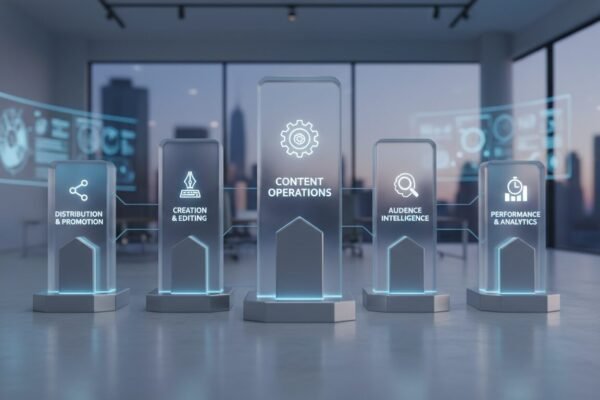
Digital marketing agencies help businesses grow online through SEO, paid ads, and content strategies. The best partners combine proven expertise with transparent reporting to deliver measurable results.
Key Takeaways
- Digital marketing agencies specialize in services like SEO, PPC, social media, and content marketing to help businesses grow online.
- The most effective agencies demonstrate clear ROI with verified case studies and transparent reporting, not just promises.
- In 2026, top agencies are incorporating AI-powered search optimization and maintaining strict data ownership practices.
- Choosing the right partner requires evaluating industry expertise, client reviews, pricing models, and cultural fit.
- According to Clutch and GoodFirms, thousands of agencies are available nationwide, making a structured selection process essential.
What Are Digital Marketing Agencies?

A digital marketing agency is a company that manages online marketing campaigns and strategies for businesses looking to expand their digital reach. These agencies offer services including search engine optimization (SEO), pay-per-click advertising (PPC), social media management, content creation, and web design. By partnering with specialists, companies access advanced tools, talent, and data insights that would be expensive to build internally.
The Role of Modern Marketing Partners
Today’s digital marketing agencies function as strategic partners that develop and execute comprehensive internet marketing plans. They bridge the gap between business goals and the technical complexity of platforms like Google Ads, Meta, and TikTok. According to Clutch, Georgia alone hosts over 1,256 such agencies as of 2026, reflecting strong demand for specialized online marketing expertise.
These agencies handle everything from keyword research to conversion rate optimization, freeing internal teams to focus on core business functions. A well-chosen agency provides execution plus strategic consulting, using analytics to refine campaigns continuously.
Types of Marketing Agencies
Not all digital marketing agencies are the same. They vary in size, specialization, and service scope:
- Full-service agencies offer a complete suite of services, from web development to public relations.
- Specialized boutiques focus on one area, such as SEO, social media, or paid media.
- Industry-specific agencies cater to niches like healthcare, e-commerce, or B2B.
- AI-driven agencies use artificial intelligence for predictive analytics and automated campaign management.
Why the Definition Matters
Understanding what a digital marketing agency is and the different models available helps businesses align expectations and budget. A full-service firm may excel at integrated campaigns, while a niche shop can deliver deeper expertise in a single channel. Matching the right agency type to your needs is the first step in a successful partnership.
Why Businesses Partner with Marketing Agencies
Companies choose to outsource their digital marketing for several practical reasons. Access to advanced technology, specialized talent, and performance accountability are the most common drivers. Instead of hiring and training a full internal team, businesses can scale efforts through an agency that already has proven systems in place.
Cost Efficiency and Scalability
Hiring an agency often costs less than building an internal department once you factor in salaries, benefits, software, and training. Agencies spread overhead across multiple clients, allowing smaller businesses to access enterprise-level tools. For example, a midsize company can run sophisticated paid search campaigns through an agency without purchasing licenses for platforms like SEMrush or Ahrefs. As your needs grow, an agency can quickly scale activities, increasing monthly ad spend or adding new service lines without a lengthy hiring process.
Access to Specialized Skills and Technology
Digital marketing agencies employ professionals dedicated to specific channels. A Google Ads specialist, an SEO auditor, a content strategist, and a social media manager work together under one roof. Each stays current on algorithm changes and platform updates. According to the GoodFirms directory, over 12,744 digital marketing companies are listed in the U.S., indicating a vast pool of expertise across disciplines. Agencies also invest in tools like marketing automation platforms, heat mapping software, and AI-driven analytics that provide a competitive edge.
Accountability Through Data and Reporting
Top agencies back their strategies with measurable outcomes. Instead of vague promises, they present concrete metrics like organic traffic growth, conversion rate improvements, and revenue lift. This data-centric approach makes agencies accountable partners, not just vendors.
Core Services Provided by These Agencies
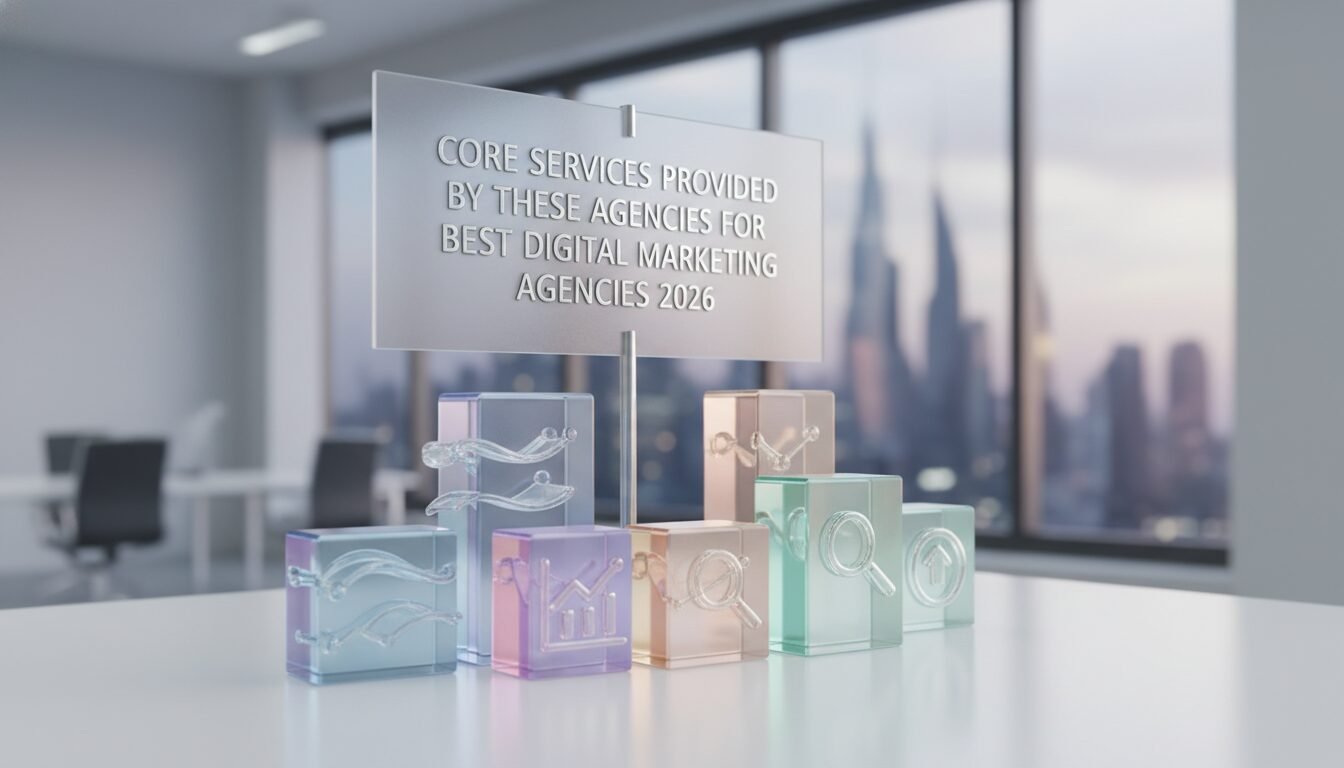
While each agency has a unique service mix, certain core offerings are standard across the industry. Understanding these helps you evaluate whether an agency can meet your specific needs.
Search Engine Optimization (SEO) and New AEO Strategies
SEO remains a foundational service. It includes on-page optimization, link building, technical audits, and content creation to improve organic rankings. In 2026, a new layer has emerged: Answer Engine Optimization (AEO). This practice optimizes content for AI-powered search experiences like ChatGPT, Google’s AI Overviews, and voice assistants. Agencies now combine traditional SEO with AEO to help brands become the direct answer to a user’s query, not just a search result. This dual approach is vital as generative AI increasingly influences consumer discovery.
Pay-Per-Click (PPC) and Paid Social Advertising
PPC management is another staple. Agencies create and optimize ad campaigns on Google, Bing, and social platforms. They handle keyword selection, ad copy testing, bidding strategies, and conversion tracking. Advanced shops use programmatic advertising and AI-based bid adjustments to maximize return on ad spend. Paid social campaigns on Meta, LinkedIn, and TikTok are also common, targeting precise audience segments with creative, video-first ads.
Content Marketing and Video Production
Content fuels both SEO and social media. Agencies produce blog posts, white papers, infographics, e-books, and high-quality video. Video production has become especially critical; a well-crafted explainer video or product demo can significantly boost engagement. Some agencies maintain internal video teams, while others partner with production studios.
Evaluating and Selecting the Right Agency

Choosing the right agency from thousands of options requires a structured, criteria-based approach. A rushed decision can lead to wasted budget, misaligned strategies, and data loss. The following process helps reduce risk and ensures a strong partnership.
Step 1: Define Your Marketing Goals and KPIs
Before contacting any agency, clarify what you need to achieve. Is the primary goal to increase website traffic, generate leads, boost e-commerce sales, or rebuild brand reputation? Set specific, measurable KPIs: a 30% increase in organic sessions in 6 months, a 20% reduction in cost per lead, etc. Having concrete goals allows you to filter agencies with relevant case studies and expertise.
Step 2: Evaluate Agency Experience and Industry Fit
Look for agencies that have worked in your industry or with similar business models. A B2B SaaS company has different marketing needs than a local restaurant chain. Review their portfolio and case studies. Pay attention to the metrics they highlight. Did they help a client achieve a 240% revenue increase over two years, as ScaledOn did for one of their Amazon clients (reported on Clutch)? Such specific, verifiable results are more meaningful than broad claims of “growth.”
Step 3: Scrutinize Reviews and References
Platforms like Clutch, GoodFirms, and Agency Spotter host verified reviews. Look for patterns in feedback: do multiple clients mention timely communication, deep data analysis, or proactive strategy adjustments? However, also note any critical reviews, an agency where a significant portion of clients cite execution or communication issues deserves further investigation. Request references and ask direct questions about reliability and results.
Step 4: Assess Their Technical and Data Capabilities
A modern agency must be proficient with data analytics, marketing automation, and AI tools. Ask how they track attribution, manage data compliance, and ensure data ownership. A critical point raised by Improvado is that businesses should secure all marketing data accumulated over the years by storing and centralizing it on their own end. If your agency holds the data exclusively, you risk losing it when the partnership ends. Ensure they agree to transparent data portability.
Step 5: Understand Pricing and Contract Structures
Agency pricing models vary widely. Common structures include monthly retainers, project-based fees, performance-based (a percentage of ad spend or revenue), and hourly rates. Minimum budgets can range from $1,000 to $50,000 per month depending on the scope. For example, on Clutch, agencies like Intero Digital list a minimum of $1,000, while Hotspex Media requires $50,000+. Clarify what is included, how often reports are delivered, and the terms for termination. Avoid long-term lock-ins without a trial period.
Spotlight: Top Digital Marketing Agencies in 2026
Comparing leading agencies based on verified third-party data provides a clearer picture of the market. The table below highlights several top-ranked digital marketing agencies as profiled on Clutch and other platforms, focusing on those with strong review volumes and transparent pricing.
| Agency Name | Clutch Rating | Min. Budget (per project) | Key Services | Number of Reviews |
|---|---|---|---|---|
| Codedesign | 4.8 | $5,000+ | PPC, SEO, Demand Gen | 38 |
| Intero Digital | 4.8 | $1,000+ | SEO (70%), PPC (30%) | 147 |
| ScaledOn | 5.0 | $1,000+ | Amazon Mgmt, PPC, SEO | 12 |
| Hotspex Media | 4.9 | $50,000+ | Media Buying, PPC, Social | 16 |
| Acadia | 4.8 | $5,000+ | Ecommerce, PPC, SEO | 27 |
Data sourced from Clutch as of 2026. Ratings and budget information are subject to change. Agencies are selected based on review frequency, service fit, and verified profile completeness.
What Makes These Agencies Stand Out
Beyond the numbers, these digital marketing agencies share common traits: a high volume of verified, detailed client feedback; clear service descriptions; multi-industry experience; and transparent budget ranges. For instance, Codedesign’s clients consistently highlight strategic insights and timely delivery, while ScaledOn claims a 100% on-time rating and a 240% revenue increase for one long-term client. Such specifics allow you to benchmark your own expectations.
Regional vs. National: Does Location Matter?
While the agencies above serve Georgia, many offer remote services nationwide. In 2026, video conferencing and cloud-based collaboration tools make physical proximity less critical. However, certain industries (like local retail) may still benefit from an agency that understands regional market dynamics. When evaluating top digital marketing agencies, prioritize industry expertise and communication style over zip code.
Agency Pricing: What to Expect
Budget planning is a major factor in the agency selection process. Pricing transparency varies, but industry benchmarks can help you avoid overpaying or underestimating costs.
Common Pricing Models Explained
- Monthly Retainer: A fixed monthly fee for ongoing services (e.g., $3,000–$15,000). Best for continuous needs like SEO and social media management.
- Project-Based: A one-time fee for a specific deliverable, such as a website redesign. Costs can range from $5,000 to $50,000+.
- Performance/Commission: Agency earns a percentage of ad spend (10-20%) or a share of revenue generated. Aligns incentives but requires careful tracking.
- Hourly: Rates commonly range from $100 to $200 per hour for strategic work. Often used for consulting or ad hoc tasks.
What Influences the Cost?
Agency size, location, and specialization heavily influence fees. A boutique SEO firm may charge $5,000/month, while a large full-service agency in a major city might start at $20,000. The complexity of your campaign, international SEO, multi-language content, heavy video production, also raises costs. Always request a detailed scope of work itemizing deliverables, hours, and expected outcomes.
Hidden Costs and Contract Traps
Look out for long-term contracts with auto-renewals, vague scope definitions, and extra charges for tools or reporting dashboards. Some agencies mark up ad spend by 15-30% without disclosing it. Negotiate a 30-day out clause and require a data export agreement to protect your information if you switch providers.
Industry Trends and the Future of Marketing Agencies
The digital marketing agencies landscape is evolving rapidly, driven by AI, privacy regulations, and changing consumer behavior. Staying aware of these shifts helps you choose a forward-thinking partner.
AI and Automation Reshaping Service Delivery
AI tools are now embedded in nearly every service area. Agencies use generative AI for ad copy and content drafts, predictive analytics for media buying, and machine learning for SEO trend analysis. The top agencies don’t just use AI; they understand its limitations and maintain human oversight for strategy and creativity. According to a recent analysis by NoGood, agencies that successfully integrate AI into their workflows see faster campaign iteration and tighter optimization, but only when paired with robust data hygiene.
The Rise of Answer Engine and Voice Optimization
As noted earlier, AEO is no longer optional. With millions using voice assistants and AI chatbots for search, agencies must adapt content to be the answer, not just a link. This requires new skill sets in structured data, conversational keyword research, and entity-based content modeling. Expect more digital marketing agencies to add AEO as a standalone service by the end of 2026.
Data Privacy and First-Party Data Strategies
Third-party cookies are phasing out. Smart agencies are helping clients build robust first-party data strategies through email marketing, loyalty programs, and interactive content. This shift also demands stricter compliance with GDPR, CCPA, and other regulations. Agencies that make data security a core value, and ensure you retain full ownership of your customer data, offer long-term strategic advantage.
Maximizing Your Agency Partnership
Once you’ve selected a digital marketing agency, the work isn’t over. Active management of the relationship drives better results and longer satisfaction.
Establish Clear Communication and Reporting Cadences
Set expectations early for frequency of meetings, report formats, and the metrics that matter most to your business. Weekly email summaries and monthly deep-dives keep alignment strong. Use a shared dashboard or project management tool to track progress in real time. This prevents surprises and builds trust.
Foster a Collaborative Culture
Treat the agency as an extension of your team, not an outside vendor. Share product updates, customer feedback, and internal wins. Encourage them to challenge your assumptions. The agencies that outperform are those that feel invested in your overall success, not just their monthly fee.
Measure and Iterate Together
Set quarterly reviews to evaluate KPIs, reassess goals, and pivot strategies if needed. A healthy agency will propose changes proactively when data suggests a better path. This iterative cycle, plan, execute, measure, adjust, is the core of modern digital marketing agencies‘ value.
Book a free demo at digimeapp.com to see how AI can transform your practice.
Frequently Asked Questions
What is a digital marketing agency?
A digital marketing agency is a company that provides online marketing services like SEO, paid advertising, social media management, and content creation to help businesses attract and convert customers.
How much do digital marketing agencies charge?
Costs range from $1,000 per month for basic services to over $50,000 per month for full-service campaigns. Pricing depends on scope, agency size, and expertise.
How do I choose the best digital marketing agency?
Start by defining your goals, then evaluate agencies based on verified reviews, industry experience, case studies, and pricing transparency. Ask for references and confirm data ownership terms.
What is AEO and why does it matter?
Answer Engine Optimization (AEO) optimizes content to be the direct answer in AI-powered search results (ChatGPT, voice assistants). It’s increasingly important for visibility as search behavior changes.
How long does it take to see results from a digital marketing agency?
SEO typically shows meaningful results in 3–6 months, while PPC can generate leads immediately. A good agency sets realistic timelines based on your market and goals.
Should I hire a local digital marketing agency or a remote one?
Remote agencies can be as effective as local ones thanks to modern collaboration tools. Choose based on industry expertise and communication style, not proximity.