Key Takeaways
- Social media & marketing connects businesses with over 5 billion users through strategic platform use and content creation.
- A balanced approach combines organic content, paid advertising, and community management to drive measurable business results.
- Key benefits include enhanced brand awareness, increased leads and sales, and stronger customer trust through authentic engagement.
- Success depends on understanding audience preferences, choosing the right channels, and continuously analyzing performance metrics.
- Integration with email marketing, content strategy, and SEO amplifies results across all digital channels.
- Most businesses see meaningful results within 6-12 months of consistent, strategic social media efforts.
What Is Social Media & Marketing?

Social media & marketing is the strategic use of social platforms to connect with audiences, promote products or services, and achieve business goals through organic engagement and paid campaigns.
Defining the Core Concept
This approach involves creating and publishing content on networks such as Facebook, Instagram, TikTok, LinkedIn, and YouTube to build meaningful connections with your target audience. Unlike traditional advertising, it emphasizes two-way communication, allowing brands to listen to customers, respond to feedback, and foster community. This strategy turns one-time buyers into loyal advocates by consistently delivering value through posts, stories, videos, and direct messages.
Evolution from Personal to Business Tool
Social platforms began as personal networking tools but have evolved into critical business assets. According to a 2025 report by Kepios cited by Adobe, social media users now number 5.24 billion worldwide, representing over 64% of the global population. Businesses that once relied solely on word-of-mouth or basic websites now use advanced targeting, shoppable posts, and influencer collaborations. The shift from simple brand pages to full-fledged digital storefronts shows how deeply social platforms influence modern commerce.
Key Components of Effective Strategy
An effective social media & marketing strategy incorporates several core elements: clear goal setting (brand awareness, lead generation, or sales), audience research, content creation, platform selection, community engagement, paid advertising, and performance analysis. Each component works together to ensure that every post, comment, and dollar spent aligns with broader business objectives. Without a cohesive plan, efforts risk becoming scattered and unmeasurable.
“Social media marketing builds connections with your audience by creating content to promote your products or services.” – Salesforce
Benefits of Social Media & Marketing for Businesses

The advantages of adopting social media & marketing extend far beyond mere visibility. From small local shops to global enterprises, businesses tap into social platforms to achieve tangible, long-term growth.
Building Brand Awareness and Trust
With over 5 billion social media users, as reported by Salesforce, the reach potential is unmatched. Consistent, authentic content helps brands become recognizable and memorable. Moreover, 81% of consumers believe social media increases brand accountability, according to the same source, meaning transparency and responsiveness on social channels directly translate into higher trust and loyalty. That trust often leads customers to choose your brand over competitors, even at a premium price point.
Driving Website Traffic and Lead Generation
Social platforms serve as powerful top-of-funnel drivers. By sharing blog posts, landing pages, and product updates, businesses can direct qualified visitors to their websites. Industry benchmarks suggest that social media marketing generates roughly 40% more leads than traditional outbound methods. These leads often have higher intent because they’ve already engaged with your brand’s content. Integrating clear calls-to-action and retargeting pixels further improves conversion rates.
Boosting Sales and Customer Loyalty
The connection between social engagement and revenue is direct and measurable. Platforms like Facebook and Instagram offer in-app shopping, while TikTok’s viral trends can cause products to sell out in hours. The average Facebook ad click-through rate is nearly 1%, with a conversion rate over 9%, according to data from STU Online. Even at an average cost-per-click of $1.72, the ROI remains strong due to the volume and quality of engagements. Beyond direct transactions, loyal customers also recommend brands to friends via social shares, amplifying word-of-mouth.
Understanding Your Target Audience

No marketing strategy succeeds without a deep, data-backed understanding of who you’re trying to reach. Social media provides unique opportunities to study and segment audiences for more effective campaigns.
Creating Detailed Buyer Personas
A buyer persona is a semi-fictional representation of your ideal customer based on real data and market research. It includes demographics (age, location, income), psychographics (interests, values, pain points), and behavioral traits (preferred platforms, content consumption habits). Use social listening tools and historical sales data to build these profiles. For example, if your product appeals to working parents aged 30-45, your persona might highlight Facebook and Instagram use during evening hours, with a preference for video content and informative posts.
Analyzing Audience Behavior and Preferences
Each social platform provides native analytics that reveal when followers are online, what content they engage with most, and how they move from discovery to purchase. The average person spends 143 minutes daily on social media, per Salesforce, providing a massive window for interaction. By tracking metrics like time-on-page, bounce rate, and social referral traffic, you can map the customer journey and identify drop-off points. Use these insights to refine your posting schedule and content mix continuously.
Segmenting Audiences for Personalized Campaigns
Not all followers are the same. Segmentation means dividing your audience into smaller groups based on shared characteristics, such as new visitors, past purchasers, or high-engagement fans. Then, tailor content and ads to each segment. A new follower might see an introduction to your brand, while a loyal customer receives exclusive discount offers. This level of personalization, powered by social media data, typically raises engagement rates significantly in most industries.
Choosing the Right Social Platforms

With dozens of social networks available, selecting the right ones is critical for maximizing return on effort. The table below compares key platforms for marketers implementing social media & marketing strategies.
| Platform | Monthly Active Users | Primary Use | Average Ad CPC | Best for |
|---|---|---|---|---|
| ~3 billion | Community, customer service | $1.72 | Broad B2C, retargeting | |
| ~2 billion | Visual storytelling, influencer | $0.70 – $2.00 | Fashion, lifestyle, e-commerce | |
| ~1 billion | B2B networking, thought leadership | $5.00+ | Professionals, B2B lead gen | |
| TikTok | ~1.5 billion | Short-form video, trends | $0.50 – $1.50 | Gen Z, viral campaigns |
| YouTube | ~2.5 billion | Long-form video, tutorials | $0.10 – $0.30 per view | Education, product demos |
Facebook and Instagram: Mass Reach and Visual Storytelling
Facebook remains the largest platform with roughly three billion users, over two-thirds of whom log in daily. It excels at community building through Groups and Messenger, while its ad platform offers unparalleled targeting capabilities. Instagram, owned by Meta, is ideal for brands with strong visual assets. Its Stories, Reels, and shoppable posts create a path from discovery to purchase. Both platforms support robust analytics and A/B testing for ad creative, making them essential for most B2C social media & marketing campaigns.
LinkedIn: B2B Networking and Thought Leadership
LinkedIn is the premier channel for business-to-business marketing. With over 1 billion members, it allows precise targeting by job title, company size, and industry. Organic content like long-form articles and case studies establishes authority, while Sponsored InMail and lead gen forms convert professionals into qualified leads. 60% of consumers use Facebook for customer service, according to STU Online, but for B2B, LinkedIn is where trust and credibility are built most effectively.
TikTok and Emerging Platforms: Engaging Younger Demographics
TikTok’s explosive growth has made it a must-consider for brands targeting Gen Z and millennials. Its algorithm prioritizes content quality over follower count, enabling small brands to achieve viral reach. Short-form video trends, challenges, and influencer collaborations drive high engagement. Brands like Gymshark and Duolingo have built massive followings by embracing TikTok’s playful, authentic style. Meanwhile, emerging platforms such as BeReal offer new ways to connect with audiences seeking unfiltered content, though they typically serve niche segments.
Content Creation and Curation
Content is the fuel of any successful social media & marketing strategy. A strategic approach to creation and curation ensures consistent, value-driven communication that resonates with your audience.
Developing a Content Calendar
A content calendar is a scheduled plan of what and when you’ll post across channels, often organized weekly or monthly. It aligns content with marketing campaigns, seasonal events, and product launches. Use tools like Planable or Loomly to visualize your schedule, assign tasks, and maintain a consistent brand voice. A well-maintained calendar prevents last-minute scrambles and ensures a healthy mix of promotional, educational, and entertaining posts.
Step-by-Step: Building a Content Plan
- Define content pillars – Choose 3–5 core themes (e.g., how-to tips, customer stories, behind-the-scenes) that reflect your brand.
- Set a posting frequency – Start with 3–5 times per week per platform, then adjust based on engagement data.
- Create templates and assets – Use Canva or Adobe Express for consistent visuals, and write copy variations for each channel.
- Schedule posts – Bulk schedule using Buffer or native tools, leaving room for real-time engagement.
- Monitor and optimize – Review weekly analytics to see what content performs best and double down on those formats.
User-Generated Content and Influencer Partnerships
User-generated content (UGC), photos, reviews, or videos shared by customers, builds social proof and reduces creation costs. Encourage UGC with branded hashtags and contests. Influencer marketing, where brands partner with individuals who have dedicated followings, amplifies reach and credibility. According to STU Online, 49% of consumers find products through targeted ads, but 40% do so via organic posts from brands, highlighting the power of authentic content over pure advertising.
Measuring Success: Metrics and Analytics
Data-driven decision-making separates successful social media & marketing programs from guesswork. Tracking the right metrics ensures your efforts contribute to business objectives and demonstrate clear ROI.
Key Performance Indicators (KPIs) for Social Media
Common KPIs include engagement rate (likes, comments, shares divided by impressions), reach, click-through rate (CTR), conversion rate, and cost per acquisition. Brand awareness campaigns may prioritize impressions and follower growth, while lead generation focuses on form fills and link clicks. Engagement rate is the percentage of audience interactions relative to total impressions, offering a direct measure of content resonance.
Tools for Tracking and Reporting
Platform-native analytics (Meta Business Suite, TikTok Analytics, LinkedIn Analytics) provide baseline data. For cross-channel reporting, tools like Sprout Social, Hootsuite, and Google Analytics 4 offer unified dashboards. These solutions automate data collection, highlight trends, and attribute conversions to specific posts or ads. With proper tracking parameters (UTMs), you can trace a sale back to an Instagram Story or a LinkedIn post, proving ROI.
Using Data to Refine Your Strategy
Analytics loses value if it doesn’t drive action. Schedule monthly reviews to assess performance, compare against benchmarks, and identify winning content themes. If video posts consistently outperform static images, shift resources accordingly. If a platform delivers a high cost per lead, consider reallocating budget. Continuous testing, A/B testing headlines, creatives, and CTAs, helps optimize campaigns over time.
Navigating Social Media Algorithms
Understanding how algorithms rank content is essential for organic reach in any social media & marketing strategy. Each platform uses signals like relevance, recency, and user engagement to decide what appears in feeds.
Understanding Platform Algorithms
Facebook’s algorithm prioritizes content from friends and family, along with posts that spark conversations. Instagram favors posts with high engagement in the first hour and uses machine learning to personalize the Explore page. TikTok’s “For You” page algorithm considers video completion rate, likes, shares, and even device settings to push content to new audiences. LinkedIn rewards posts that drive professional conversation and relevance to the user’s network. Adapting content for these mechanics is not optional, it’s foundational.
Adapting Content for Maximum Reach
To work with algorithms, create content that encourages meaningful interactions. Ask questions, use interactive stickers (polls, quizzes), and reply quickly to comments. Videos, especially live streams and short clips, are favored across all major platforms. Posting when your audience is most active improves early engagement signals. Additionally, experimenting with different formats, carousels, text-only posts, infographics, keeps your content fresh and responsive to algorithmic changes.
Overcoming Common Algorithm-Related Challenges
Sudden drops in reach or engagement can signal an algorithm update. Instead of panicking, diversify your platform presence and invest in paid social to stabilize visibility. Building an email list or a private community (like a Facebook Group) creates owned channels immune to algorithm shifts. Stay informed through official platform blogs and industry publications like Social Media Examiner to pivot proactively.
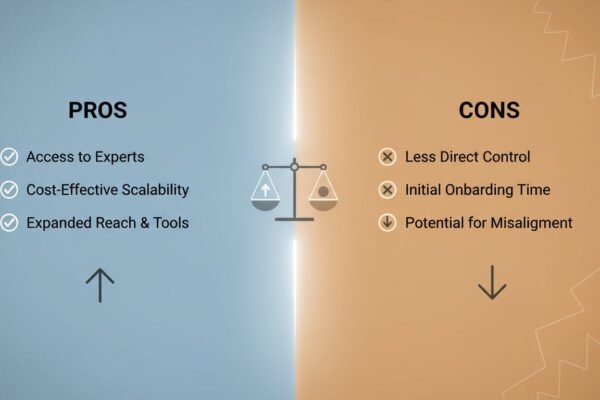
Pros and Cons
Pros
- Massive reach potential – Access to over 5 billion users worldwide across multiple platforms
- Cost-effective advertising – Lower costs compared to traditional media with precise targeting capabilities
- Real-time engagement – Direct communication with customers builds trust and loyalty
- Measurable results – Detailed analytics show exactly what’s working and what isn’t
- Brand building opportunities – Showcase personality and values through authentic content
Cons
- Time-intensive management – Requires consistent content creation and community engagement
- Algorithm dependency – Organic reach can fluctuate based on platform changes
- Public criticism exposure – Negative feedback is visible and can spread quickly
- Platform control – You don’t own your audience; platforms can change rules anytime
- Results take time – Building meaningful engagement typically requires 6-12 months of consistent effort
Integrating Social Media & Marketing with Other Channels
Social media is most powerful when combined with email, content marketing, and SEO. A unified approach amplifies results and delivers a consistent customer experience across all touchpoints.
Social Media and Email Marketing
Use social platforms to grow your email list by offering lead magnets (e.g., free guides) in exchange for sign-ups. Conversely, email newsletters can promote social contests, UGC campaigns, or exclusive live events. Tools like Mailchimp allow you to embed social posts directly into campaign emails, bridging the gap between the two channels. This cross-pollination increases touchpoints and nurtures leads through the funnel.
Social Media and Content Marketing
Blog posts, whitepapers, and case studies gain extended life through social distribution. Share snippets, key stats, or short video summaries on LinkedIn and Twitter, driving traffic back to your website. Embedding social share buttons on blog posts makes it easy for readers to spread the word. This symbiotic relationship positions your brand as an authority while boosting SEO through increased backlinks and social signals.
Social Media and SEO
While social signals are not direct ranking factors, they influence SEO indirectly by increasing brand searches, content visibility, and backlink opportunities. When your content trends on social media, it attracts the attention of publishers who may link to it from their articles. Additionally, optimized social profiles often rank in search results for brand names, controlling the first impression. Consistent NAP (name, address, phone) information across social profiles also supports local SEO efforts.
Frequently Asked Questions
What exactly is social media & marketing?
It is the disciplined use of social media platforms to reach, engage, convert, and retain customers through organic content, paid advertising, and community interaction. The practice aligns platform-specific tactics with overarching business goals to drive measurable results.
How much does social media marketing cost?
Costs vary widely based on your approach and goals. Organic social media can be free beyond time and creativity, while paid advertising on Facebook averages $1.72 per click, with monthly budgets ranging from a few hundred to tens of thousands of dollars. Tools and agency fees add to the total investment.
Which social media platform is best for my business?
It depends on your audience and industry. B2C brands often thrive on Instagram and Facebook, B2B companies on LinkedIn, and brands targeting younger demographics on TikTok. Analyze where your customers spend time and what content they prefer, then focus on 2–3 platforms initially rather than spreading yourself too thin.
How often should I post on social media?
Quality trumps quantity in every case. Most brands succeed with 3–5 posts per week per major platform, though consistency matters more than frequency. Use a content calendar to maintain regular posting and adjust based on engagement data. Overposting can annoy followers, while underposting risks losing visibility in algorithms.
Can I do social media marketing myself, or do I need an agency?
Many small businesses handle it in-house using free tools and organic growth tactics. As complexity increases with paid ads, advanced analytics, and multi-platform management, an agency or dedicated social media manager becomes valuable. Start small with organic content and scale as you see ROI and need more sophisticated strategies.
How long does it take to see results from social media marketing?
Organic growth is a long-term play, often requiring 6–12 months to build a significant following and see consistent sales impact. Paid campaigns can yield immediate traffic and conversions, but sustainable brand building requires patience and ongoing effort. Most businesses see meaningful engagement within the first 3 months of consistent posting.