Most local business owners approach social media marketing backwards. They post random content, hope for engagement, and wonder why their follower count doesn’t translate to phone calls or appointments.
We’ve watched hundreds of dental practices, MedSpas, HVAC companies, and law firms make the same mistake: treating social media like a billboard instead of a conversation starter. The difference between businesses that see real ROI from social platforms and those that don’t comes down to strategy, not luck.
Here’s what actually works when you’re competing for local customers who have dozens of options within a 10-mile radius.
Understanding Social Media Marketing for Local Businesses

Social media marketing isn’t about going viral or building a massive following. For local service businesses, it’s about becoming the obvious choice when someone in your area needs what you offer.
What Makes Local Social Media Different
Your competition isn’t Nike or Starbucks , it’s the dental practice three blocks away or the HVAC company with the truck you see around town. This changes everything about how you should approach content, targeting, and measurement.
Local businesses have built-in advantages that most marketers ignore. You can showcase real customers (with permission), highlight community involvement, and create content around local events or seasonal needs. When Dr. Sarah posts before-and-after photos from her dental practice in downtown Austin, she’s not just showing her work , she’s proving she understands her neighbors’ needs.
The Platform Reality Check
You don’t need to be everywhere. Most successful local businesses focus on 2-3 platforms maximum. Facebook remains the strongest for local discovery and reviews, Instagram works well for visual businesses like MedSpas and landscaping, and LinkedIn serves professional services like law firms and financial advisors.
The key is matching platform demographics to your customer base. If you’re a family dentist, Facebook’s older user base aligns perfectly with parents making healthcare decisions. If you run a MedSpa targeting professionals aged 25-45, Instagram’s visual format showcases results better than lengthy Facebook posts.
Beyond Vanity Metrics
Follower count means nothing if those followers live in different states. Engagement rates matter more than reach when you’re targeting a specific geographic area. One local comment asking about pricing is worth more than 100 likes from random accounts.
Track metrics that connect to business outcomes: website clicks from social posts, phone calls generated from Facebook ads, and appointment bookings that mention seeing you on Instagram. These numbers tell you whether your social media efforts are actually growing your business.
Building Your Content Strategy That Converts

Content strategy for local businesses isn’t about entertainment , it’s about education and trust-building. Your potential customers are researching solutions to problems, comparing options, and looking for reasons to choose you over competitors.
The Educational Content Framework
Start with the questions your customers ask most frequently. HVAC companies can explain why air filters need changing every 90 days. Dental practices can share proper brushing techniques or explain common procedures. MedSpas can educate about different treatment options and realistic expectations.
This approach positions you as the expert while providing genuine value. When someone searches for “how often should I get Botox” and finds your detailed Instagram post explaining treatment timelines, you’ve just moved from unknown business to trusted advisor.
Create content pillars around your core services, seasonal needs, and community involvement. A landscaping company might focus on lawn care tips (educational), seasonal planting guides (seasonal), and local garden tours they’ve participated in (community).
User-Generated Content That Builds Trust
Nothing sells local services like satisfied customers sharing their experiences. Encourage reviews, testimonials, and before-and-after photos (with proper permissions). This content feels authentic because it is authentic.
Set up simple systems to capture this content. Send follow-up emails asking happy customers to share their experience on social media. Offer small incentives like discounts on future services for customers who post about their experience and tag your business.
Behind-the-Scenes Content
Show the people behind your business. Introduce your team, share your process, and highlight your expertise. This humanizes your brand and helps potential customers feel comfortable choosing you.
A dental practice might share videos of their sterilization process, showing how seriously they take hygiene. An HVAC company could post time-lapse videos of complex installations, demonstrating their technical expertise. These posts build confidence in your professionalism.
Targeting Your Local Audience Effectively
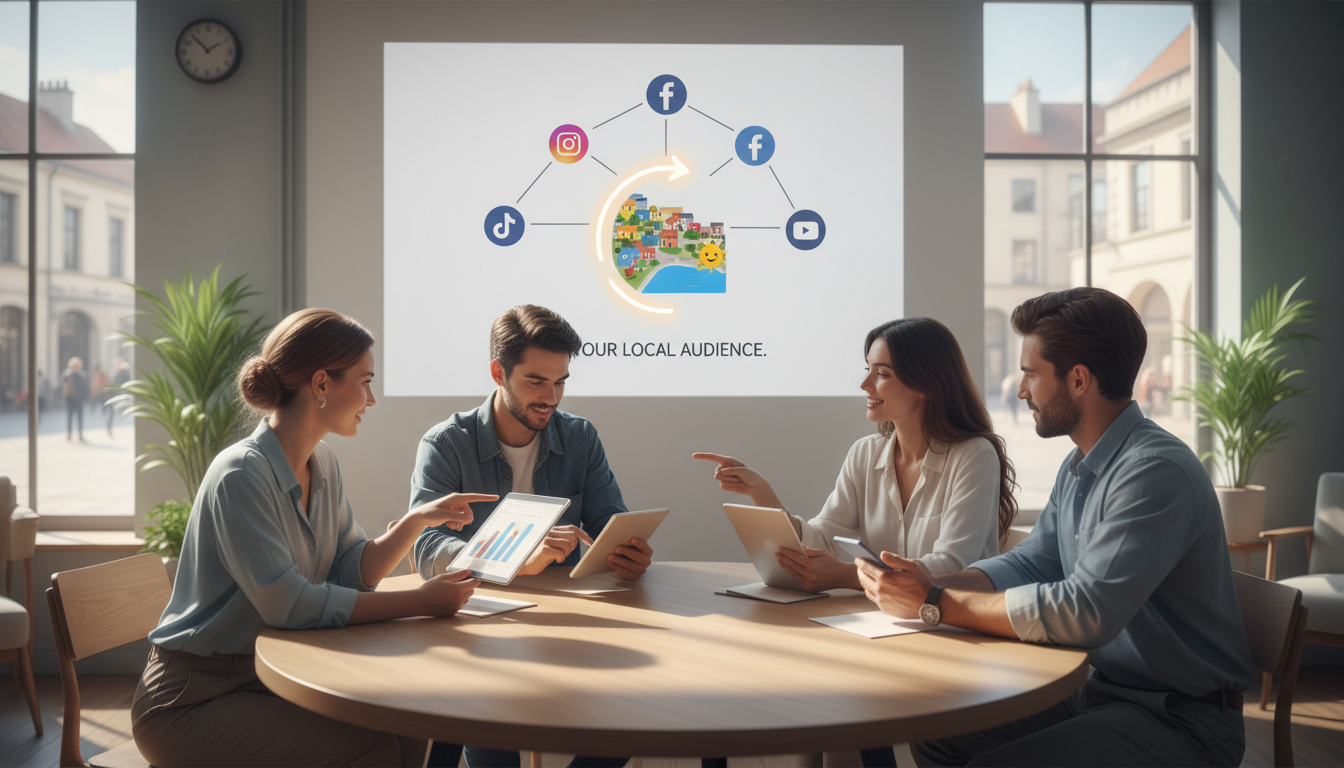
Generic targeting wastes money and attracts the wrong audience. Local businesses need precision targeting that reaches people who can actually become customers.
Geographic Targeting That Makes Sense
Don’t just target your city , think about drive times and service areas. A dental practice might target a 15-mile radius, while an HVAC company serving commercial clients might target a 50-mile radius but exclude residential areas.
Consider demographic overlays within your geographic area. Target homeowners for landscaping services, parents for pediatric dental care, or professionals aged 35-55 for MedSpa treatments. The more specific your targeting, the better your conversion rates.
Use location-based interests and behaviors. Target people who frequent local gyms for fitness-related services, or people who visit home improvement stores for contractor services. Facebook’s location data is remarkably detailed for local businesses willing to use it strategically.
Lookalike Audiences from Existing Customers
Your best customers are templates for finding similar prospects. Upload your customer email list to create lookalike audiences on Facebook and Instagram. These audiences share characteristics with your existing customers, making them more likely to need your services.
Segment your customer lists for better targeting. Create separate lookalike audiences for high-value customers, recent customers, and customers who refer others. Each segment will produce different targeting profiles, allowing you to test which performs best for different campaigns.
Retargeting Website Visitors
Most website visitors don’t convert immediately. Set up retargeting campaigns to stay visible to people who visited your site but didn’t book an appointment or request a quote.
Create different retargeting messages based on which pages people visited. Someone who looked at your pricing page is closer to buying than someone who only visited your homepage. Tailor your retargeting ads accordingly, offering specific incentives to people who showed higher purchase intent.
Platform-Specific Strategies for Maximum Impact

Each social platform serves different purposes in your marketing mix. Understanding these differences helps you create more effective campaigns and avoid wasting time on platforms that don’t serve your goals.
Facebook for Local Discovery and Trust
Facebook remains the strongest platform for local business discovery. People search Facebook for local services, read reviews, and join community groups where they ask for recommendations.
Optimize your Facebook Business Page like a mini-website. Include complete contact information, service descriptions, and high-quality photos. Post customer reviews, share community involvement, and respond quickly to messages and comments.
Use Facebook Groups strategically. Join local community groups where your potential customers gather. Provide helpful advice without being salesy. When someone asks for HVAC recommendations in a local homeowners group, your helpful previous contributions make your business the obvious choice.
Instagram for Visual Storytelling
Instagram works best for businesses with visual appeal , MedSpas, landscaping, home improvement, and restaurants. The platform’s visual nature lets you showcase results, processes, and behind-the-scenes content effectively.
Use Instagram Stories for real-time updates and behind-the-scenes content. Stories feel more personal and immediate than feed posts. Share day-in-the-life content, quick tips, and customer spotlights through Stories.
Leverage Instagram’s local features. Use location tags, local hashtags, and geotag your posts to increase local discovery. When someone searches for businesses near them, your tagged content appears in location-based searches.
LinkedIn for Professional Services
LinkedIn serves B2B services and professional practices exceptionally well. Law firms, financial advisors, and business consultants find their ideal clients through LinkedIn’s professional network.
Share industry insights, regulatory updates, and thought leadership content. Position yourself as the expert your professional network turns to for advice. This approach generates referrals and builds authority within your industry.
Participate in local business groups and industry associations on LinkedIn. Share valuable insights in group discussions, and connect with other professionals who might refer clients to you.
Creating Engaging Content That Drives Action
Engagement without action is just entertainment. Your content needs to move people from awareness to consideration to booking an appointment or requesting a quote.
Educational Content That Builds Authority
Answer the questions your customers ask before they’re ready to buy. Create content that helps people understand their problems and potential solutions. This positions you as the expert they’ll call when they’re ready to purchase.
A plumbing company might create videos explaining when to call a professional versus attempting DIY repairs. This content helps homeowners make informed decisions while establishing the company as knowledgeable and trustworthy.
Use seasonal timing to your advantage. HVAC companies can share maintenance tips before peak seasons, landscaping companies can discuss seasonal planting schedules, and tax professionals can share year-end planning advice.
Social Proof and Customer Stories
Share customer success stories, testimonials, and case studies. People trust other customers more than they trust your marketing messages. Make social proof a regular part of your content calendar.
Get creative with social proof formats. Share before-and-after photos, customer video testimonials, written reviews with photos, and case studies that show your problem-solving process. Different formats appeal to different people and provide multiple ways to showcase your expertise.
Call-to-Action Strategy
Every post should have a purpose. Whether you want people to call, visit your website, or book an appointment, make your desired action clear and easy to take.
Vary your calls-to-action to avoid sounding repetitive. Use “Call today for a free estimate,” “Visit our website to learn more,” “Comment below with questions,” and “Share this post to help your neighbors.” Different CTAs serve different stages of the customer journey.
Measuring ROI and Tracking What Matters
Social media marketing only works if you can measure its impact on your business. Tracking the right metrics helps you optimize campaigns and prove ROI to yourself and any business partners.
Setting Up Proper Tracking
Install Facebook Pixel and Google Analytics on your website to track social media traffic and conversions. Set up goal tracking for important actions like form submissions, phone calls, and appointment bookings.
Use UTM parameters on links you share on social media. This helps you identify which platforms and posts drive the most website traffic and conversions. Most social media management tools can add UTM parameters automatically.
Track phone calls generated from social media using call tracking numbers or asking new customers how they found you. Many local businesses get more phone calls than website conversions, so don’t ignore this important metric.
Key Performance Indicators for Local Businesses
Focus on metrics that connect to business outcomes. Website traffic from social media, leads generated, appointments booked, and revenue attributed to social campaigns matter more than likes and shares.
Track local engagement separately from total engagement. Comments from people in your service area are more valuable than likes from people across the country. Many social media tools let you filter engagement by location.
Monitor your online reputation as part of your social media ROI. Track review scores, response times to customer inquiries, and sentiment of social media mentions. These factors impact your business even if they don’t directly generate immediate sales.
Monthly Reporting That Drives Decisions
Create monthly reports that show social media’s impact on your business goals. Include website traffic from social platforms, leads generated, cost per lead, and revenue attributed to social campaigns.
Compare social media performance to other marketing channels. If social media generates leads at $50 each while Google Ads costs $150 per lead, you know where to allocate more budget.
Track trends over time rather than focusing on month-to-month fluctuations. Social media marketing often takes 3-6 months to show consistent results, so look for quarterly trends rather than monthly ups and downs.
Automation and AI Tools for Efficiency
Smart automation helps local businesses maintain consistent social media presence without hiring full-time social media managers. The key is automating routine tasks while keeping personal interaction genuine.
Content Scheduling and Management
Use scheduling tools to maintain consistent posting without being chained to your phone. Plan content in advance, schedule posts for optimal times, and batch content creation to save time.
Most scheduling tools offer analytics that help you identify the best posting times for your audience. Test different posting schedules and stick with times that generate the most engagement from your local audience.
Create content templates for common post types. Develop templates for customer spotlights, educational posts, and promotional content. Templates speed up content creation while maintaining consistency.
AI-Powered Content Creation
AI tools can help generate content ideas, write post captions, and create visual content. Use AI as a starting point, then customize content to match your brand voice and local market.
AI excels at creating educational content and answering common customer questions. Input your frequently asked questions and let AI help create social media posts that address these topics in engaging ways.
Use AI for content optimization, not replacement. AI can suggest better headlines, optimal posting times, and content improvements, but your local knowledge and customer relationships remain irreplaceable.
Automated Response Systems
Set up automated responses for common inquiries while ensuring complex questions reach human team members. Automated responses can provide business hours, location information, and basic service details instantly.
Use chatbots for initial customer interactions, then transfer complex conversations to staff members. This approach provides immediate responses while maintaining personal service for important discussions.
Automate review response acknowledgments, but personalize responses to negative reviews. Quick acknowledgment shows you’re responsive, while personalized responses to problems demonstrate genuine customer service.
Common Mistakes and How to Avoid Them
Local businesses make predictable social media mistakes that waste time and money. Learning from these common errors helps you avoid frustration and focus on strategies that actually work.
The Broadcasting Trap
Many businesses treat social media like a billboard, constantly promoting their services without engaging in conversations. This approach generates few results because social media users expect interaction, not advertisements.
Follow the 80/20 rule: 80% helpful, educational, or entertaining content, 20% promotional content. This balance keeps your audience engaged while still promoting your services effectively.
Respond to comments, ask questions, and participate in conversations. Social media is called “social” for a reason , businesses that engage in genuine conversations see better results than those that just broadcast messages.
Inconsistent Posting and Engagement
Posting sporadically or abandoning social media for weeks at a time hurts your visibility and credibility. Social media algorithms favor consistent, active accounts over inactive ones.
Create a realistic posting schedule you can maintain long-term. It’s better to post twice per week consistently than to post daily for a month and then disappear for three months.
Set aside specific times for social media engagement. Check messages, respond to comments, and engage with other local businesses’ content during designated times rather than randomly throughout the day.
Ignoring Local SEO Integration
Social media and local SEO work together to improve your online visibility. Businesses that ignore this connection miss opportunities to dominate local search results.
Use consistent business information across all social platforms and your website. Inconsistent addresses, phone numbers, or business names confuse search engines and potential customers.
Encourage customers to leave reviews on multiple platforms, not just Google. Reviews on Facebook, Yelp, and industry-specific sites all contribute to your online reputation and local search visibility.
“The biggest mistake we see local businesses make is treating social media like traditional advertising. They post about their services and wait for customers to call. Social media works when you build relationships first and sell second. The businesses that understand this difference see real ROI from their social efforts.” , DigiMe Marketing Team
Social media marketing works for local businesses when you focus on building relationships within your community rather than chasing viral content or massive follower counts. Start with one or two platforms, create helpful content consistently, and track metrics that matter to your bottom line.
The businesses that succeed with social media treat it as a long-term relationship-building tool, not a quick-fix marketing tactic. With the right strategy and consistent execution, social media becomes a reliable source of new customers and referrals.
Ready to transform your social media from time-waster to profit-driver? Book a free demo to see how AI-powered tools can automate your social media marketing while keeping it personal and effective.