Most business owners think artificial intelligence is either too complicated to understand or too expensive to implement. We get it , when tech experts throw around terms like “machine learning algorithms” and “neural networks,” it sounds like something only Fortune 500 companies can afford.
But here’s what we’ve learned after working with hundreds of local service businesses: AI isn’t rocket science, and it’s not just for tech giants. It’s a practical tool that’s already helping dental practices automate appointment scheduling, MedSpas personalize treatment recommendations, and HVAC companies predict equipment failures before they happen.
What Is Artificial Intelligence in Simple Terms?
Artificial intelligence is software that can learn patterns from data and make decisions without being programmed for every possible scenario. Instead of writing thousands of rules, you show the system examples, and it figures out the patterns on its own.
Think of AI Like a Really Smart Assistant
Imagine hiring an assistant who never gets tired, never forgets details, and gets better at their job every single day. That assistant can:
- Answer the same questions hundreds of times without getting frustrated
- Remember every customer interaction perfectly
- Spot patterns you might miss (like which patients are most likely to cancel appointments)
- Work 24/7 without breaks or sick days
That’s essentially what artificial intelligence does for your business , it handles repetitive tasks while learning to do them better over time.
AI vs. Traditional Software: The Key Difference
Traditional software follows strict rules: “If this happens, do that.” AI software learns from examples: “Here are 10,000 customer service conversations , figure out how to respond to new ones.”
For a dental practice, traditional software might send appointment reminders at exactly 24 hours before each visit. AI software learns that some patients prefer text messages in the evening, others respond better to morning calls, and certain demographics need longer lead times for rescheduling.
Why Business Owners Should Care About AI Now
The businesses that adopt AI tools early aren’t just saving time , they’re fundamentally changing how they compete. While their competitors manually follow up with leads, AI-powered businesses are nurturing prospects automatically, booking more appointments, and delivering personalized experiences at scale.
How Artificial Intelligence Actually Works

You don’t need a computer science degree to understand how AI works in your business. The process is surprisingly straightforward when you break it down into three basic steps.
Step 1: Data Collection and Pattern Recognition
AI systems start by analyzing large amounts of data to identify patterns. In a MedSpa, this might mean looking at thousands of customer interactions to understand:
- Which marketing messages lead to bookings
- What time of day people prefer to schedule consultations
- Which services customers typically book together
- How long between initial inquiry and first appointment
The AI doesn’t just store this information , it finds connections that humans might miss. Maybe customers who book Botox consultations on Tuesdays are 40% more likely to add additional services, or perhaps clients who ask about pricing upfront are actually more likely to convert than those who don’t.
Step 2: Learning and Adaptation
This is where AI gets interesting. Unlike traditional software that stays the same forever, AI systems improve based on new information. Every customer interaction teaches the system something new.
For an HVAC company, the AI might initially send the same follow-up sequence to every lead. But over time, it learns that homeowners who mention “emergency repair” respond better to immediate phone calls, while those asking about “system upgrades” prefer detailed email sequences with financing information.
Step 3: Automated Decision Making
Once the AI understands the patterns, it can make decisions automatically. It’s not guessing , it’s applying what it learned from thousands of previous examples to new situations.
A dental practice’s AI might automatically:
- Schedule hygiene appointments for patients based on their preferred times
- Send personalized treatment reminders based on each patient’s communication preferences
- Flag patients who are overdue for cleanings and suggest the best outreach approach
- Recommend optimal appointment times to minimize no-shows
Types of AI That Matter for Local Businesses
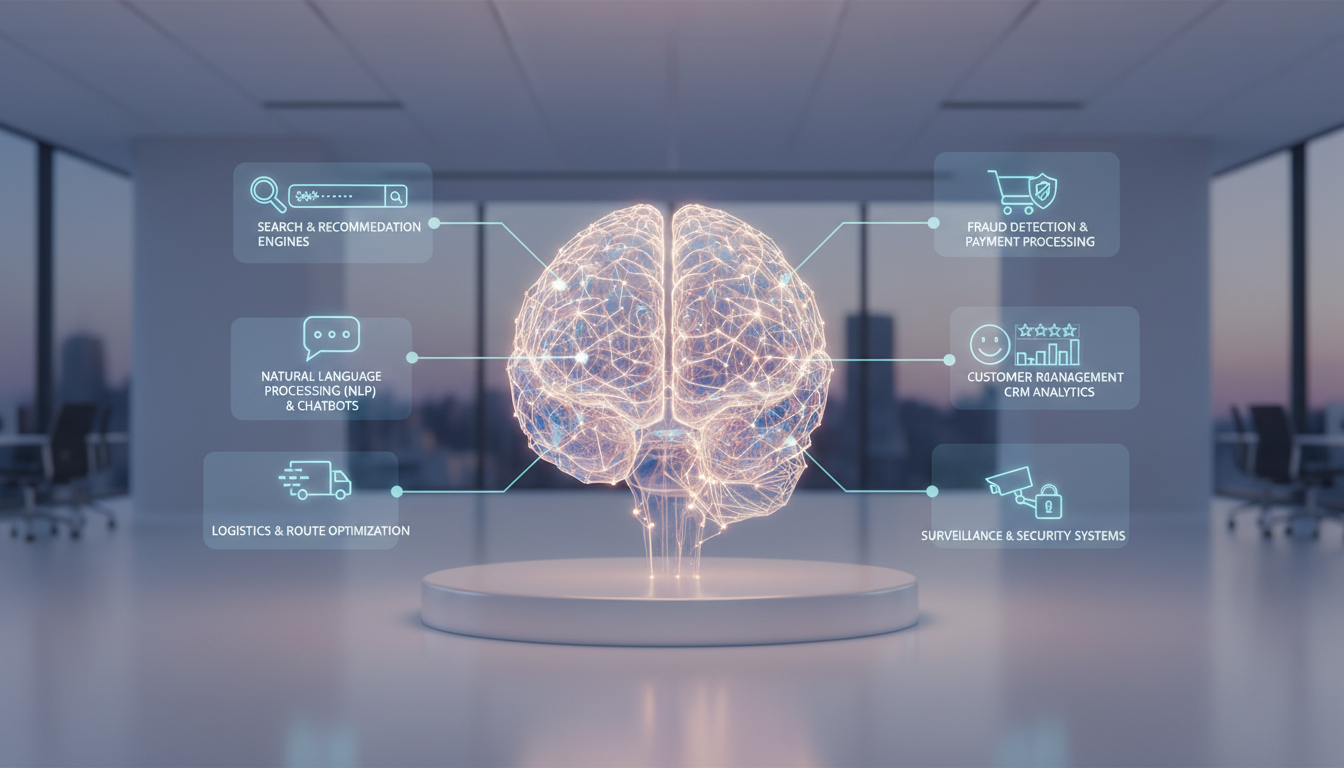
Not all artificial intelligence is created equal. While tech companies focus on building general AI that can do everything, local businesses benefit most from specialized AI tools designed for specific tasks.
Conversational AI: Your 24/7 Customer Service Team
Conversational AI handles customer interactions through chatbots, voice assistants, and automated messaging. But modern conversational AI goes far beyond simple “press 1 for appointments” systems.
Today’s conversational AI can:
- Answer complex questions about services and pricing
- Schedule appointments by checking real-time availability
- Qualify leads by asking the right follow-up questions
- Transfer warm leads to human staff at the perfect moment
A law firm might use conversational AI to handle initial consultations, gathering case details and determining urgency before connecting potential clients with the appropriate attorney. The AI works around the clock, ensuring no lead goes cold because someone called after hours.
Predictive AI: Seeing Around Corners
Predictive AI analyzes historical data to forecast future events. This isn’t fortune-telling , it’s pattern recognition applied to business planning.
For local businesses, predictive AI excels at:
- Identifying which leads are most likely to convert
- Predicting when existing customers might need additional services
- Forecasting busy periods to optimize staffing
- Spotting customers at risk of churning before they leave
An auto dealership might use predictive AI to identify which service customers are ready to buy a new vehicle, allowing sales teams to reach out with perfectly timed offers instead of generic mass mailings.
Automation AI: The Ultimate Efficiency Engine
Automation AI handles repetitive tasks that eat up your team’s time. This includes everything from data entry to complex multi-step workflows.
Smart automation can:
- Update customer records across multiple systems simultaneously
- Generate personalized follow-up sequences based on customer behavior
- Create and send invoices automatically after service completion
- Manage inventory levels and reorder supplies when needed
Real-World AI Applications in Local Service Businesses

The gap between AI hype and practical reality is huge. Let’s look at how artificial intelligence actually works in businesses similar to yours, with specific examples that deliver measurable results.
Healthcare and Dental Practices
Medical practices deal with complex scheduling, insurance verification, and patient communication challenges that AI handles exceptionally well.
Patient scheduling AI can analyze historical appointment data to predict optimal scheduling patterns. It learns that Dr. Smith’s hygiene patients prefer morning appointments and rarely reschedule, while Dr. Johnson’s cosmetic consultations work better in the afternoon when patients have more time to discuss treatment options.
Insurance verification becomes automatic , AI systems can check coverage, copays, and pre-authorization requirements before patients arrive, reducing front desk workload and preventing billing surprises.
Treatment reminders get personalized based on each patient’s response history. Some patients respond to text messages, others prefer phone calls, and the AI learns which approach works best for each individual.
HVAC and Home Service Companies
Service businesses face unique challenges around emergency calls, seasonal demand fluctuations, and equipment maintenance scheduling. AI addresses these pain points directly.
Emergency dispatch AI can prioritize service calls based on urgency indicators, customer history, and technician location. Instead of manually juggling schedules, the system automatically routes emergency calls to the nearest available technician while considering their skill set and current workload.
Preventive maintenance scheduling becomes proactive rather than reactive. AI analyzes equipment age, usage patterns, and maintenance history to predict when systems are likely to need service, allowing companies to reach out to customers before breakdowns occur.
Seasonal demand forecasting helps with inventory management and staffing decisions. The AI learns that certain neighborhoods tend to need AC repairs two weeks earlier than others, or that furnace maintenance requests spike after the first cold snap.
Legal and Financial Services
Professional services firms use AI to handle client intake, document review, and case management tasks that traditionally required significant manual effort.
Client intake AI can conduct initial consultations, gathering case details and determining urgency before connecting potential clients with the appropriate attorney. This ensures every lead receives immediate attention while filtering out unqualified prospects.
Document analysis AI can review contracts, identify key terms, and flag potential issues faster than human review. For real estate attorneys, this might mean automatically extracting important dates and conditions from purchase agreements.
Case progress tracking becomes automated, with AI monitoring deadlines, court dates, and required filings while sending appropriate reminders to both staff and clients.
The Business Benefits of Implementing AI
Understanding what artificial intelligence can do is one thing. Knowing how it translates to real business improvements is another. Here’s what we see when local businesses implement AI tools effectively.
Time Savings That Actually Matter
Most businesses waste 15-20 hours per week on repetitive administrative tasks. AI doesn’t just speed up these tasks , it eliminates them entirely.
A typical dental practice spends roughly 8 hours per week on appointment confirmations, rescheduling, and no-show follow-ups. AI handles all of this automatically, freeing up front desk staff for higher-value activities like treatment planning coordination and patient education.
MedSpas often spend significant time on consultation scheduling and follow-up sequences. AI can manage the entire process from initial inquiry to post-treatment care instructions, maintaining personalization while eliminating manual work.
The time savings compound over months and years. Staff can focus on patient care, business development, and other activities that directly impact revenue and satisfaction.
Revenue Growth Through Better Lead Management
Most local businesses lose potential customers because they can’t respond quickly enough or consistently enough to inquiries. AI solves both problems simultaneously.
Response time improvements are dramatic. While competitors take hours or days to follow up with leads, AI-powered businesses respond within minutes, dramatically improving conversion rates.
Lead nurturing becomes systematic rather than sporadic. Every prospect receives appropriate follow-up based on their specific interests and behavior, not generic mass communications.
Conversion tracking gets more sophisticated. AI can identify which marketing channels produce the highest-value customers, allowing businesses to optimize their advertising spend for maximum return.
Customer Experience Enhancement
AI enables personalization at scale that was previously impossible for small businesses. Every customer interaction can be tailored based on their history, preferences, and behavior patterns.
Communication preferences get learned and applied automatically. Some customers prefer detailed explanations, others want quick summaries. Some respond to urgency, others to value propositions. AI adapts the message to match the recipient.
Service delivery becomes more consistent. AI ensures every customer receives the same high-quality experience regardless of which staff member they interact with or what time they contact the business.
Common AI Myths and Misconceptions
The biggest barrier to AI adoption isn’t technical complexity , it’s misinformation. Let’s address the myths that prevent business owners from exploring AI solutions.
Myth: AI Will Replace Human Workers
This fear dominates AI discussions, but it’s based on science fiction rather than business reality. AI doesn’t replace people , it handles the tasks people don’t want to do anyway.
Your front desk staff won’t lose their jobs because AI answers basic questions. Instead, they’ll spend more time on complex patient needs, insurance issues, and treatment coordination that require human judgment and empathy.
Technicians won’t be replaced by AI diagnostic tools. They’ll arrive at job sites with better information about potential problems, allowing them to solve issues faster and more accurately.
Sales teams benefit from AI lead scoring and nurturing, but closing deals still requires human relationship-building skills that AI can’t replicate.
Myth: AI Is Too Expensive for Small Businesses
This misconception comes from confusing enterprise AI implementations with business-ready AI tools. You don’t need a million-dollar budget or a team of data scientists.
Modern AI tools are designed for small businesses, with monthly subscription pricing that’s often less than what you’d pay a part-time employee. The ROI typically pays for itself within the first few months through time savings and improved conversion rates.
Implementation doesn’t require technical expertise. Most AI tools integrate with existing systems and can be set up in hours, not months.
Myth: AI Requires Perfect Data to Work
Many business owners think they need to clean up all their data before implementing AI. While good data helps, AI systems are designed to work with real-world, imperfect information.
AI can actually help improve data quality over time by identifying inconsistencies and filling in missing information based on patterns in existing data.
You can start with whatever data you have and let the AI system learn and improve as you add more information.
Getting Started with AI in Your Business
The key to successful AI implementation is starting small and scaling gradually. Most businesses try to do too much too fast, leading to frustration and abandoned projects.
Identify Your Biggest Time Wasters
Look for tasks that meet three criteria: they’re repetitive, they follow predictable patterns, and they don’t require complex human judgment. These are perfect candidates for AI automation.
Common examples include:
- Appointment scheduling and confirmations
- Initial lead qualification and follow-up
- Basic customer service questions
- Data entry and record updates
- Invoice generation and payment reminders
Start with the task that wastes the most time or causes the most frustration for your team. Success with one process builds confidence for tackling others.
Choose AI Tools That Integrate with Your Existing Systems
Don’t replace your entire tech stack to add AI capabilities. Look for solutions that work with your current practice management software, CRM, or scheduling system.
Integration reduces implementation time and ensures your team doesn’t need to learn completely new workflows. The best AI tools enhance what you’re already doing rather than forcing you to start over.
Measure Results and Expand Gradually
Track specific metrics before and after AI implementation. This might include response times, conversion rates, no-show percentages, or hours spent on administrative tasks.
Once you see positive results in one area, gradually expand AI to other processes. This approach reduces risk while building organizational confidence in AI capabilities.
The Future of AI for Local Businesses
Artificial intelligence isn’t a trend that will fade away , it’s becoming as essential as having a website or accepting credit cards. Understanding where AI is headed helps you prepare for what’s coming next.
AI Will Become More Accessible, Not More Complex
The trajectory of AI development is toward simplicity and accessibility. Just as websites went from requiring coding knowledge to drag-and-drop builders, AI tools are becoming more user-friendly every year.
Voice-activated AI assistants will handle more business functions, allowing owners to manage operations through simple conversations rather than complex software interfaces.
No-code AI solutions will let businesses customize automation without technical expertise, similar to how modern website builders work.
Integration Will Become Smooth
Future AI tools won’t feel like separate systems , they’ll be built into the software you already use. Your scheduling system will automatically optimize appointment times, your CRM will predict which leads need immediate attention, and your billing software will identify payment issues before they become problems.
This integration means less training for staff and fewer systems to manage, making AI adoption even more straightforward for small businesses.
Competitive Advantage Will Shift to AI Adopters
Businesses that embrace AI early will have significant advantages over competitors who wait. They’ll operate more efficiently, respond faster to customer needs, and deliver more personalized experiences.
The gap between AI-powered businesses and traditional operations will become increasingly obvious to customers, who will gravitate toward companies that provide faster, more convenient service.
By 2027, businesses without AI capabilities may struggle to compete on response times, personalization, and operational efficiency , much like businesses without websites struggled in the early 2000s.