- Internet marketing is how you promote your business online through SEO, social media, email, and paid ads , channels where your customers actually spend their time.
- The most effective strategies include SEO, PPC advertising, content marketing, social media marketing, email marketing, affiliate marketing, and influencer marketing.
- Internet marketing delivers measurable results, precise targeting, and better ROI compared to traditional marketing , you can track every dollar spent.
- Getting started means defining clear goals, knowing your customers, picking the right channels, creating valuable content, and measuring what works.
- Privacy matters more than ever; following regulations like GDPR and CCPA builds trust and protects your business from legal issues.
Internet marketing is how you connect with customers online , through search engines, social media, email, and websites. It’s not just posting on Facebook. We’re talking about strategic promotion that drives real business results. The goal is simple: reach people where they’re already looking, engage them with helpful content, and turn them into paying customers.
What Is Internet Marketing?
Internet marketing is every marketing effort that happens online , from your Google listing to your Instagram posts to your email newsletters. It’s different from digital marketing because it focuses specifically on internet-based channels. According to the American Marketing Association, internet marketing is about increasing your visibility online and converting website visitors into customers who actually buy from you.
Key Components of Internet Marketing
Internet marketing isn’t one thing , it’s a toolkit of strategies that work together:
- Search Engine Optimization (SEO): Getting your website to show up when people search for what you offer.
- Search Engine Marketing (SEM): Running paid ads on Google and Bing to appear at the top of search results.
- Social Media Marketing: Building relationships and sharing content on Facebook, Instagram, LinkedIn, and TikTok.
- Email Marketing: Staying in touch with prospects and customers through targeted email campaigns.
- Content Marketing: Creating blogs, videos, and guides that answer your customers’ questions.
- Affiliate Marketing: Partnering with others who promote your business for a commission.
- Influencer Marketing: Working with people who have engaged followings to recommend your services.
How Internet Marketing Differs from Traditional Marketing
Traditional marketing , TV ads, radio spots, newspaper ads , feels like shouting into the void. Internet marketing is different:
- Measurability: You can track exactly how many people saw your ad, clicked it, and bought something.
- Targeting: Instead of hoping the right people see your billboard, you can target homeowners within 10 miles who searched for HVAC repair.
- Cost-effectiveness: You can start with $100 and scale up, rather than dropping thousands on a radio campaign.
- Interactivity: Customers can ask questions, leave reviews, and share your content with friends.
- Global reach: Your dental practice can attract patients from neighboring towns, not just your immediate area.
Core Internet Marketing Strategies

The most effective internet marketing combines multiple strategies that reinforce each other. Here’s what actually works for local businesses.
Search Engine Optimization (SEO)
SEO gets your website to show up when potential customers search for your services. It involves optimizing your website content, improving site speed, and earning links from other reputable sites. According to a 2024 study by BrightEdge, organic search drives 53% of all website traffic. SEO takes time , usually 3-6 months to see results , but it builds lasting visibility that doesn’t disappear when you stop paying for ads.
Pay-Per-Click (PPC) Advertising
PPC puts your ads at the top of Google search results immediately. You bid on keywords like “emergency dental care” and pay only when someone clicks your ad. Google Ads generated over $224 billion in revenue in 2022 (Statista), which tells you it works. PPC gives you instant traffic and complete control over your budget, but you need to monitor it closely to avoid wasting money on irrelevant clicks.
Content Marketing
Content marketing means creating helpful articles, videos, and guides that answer your customers’ questions. Instead of just saying “we’re the best,” you prove it by solving their problems. According to the Content Marketing Institute, content marketing generates 3x more leads than traditional marketing while costing 62% less. A MedSpa might create videos about skincare routines, while an HVAC company explains how to maintain your system.
Social Media Marketing
Social media lets you build relationships with customers and showcase your work. Facebook still has 3 billion monthly users (Meta, 2024), making it essential for local businesses. Instagram works well for visual businesses like MedSpas and dental practices. LinkedIn is crucial for B2B services like accounting or legal. According to HubSpot, social media marketing can increase brand awareness by up to 80%.
Email Marketing
Email marketing keeps you connected with prospects and customers through newsletters, appointment reminders, and special offers. It’s incredibly cost-effective , businesses typically see $36 in revenue for every $1 spent on email marketing (Litmus, 2023). The key is segmentation: sending different messages to new prospects versus long-term customers.
Affiliate Marketing
Affiliate marketing means partnering with others who promote your business in exchange for a commission on sales they generate. Amazon Associates is the most famous example, but local businesses can work with bloggers, other service providers, or satisfied customers. Affiliate marketing accounts for 16% of all e-commerce orders in the US (Statista, 2023).
Influencer Marketing
Influencer marketing involves partnering with people who have engaged social media followings to promote your services. It works especially well on Instagram, YouTube, and TikTok. According to Influencer Marketing Hub, the industry is worth $21.1 billion in 2024. For local businesses, micro-influencers with 10,000-100,000 followers often deliver better results than celebrities because their audiences trust their recommendations more.
How to Start Internet Marketing: A Step-by-Step Process

Most businesses jump into internet marketing without a plan and waste their first year’s budget learning what doesn’t work. Here’s how to do it right from the start.
Step 1: Define Your Goals
Set specific, measurable goals that matter to your business. “Get more customers” isn’t a goal , “generate 20 new patient appointments per month” is. Examples: increase website traffic by 30% in six months, generate 50 qualified leads monthly, or achieve a 3% conversion rate on your contact form.
Step 2: Understand Your Target Audience
Create detailed profiles of your ideal customers based on age, income, problems they face, and where they spend time online. Use Google Analytics to see who visits your website, survey existing customers, and check your social media insights. A dental practice might target families with children, while a MedSpa focuses on professionals aged 35-55.
Step 3: Choose Your Channels
Pick 2-3 channels that match where your customers spend time and your business goals. B2B services like accounting firms should focus on LinkedIn and email marketing. Consumer services like fitness studios work well on Instagram and Facebook. Don’t try to be everywhere at once , you’ll spread yourself too thin and do nothing well.
Step 4: Create a Content Plan
Develop a content calendar that addresses your customers’ questions and concerns. Focus on being helpful, not promotional. Use keyword research tools like Semrush to find topics people actually search for. An HVAC company might create content about seasonal maintenance, energy efficiency tips, and troubleshooting common problems.
Step 5: Implement and Optimize
Launch your campaigns and track performance from day one. Test different headlines, images, and calls-to-action to see what resonates with your audience. Small changes can make big differences , we’ve seen contact form conversions double just by changing the button text from “Submit” to “Get My Free Quote.”
Step 6: Measure and Scale
Track metrics that matter to your business: website traffic, lead generation, conversion rates, and cost per new customer. Scale up what’s working and pause what isn’t. Most successful businesses find 1-2 channels that work really well, then double down on those rather than chasing every new platform.
Comparison of Internet Marketing Channels
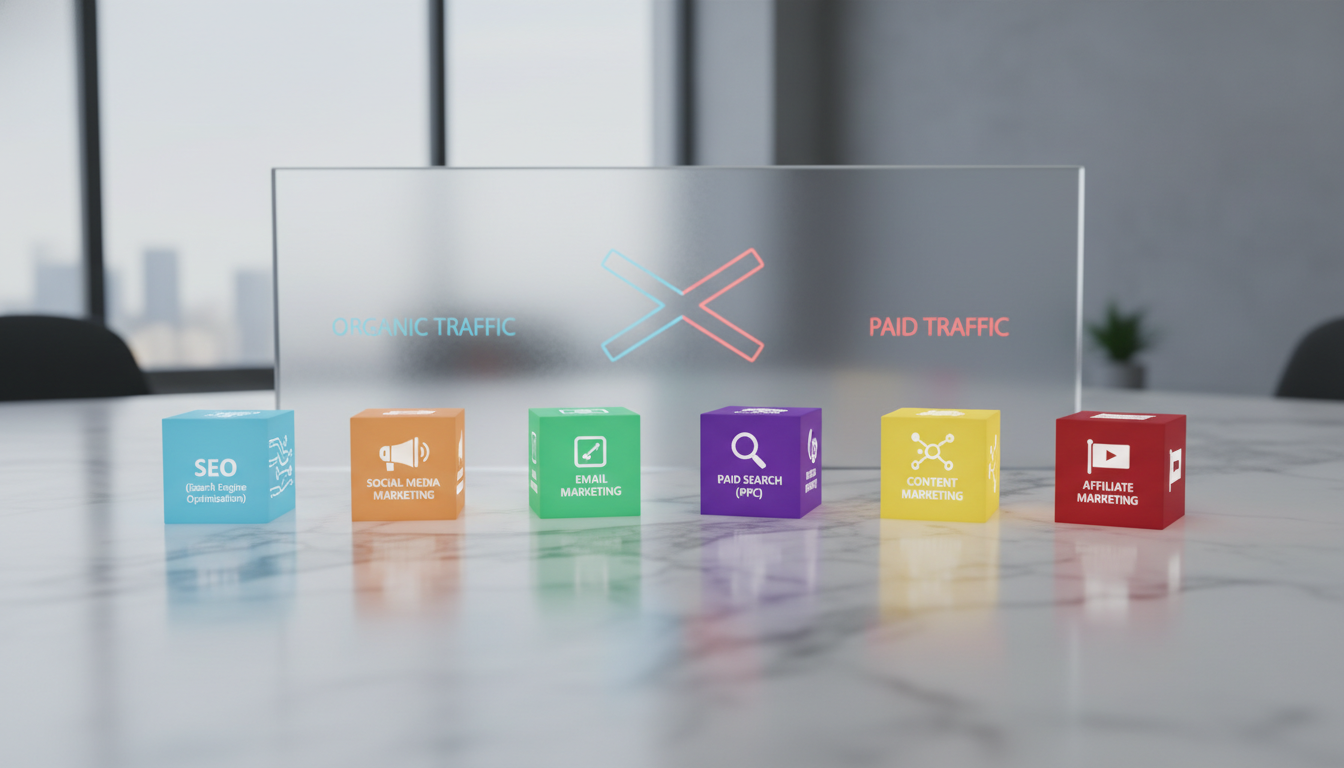
| Channel | Cost | Time to Results | Best For | Example Platform |
|---|---|---|---|---|
| SEO | Medium to High | 3-6 months | Sustainable organic traffic | |
| PPC | High (per click) | Immediate | Quick leads and sales | Google Ads |
| Content Marketing | Low to Medium | 1-3 months | Brand authority and leads | Blog, YouTube |
| Social Media | Low to High | 1-3 months | Brand awareness and engagement | Facebook, Instagram |
| Email Marketing | Low | 1-2 weeks | Lead nurturing and retention | Mailchimp |
| Affiliate Marketing | Commission-based | 1-3 months | Scalable sales | Amazon Associates |
| Influencer Marketing | Medium to High | 1-2 months | Social proof and reach | Instagram, TikTok |
Unique Angles in Internet Marketing
Ethical Internet Marketing and Consumer Privacy
Privacy isn’t just a nice-to-have anymore , it’s a business requirement. Regulations like the General Data Protection Regulation (GDPR) in Europe and the California Consumer Privacy Act (CCPA) require explicit consent for data collection and clear opt-out options. According to a 2023 Pew Research study, 79% of Americans worry about how companies use their personal data. Building trust through transparent privacy practices creates stronger customer relationships and protects your business from legal issues.
AI-Powered Internet Marketing Automation
AI is making internet marketing smarter and more efficient for small businesses. Tools like HubSpot and Marketo use AI to automatically segment your email list, optimize send times, and recommend content that converts. According to Gartner, by 2025, 80% of B2B sales interactions will happen through digital channels powered by AI. Businesses using AI-powered marketing typically see conversion rates increase by up to 30%.
Real-World Internet Marketing Examples
Nike’s Social Media Campaigns
Nike uses Instagram and Twitter to share motivational content featuring real athletes and everyday people. Their #JustDoIt campaign generated over 1 billion impressions and increased social media engagement by 60% (Nike, 2023). The key was authentic storytelling, not just product promotion.
Dollar Shave Club’s Viral Video
Dollar Shave Club launched with a funny YouTube video that got 12 million views in 24 hours. The video cost just $4,500 to produce but generated 12,000 orders in the first 48 hours. It worked because it solved a real problem (expensive razors) with humor and personality.
Airbnb’s Content Marketing
Airbnb’s blog and city guides provide genuine travel advice and local insights, not just property listings. This content strategy helped them achieve a 50% increase in organic search traffic year-over-year (SimilarWeb, 2023). They became a trusted travel resource, not just a booking platform.
Frequently Asked Questions
What is internet marketing?
Internet marketing is promoting your business through online channels like search engines, social media, email, and websites. It includes strategies like SEO, PPC advertising, content creation, and social media management to attract and convert customers online.
What are the 8 types of internet marketing?
The eight main types are SEO (search engine optimization), PPC (pay-per-click advertising), content marketing, social media marketing, email marketing, affiliate marketing, influencer marketing, and mobile marketing. Most successful businesses focus on 2-3 of these rather than trying to do everything.
How does internet marketing work?
Internet marketing works by meeting potential customers where they already spend time online, then providing valuable content or solutions to their problems. You use data to target the right people, create content that resonates with them, and optimize your campaigns based on what actually drives results.
What is the 3 3 3 rule in marketing?
The 3 3 3 rule suggests that potential customers should see your brand three times across three different channels within three days to build recognition and trust. It emphasizes the importance of consistent, multi-channel exposure rather than relying on a single touchpoint.
How to start internet marketing?
Start by defining specific business goals, understanding your target customers, and choosing 2-3 marketing channels that match where your audience spends time. Create valuable content, launch small campaigns, measure results, and scale what works while eliminating what doesn’t.
Is internet marketing ethical?
Internet marketing is ethical when you respect customer privacy, obtain proper consent for data collection, provide genuine value, and comply with regulations like GDPR and CCPA. Focus on helping customers solve problems rather than just pushing sales, and always be transparent about how you use their information.