Can you finance a new HVAC system is absolutely possible through multiple financing paths, from traditional bank loans to no-credit-check lease agreements that get you approved instantly.
Key Takeaways
- Replacing an HVAC unit typically costs between $3,000 and $10,000, with financing often the only practical path for many homeowners.
- You can finance a new HVAC system through personal loans, home equity lines, manufacturer deals, or lease-to-own programs, even with poor credit.
- No-credit-check options like AC Direct’s lease program offer instant approval up to $12,000 with payments as low as $99 per month.
- Utility and manufacturer rebates, such as Trane’s instant rebates up to $900, can significantly reduce your out-of-pocket cost.
- Compare APRs, terms, and eligibility carefully , promotional 0% offers can revert to rates as high as 28.99% if not paid in time.
Can You Finance a New HVAC System?
Yes, you can finance a new HVAC system through several proven methods that work for different credit situations and budgets. HVAC financing covers the complete cost of purchasing and installing heating, ventilation, and air conditioning equipment, including the system unit, labor, ductwork modifications, permits, and disposal of old units.
What Does HVAC Financing Include?
HVAC financing applies to full replacements, upgrades, or major repairs exceeding $1,000. Homeowners commonly use financing for furnaces, central air conditioners, heat pumps, and ductless mini-splits. The financing amount covers everything from equipment to installation labor.
Why Financing Often Makes Sense
HVAC systems account for over 50% of household energy consumption, according to the U.S. Department of Energy. When they break down, delays lead to discomfort and higher utility bills. The question “can you finance a new HVAC system” becomes urgent when your equipment fails unexpectedly. Trane’s research confirms:
“Getting a new HVAC system is expensive. Few homeowners have the money to pay for this home improvement in cash.”
By spreading payments over months, you manage cash flow while enjoying reliable climate control immediately.
Types of HVAC Financing Options
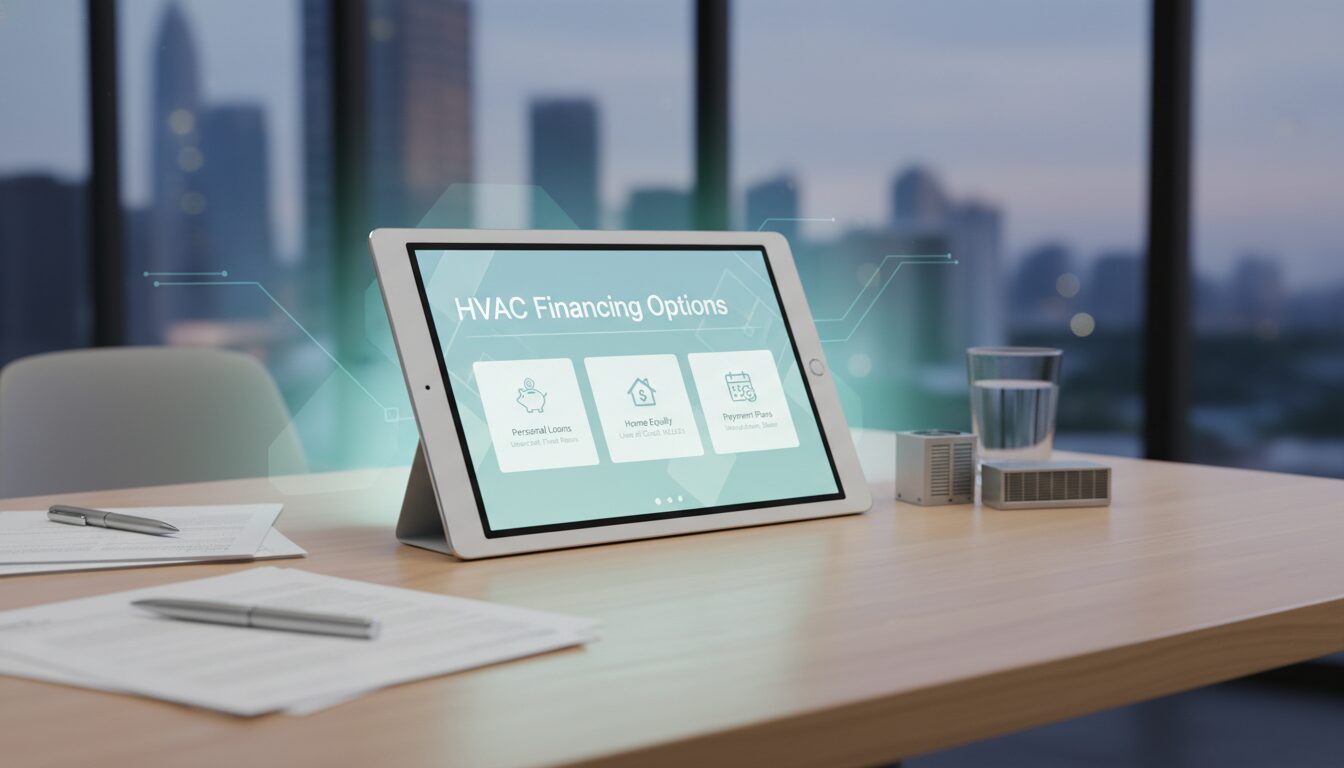
Personal Loans and Unsecured Financing
A personal loan provides an unsecured installment loan from banks, credit unions, or online lenders. Funds are disbursed as a lump sum and repaid over 2 to 7 years at a fixed interest rate. Although no collateral is required, interest rates typically range from 6% to 36% APR, depending on your credit score. For homeowners wondering “can you finance a new HVAC system” without risking their home, personal loans offer fast funding within days without putting your property at risk.
Home Equity Loans and HELOCs
Home equity loans and home equity lines of credit (HELOCs) let you borrow against the equity you’ve built in your home. A home equity loan provides a fixed-rate, one-time disbursement, while a HELOC works as a revolving credit line with variable interest. Because the loan is secured by your property, rates are generally lower , between 5% and 10% APR. This method works well for expensive systems, as you might finance up to 85% of your home’s value minus your mortgage balance. The downside: your home serves as collateral, and the application process involves an appraisal and can take several weeks.
Manufacturer and Dealer Financing
Many HVAC brands and local contractors offer financing through partnerships with lenders like Wells Fargo, Synchrony, and GoodLeap. These programs often feature promotional periods with 0% APR for 12 to 18 months if you have approved credit. Carolina Comfort Air, for instance, offers 12-month financing for repairs over $500 and instant rebates up to $900 on qualifying Trane systems with Wells Fargo. However, you must understand the deferred interest trap: if the balance isn’t paid by the end of the promotional term, interest accrues from the original purchase date at rates as high as 28.99%.
Lease-to-Own and No-Credit-Check Programs
Companies like AC Direct offer lease-to-own arrangements specifically for homeowners with bad credit or no credit history. These programs require no credit check and do not impact your credit score. You can borrow up to $12,000 and make payments starting at $99 per month over 12 to 96 months. You own the equipment after completing payments. While convenient, the total cost is higher than a traditional loan due to built-in interest. For homeowners asking “can you finance a new HVAC system” with damaged credit, this path provides immediate comfort without a credit check.
“Options like HVAC financing for bad credit, finance new HVAC system programs, and even no credit financing are available for homeowners who need immediate solutions.”
HVAC Financing with Bad Credit

Options for Low or No Credit Scores
A FICO score below 580 is generally considered poor, but it doesn’t automatically disqualify you from HVAC financing. Lease-to-own providers explicitly accept bad credit, and some personal loan lenders specialize in subprime borrowers. You may also consider adding a co-signer with good credit to qualify for a lower-rate personal loan. Another avenue is applying through a local HVAC contractor that works with multiple lenders; they can match you with a program suited to your profile.
What Credit Score Do You Need?
Each financing type sets its own credit threshold. Manufacturer promotional deals often require a score of at least 640 to 680. Home equity products typically want a score above 620 and enough equity. Lease-to-own programs have no minimum credit score. Even if your score is in the low 600s, you may still secure financing if you have stable income and a low debt-to-income ratio. Check your credit report for errors before applying, as even a small boost could unlock better terms when you’re ready to finance a new HVAC system.
Understanding the Costs of a New HVAC System
Average Installation Costs and Factors
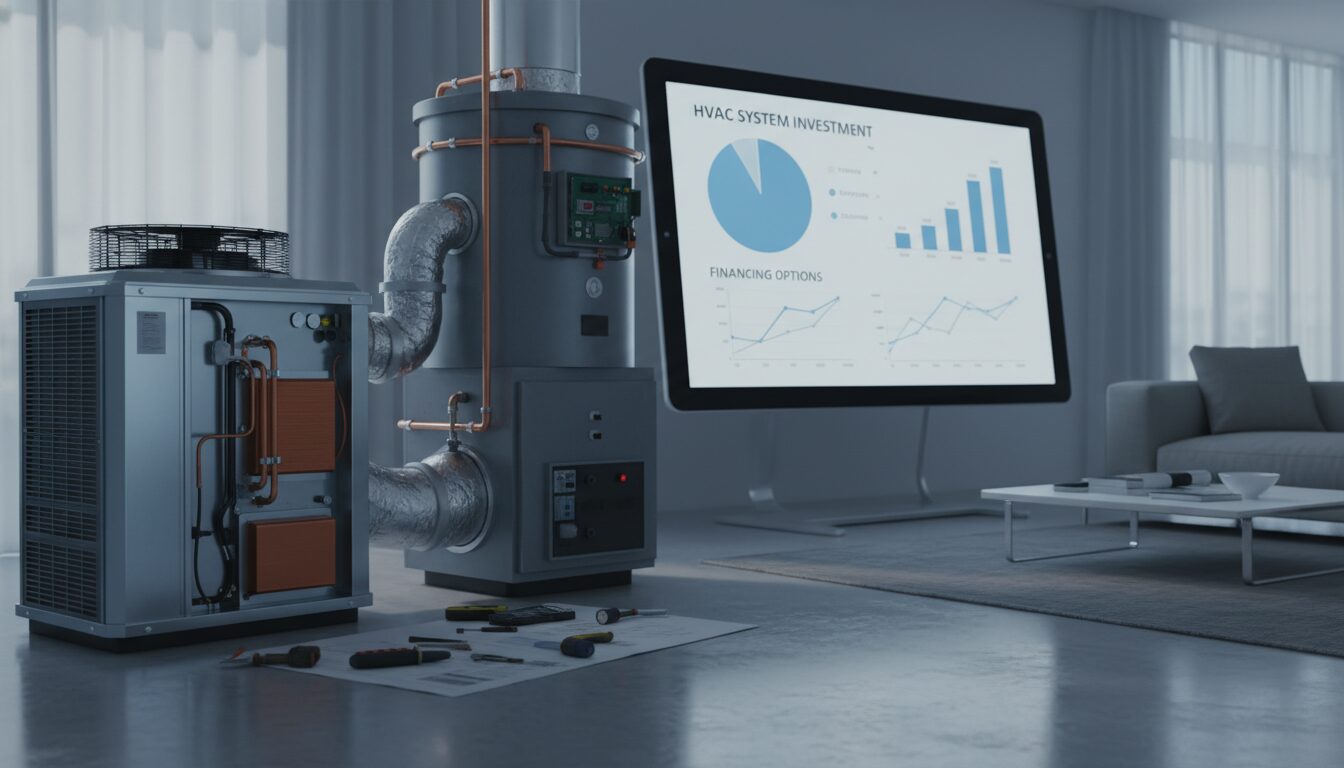
A new HVAC system typically ranges from $3,000 to $10,000, including equipment and labor. The final price depends on system type (split vs. packaged), size (measured in tons or BTUs), efficiency rating (SEER2 for AC, AFUE for furnace), and installation complexity. For example, a high-efficiency, 3-ton heat pump might cost $8,000 before incentives, while a basic 1.5-ton air conditioner could be as low as $3,500. Additional work like duct modifications or electrical upgrades can add $1,000 to $3,000.
How Rebates and Incentives Lower the Price
Federal, state, and utility programs can slash your net cost significantly. The Department of Energy’s Heat & Cool program and ENERGY STAR guidelines promote high-efficiency systems. In 2026, many states offer rebates up to $900 for qualifying equipment, while the Inflation Reduction Act’s tax credits can cover 30% of the cost up to $2,000 for heat pumps. Trane provides instant rebates when you purchase through a certified dealer. Always ask your contractor about active incentives , they can reduce your financing amount and monthly payment.
Step-by-Step: How to Finance a New HVAC System
Step 1: Get a Detailed Estimate
Contact at least three licensed HVAC contractors for written quotes. The estimate must itemize equipment model numbers, labor, removal, permits, and any ductwork. Ensure the contractor performs a Manual J load calculation to size the system correctly , oversized units waste energy. A thorough estimate helps you pinpoint the exact amount needed when you finance a new HVAC system and provides documentation lenders may require.
Step 2: Compare Financing Offers
Once you have the project cost, research financing avenues. Start with the contractor’s own financing options, then check personal loan rates from your bank or credit union, and explore home equity possibilities if you have significant equity. Use online comparison tools to view real-time APRs. Pay special attention to the total interest paid over the loan term, not just the monthly payment. Factor in any rebates you can claim independently.
Step 3: Apply and Finalize
Select the lender with the best overall terms and submit your application. Many lenders offer prequalification with a soft credit pull. Once approved, the funds are either disbursed directly to you or to the contractor on agreed dates. Sign the contract and schedule the installation. Keep all paperwork for warranty and tax credit filings. After the system is running, enroll in autopay to avoid missed payments that could void promotional rates.
Comparing HVAC Financing Methods
| Option | Credit Needed | Typical APR | Loan Term | Pros | Cons |
|---|---|---|---|---|---|
| Personal Loan | Good to excellent | 6% – 36% | 2 – 7 years | Unsecured, fast funding, no risk to home | Higher rates for poor credit |
| Home Equity Loan | Good | 5% – 10% | 5 – 15 years | Lower APR, possible tax deduction if used for home improvement | Uses home as collateral, longer approval |
| HELOC | Good | 4% – 8% intro | 10-year draw, 20-year repay | Flexible draw period, pay interest only initially | Variable rates can rise, risk of foreclosure |
| Manufacturer/Dealer Plan | Approved credit (640+) | 0% promo, then 15% – 30% | 12 – 18 months promo | 0% if paid in full during promo, often instant decision | Deferred interest trap, high post-promo rate |
| Lease-to-Own | No credit check | Built into payments | 12 – 96 months | Instant approval, no credit impact, bad credit OK | Highest total cost, limited availability in some states |
Which Option Is Right for You?
Select based on your credit profile, cash flow, and how long you plan to stay in the home. If your score is strong and you want to minimize interest, a home equity loan or manufacturer 0% promo is best , just ensure you can pay it off before the promo ends. For those with blemished credit, lease-to-own provides immediate comfort without a credit check, though the long-term cost is higher. Always calculate the total of payments before deciding.
Pros and Cons of HVAC Financing
Pros
- Immediate comfort and climate control without waiting to save cash
- Preserve emergency savings for unexpected expenses
- Access to high-efficiency systems that reduce monthly utility bills
- Multiple options available for different credit situations
- Potential tax credits and rebates can offset financing costs
Cons
- Interest charges increase the total cost of the system
- Monthly payments add to your debt-to-income ratio
- Promotional rates can jump dramatically if not paid on time
- Some options put your home at risk as collateral
- Bad credit options typically cost more in the long run
The $5,000 Rule and Other Smart Financing Guidelines
What Is the $5,000 Rule?
The $5,000 rule is a practical guideline used by HVAC professionals: if a repair costs less than $5,000 and the system is under 10 years old, fixing it may be the better financial move. But if the repair exceeds $5,000 , or the system is past its expected lifespan , replacement is often smarter. This rule helps homeowners decide between a one-time expense and financing a new, more efficient system. For example, a $4,800 compressor replacement on a 12-year-old AC may make sense, but a $5,300 repair on an aging furnace signals it’s time to consider whether you can finance a new HVAC system instead.
Applying Guidelines to Your Decision
Beyond the $5,000 threshold, apply the “50% rule”: never spend more than half the cost of a new system on repairs. Also, factor in the SEER2 upgrade , modern units are 20-30% more efficient than those from a decade ago, per ENERGY STAR. By financing a higher-efficiency system, your lower utility bills can offset the loan payment. A system financed over 5 years that saves $40 per month gives you $2,400 back over its lifespan. Thus, financing isn’t just about paying over time; it’s about investing in future savings.
Frequently Asked Questions
What is the $5000 rule for HVAC?
The $5,000 rule suggests that if repair costs exceed $5,000 or the system is over 10 years old, replacement is usually wiser. It’s a cost-benefit benchmark that helps homeowners decide whether to fix or finance a new system.
How hard is it to get HVAC financing?
It varies by option. Manufacturer and dealer plans often require a credit score of 640 or higher. However, lease-to-own options have no credit check, making them accessible even with bad credit. Approval processes range from instant decisions to a few days.
What do I do if I can’t afford a new HVAC system?
If you can’t afford a new system outright, explore financing with low or no credit check, such as AC Direct’s lease program. Also, look into government assistance through the Weatherization Assistance Program, which helps low-income households with HVAC upgrades.
Can you finance a new HVAC system with bad credit?
Yes. Many lenders and lease-to-own companies cater to bad-credit borrowers. You may pay higher interest or total costs, but instant-approval programs exist that do not check credit. Consider a co-signer to access better rates.
Do government loans exist for HVAC replacement?
While the government does not offer specific HVAC loans, programs like PACE (Property Assessed Clean Energy) financing allow you to repay through property taxes. Additionally, HUD’s Section 504 program provides grants for home repairs for eligible rural homeowners.
How long does HVAC financing approval take?
Approval can be instant for lease-to-own or some dealer financing (e.g., Synchrony partners). Personal loans may fund within 1–3 business days. Home equity loans take 2–6 weeks due to appraisal and underwriting.
Ready to explore your HVAC financing options? Book a free demo at digimeapp.com to see how AI can transform your practice.