New HVAC system financing is the use of lending products to pay for a heating and cooling system over time rather than upfront. Most homeowners can access dealer promotions, personal loans, or home equity options regardless of credit score.
Key Takeaways
- system financing lets you spread the cost of a replacement over months or years.
- Costs range from $3,000 to $12,500 depending on system size and type, according to Angi and contractor estimates.
- Dealer financing often offers 0% APR for 5 years, while personal loans may fund within a day.
- Bad credit options exist, though interest rates may be higher.
- Rebates and tax credits can reduce your net cost significantly, up to $2,100 from Carrier alone.
- The $5,000 rule helps decide between repair and replacement for older systems.
What Is New HVAC System Financing?

these financing converts the lump-sum cost of a heating, ventilation, and air conditioning installation into manageable periodic payments. Instead of depleting savings, homeowners access credit lines, installment loans, or lease-to-own contracts to fund the project immediately.
Why Financing Is a Smart Choice
A functioning HVAC system is essential, especially during extreme weather. such system financing removes the urgency of a cash-only decision, allowing you to replace failing equipment before it creates discomfort or damage. It also opens the door to higher-efficiency units that lower monthly energy bills, a system that accounts for around half of a home’s energy use, as noted by Lennox.
Common Misconceptions About HVAC Financing
Some homeowners assume the hvac system financing is only for excellent credit, but lenders like Upstart and Upgrade consider borrowers with scores as low as 600. Others worry about hidden fees, but many dealer plans have transparent terms with 0% promotional periods. The key is comparing offers to find the best fit.
How Much Does a New HVAC System Cost?
The total price of a replacement HVAC system varies widely. Angi reports a typical range of $5,000 to $12,500, while contractors like Thomas & Galbraith cite narrower averages of $3,000 to $10,000. The discrepancy depends on equipment type, home size, and local labor rates.
“According to Angi, the cost to replace an HVAC system typically varies from $5,000 to $12,500, depending on unit type and complexity.”
Average Cost Ranges by System Type
- Central air conditioner only: $3,800 – $7,500
- Gas furnace only: $2,800 – $6,800
- Complete split system (AC + furnace): $5,000 – $12,500
- Heat pump: $5,500 – $10,500
Additional Costs to Consider
Beyond the unit itself, installation may require ductwork upgrades. For a 2,000-square-foot home, new ductwork averages $2,100 to $4,000. Other factors include permit fees, electrical work, and removal of old equipment. Always request an itemized estimate from your contractor.
Factors That Affect Your Total Investment
Square footage, insulation quality, and local climate (measured in BTUs) drive equipment sizing. High-efficiency units with SEER ratings above 16 cost more upfront but save on utilities. Geographic location also influences labor costs and available rebates.
Signs Your HVAC System Needs Replacement
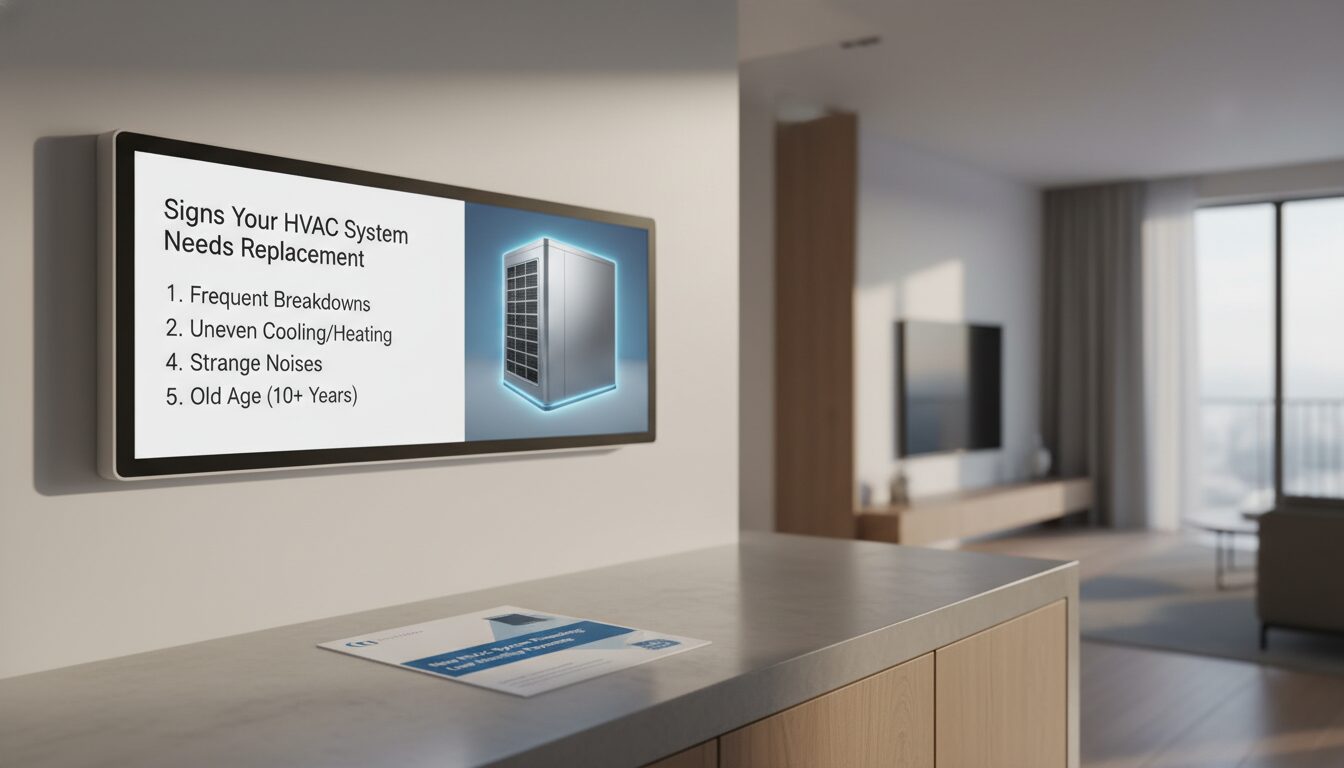
Recognizing when to pursue new HVAC system financing can save you from emergency repairs and higher costs. Watch for these warning signals that indicate replacement time.
Age and Performance Indicators
Systems over 15 years old often struggle with efficiency and reliability. Frequent repairs, uneven temperatures, and rising energy bills suggest your equipment is failing. The $5,000 rule states that if repair costs exceed $5,000 on a system older than 10 years, replacement becomes more economical.
Comfort and Air Quality Issues
Poor indoor air quality, excessive humidity, or rooms that won’t reach desired temperatures indicate system inadequacy. Modern units with variable-speed technology and improved filtration address these problems while reducing operating costs.
Types of New HVAC System Financing Options
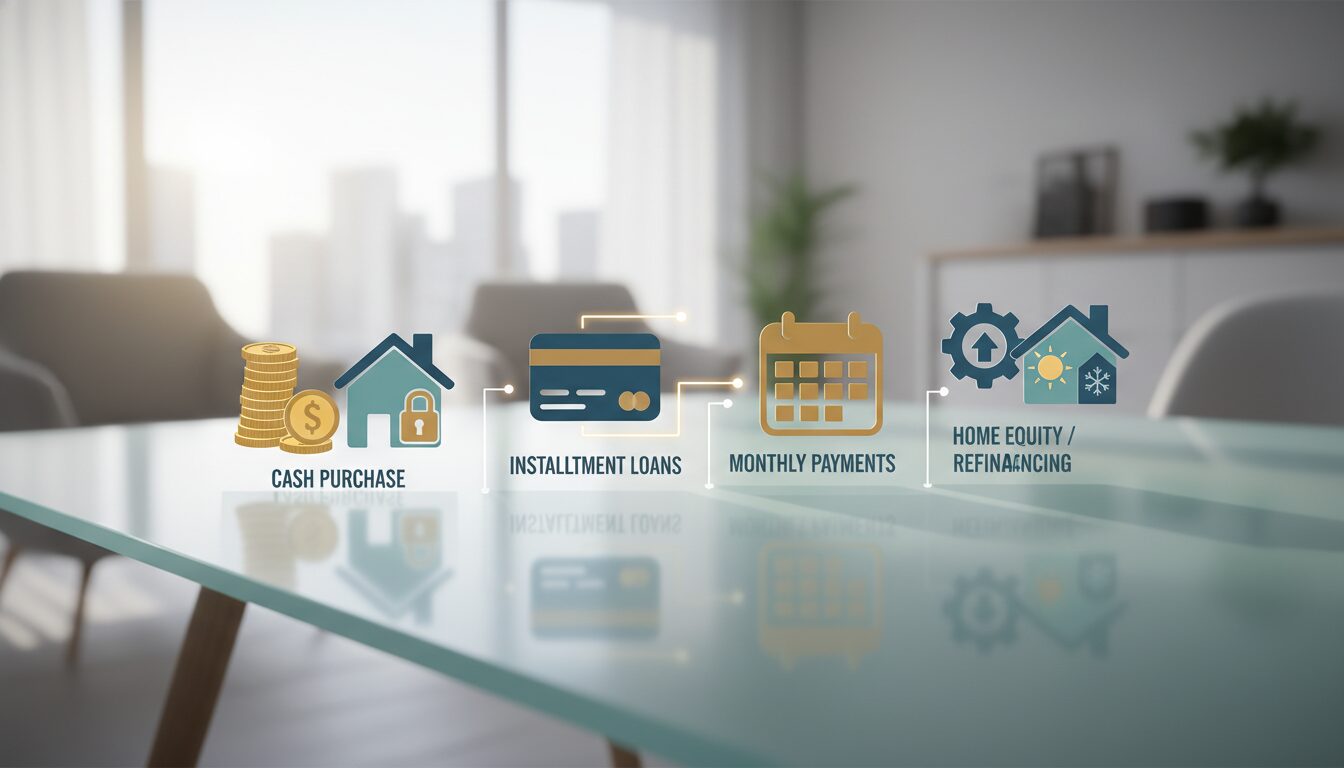
Homeowners have multiple paths to fund a system replacement. The best choice hinges on credit profile, desired monthly payment, and how long you plan to stay in the home.
Dealer-Offered Financing
Many HVAC brands, including Carrier, Lennox, and Trane, partner with banks like Wells Fargo and Synchrony to offer promotional financing. New HVAC system financing through dealers may feature 0% APR for 60 months on approved credit, as seen with Carrier’s plans. Standard rates after the promo period can climb to 28.99% APR, so paying off the balance before the promotional window ends is critical.
Personal Loans from Banks and Online Lenders
A personal loan provides a lump sum that you repay in fixed installments. NerdWallet highlights lenders like Upgrade (APR 7.74%–35.99%) and Best Egg (APR 5.99%–35.99%) as quick options, often funding the next day. These loans are unsecured, so no home equity is required.
“A personal loan can be a fast way to finance a new or replacement HVAC system, with many lenders funding by the next day after approval,” reports NerdWallet.
Home Equity Loans and HELOCs
If you have built up equity, a home equity loan or line of credit (HELOC) may offer lower rates because the property serves as collateral. Terms can extend to 15 or 30 years, reducing monthly payments. However, the application process is longer, and your home is at risk if you default.
Lease-to-Own Agreements
Lease-to-own lets you enjoy a new system with minimal initial payment. You make monthly payments for a set period, then own the equipment. Some programs, like those from Goodleap, focus on sustainable upgrades and promise quick approval. Be mindful of higher total costs compared to other forms of new HVAC system financing.
Financing Options at a Glance
| Option | Typical Interest Rate | Term | Best For | Example Providers |
|---|---|---|---|---|
| Dealer Promotional (0% APR) | 0% for 60 months, then 28.99% | 5 years | Those who can pay off within promo period | Carrier, Lennox, Trane via Wells Fargo |
| Dealer Standard Financing | 2.99% – 9.99% | 3 – 10 years | Longer repayment without home equity | Synchrony, PowerPay |
| Personal Loan | 5.99% – 35.99% | 1 – 7 years | Quick funding, no collateral | Upgrade, Best Egg, Upstart |
| Home Equity Loan/HELOC | 5% – 10% | 5 – 30 years | Lowest possible rates, tax-deductible | Local banks, credit unions |
| Lease-to-Own | Often higher total cost | 1 – 5 years | Low upfront cash, less-than-ideal credit | Goodleap, local dealers |
How to Choose the Right Financing for Your HVAC Project
Selecting the best new HVAC system financing depends on more than just the monthly payment. Weigh the following factors to avoid costly mistakes.
Evaluating Interest Rates and Terms
Promotional 0% APR offers can save thousands, but only if you retire the balance within the promotional window, typically 60 months. After that, deferred interest can inflate the cost. Always calculate the monthly payment needed to clear the balance before expiration. For longer terms, a fixed-rate personal loan provides predictability.
The Importance of Your Credit Score
Your credit score directly impacts approved rates. Lenders like Best Egg and Upgrade require a minimum score of 600, while Upstart may accept no credit history. Higher scores (700+) unlock APRs near 6%, whereas scores below 640 often see rates above 30%. Pull your free credit report before applying to check for errors.
Calculating the True Cost of Financing
Look beyond the advertised APR. Some loans have origination fees (1%–8%) that are deducted from the loan amount. Dealer financing may include a minimum interest charge of $1.00 per billing cycle. Use online calculators to compare the total payback amount across options.
New HVAC System Financing: Step-by-Step Guide
Following a structured process ensures you land the best deal without surprises. Here’s how to approach new HVAC system financing in 2026.
Step 1: Get Multiple Estimates
Contact at least three licensed HVAC contractors in your area. Ask for itemized quotes specifying equipment model, SEER rating, labor, and any ductwork. As Thomas & Galbraith notes, a comprehensive inspection helps determine the right system size and avoids oversizing, which wastes money.
Step 2: Explore Financing Options
Start with the contractor’s financing offers, they may have exclusive promotions like $500 off or 0% APR. Then research personal loans from online lenders, and check with your local credit union for home equity products. Compare at least three sources for new HVAC system financing.
Step 3: Apply and Get Approved
Most dealer applications through Wells Fargo or Synchrony offer instant decisions. Online lenders can prequalify you without a hard credit pull. Submit a single application once you’ve chosen the best offer, multiple hard inquiries within a short window can temporarily hurt your score.
Step 4: Schedule Installation
Once approved, coordinate with your contractor to schedule the installation. Confirm that the financed amount covers the full scope of work. Retain all paperwork, including the financing agreement, warranty, and proof of installation for any rebate claims.
HVAC Financing with Bad Credit
A low credit score doesn’t automatically disqualify you from new HVAC system financing. Several lenders specialize in working with credit-challenged borrowers, though costs will be higher.
Specialized Lenders for Low Credit
Upstart considers factors beyond credit score, such as education and employment. Upgrade and Best Egg accept scores down to 600. Dealer-based lease-to-own programs often have lenient criteria, and some contractors offer in-house payment plans with no credit check.
Tips to Improve Approval Chances
- Provide a co-signer: Adding a creditworthy co-signer can unlock better rates.
- Reduce your debt-to-income ratio: Pay down credit cards before applying.
- Shop around: Compare offers from at least three lenders to find the most favorable terms.
- Consider a secured loan: If you have assets, a secured personal loan may offer lower rates.
Pros and Cons
Pros
- Immediate comfort: Replace failing equipment without depleting savings
- Energy savings: New efficient systems reduce monthly utility bills
- Promotional rates: 0% APR offers can save thousands in interest
- Flexible terms: Options from 12 months to 30 years fit any budget
- Credit building: On-time payments improve your credit score
Cons
- Interest costs: Total cost exceeds cash purchase price
- Credit requirements: Best rates require good to excellent credit
- Deferred interest risk: Promotional balances can trigger retroactive charges
- Monthly obligations: Fixed payments regardless of financial changes
- Potential fees: Origination fees and prepayment penalties add costs
Rebates, Tax Credits, and Other Savings Opportunities
Combining new HVAC system financing with available incentives can dramatically lower your net expenditure. Timing your installation to match these offers is key.
Manufacturer and Dealer Rebates
Carrier’s Cool Cash program, running through May 31, 2026, offers up to $2,100 in rebates on qualifying systems. Trane provides up to $900 in instant rebates, and many dealers run seasonal promotions, like Carolina Comfort Air’s $500 off for CPP members. Always ask your contractor about current offers.
Government Tax Credits
The U.S. government offers federal tax credits for high-efficiency heating and cooling equipment. Under the Inflation Reduction Act, homeowners can claim 30% of the cost (up to $2,000) for air-source heat pumps and $600 for efficient air conditioners. These credits apply to installations completed through 2032.
Utility Company Incentives
Local utilities often reward energy-efficient upgrades with rebates. For example, a utility in Kansas or Missouri might offer $300–$500 back for a high-SEER air conditioner. Check your provider’s website or the DSIRE database for programs in your area.
Frequently Asked Questions
Can you finance a new HVAC system with bad credit?
Yes. Lenders like Upstart accept no credit history, and Upgrade considers scores as low as 600. Dealer lease-to-own programs may bypass credit checks entirely, though interest rates will be steeper.
What is the $5,000 rule for HVAC?
This informal guideline suggests that if a repair exceeds $5,000 on a system older than 10 years, replacement may be more cost-effective. It helps homeowners decide between repairing and financing a new unit.
Is it hard to get approved for HVAC financing?
Approval difficulty varies. Dealer promotional financing often requires good to excellent credit (670+), while personal loans have wider ranges. Many borrowers with scores above 600 find approval with acceptable terms.
How long are typical HVAC financing terms?
Terms range from 12 months for small repairs to 10 years (or more) for home equity loans. Promotional 0% APR plans typically run 60 months, after which standard rates apply.
Do all HVAC companies offer financing?
Not all, but many do. Major brands like Carrier, Lennox, and Trane have partnerships with national banks. Smaller contractors may offer third-party financing or recommend personal loans. Always ask about available payment options.
Can I use a credit card to finance my new HVAC system?
Yes, but it’s usually not advisable because credit card APRs average over 20%. A 0% intro APR credit card could work if you can pay off the balance within the promotional window (often 12–21 months), but beware of deferred interest.
Securing the right new HVAC system financing transforms a major expense into a predictable, budget-friendly plan. By comparing dealer promotions, personal loans, and rebate opportunities, you can enjoy modern comfort without financial strain. Book a free demo at digimeapp.com to see how AI can transform your practice.