Finance new hvac system is the process of using loans, credit arrangements, or leasing to pay for heating and cooling equipment over time instead of upfront cash.
Key Takeaways
- Most HVAC replacements cost $3,000-$10,000, making financing essential for many homeowners
- Manufacturer financing offers 0% APR promotions for qualified buyers with good credit
- Bad credit options exist through lease-to-own and specialized lenders
- Rebates up to $2,100 can reduce the amount you need to finance
- Compare at least three financing offers before choosing your loan terms
- Federal tax credits on energy-efficient systems improve overall affordability
What Does It Mean to Finance New HVAC System?
To hvac system means securing a loan or credit arrangement specifically for purchasing and installing heating, ventilation, and air conditioning equipment. Unlike general personal loans, HVAC financing often comes with promotional terms like 0% interest periods when arranged through manufacturers or contractors.
Why Homeowners Choose HVAC Financing
Heating and cooling systems fail unexpectedly, and replacement costs typically range from $3,000 to $10,000. Most families can’t pay this amount in cash without affecting their emergency savings. When you these system, you spread the expense into manageable monthly payments while maintaining home comfort and safety.
“A new HVAC system typically costs between $3,000 and $10,000, making financing a practical choice for most homeowners.”
Understanding HVAC System Costs in 2026

The total cost to such hvac system depends on unit size, energy efficiency ratings, and installation complexity. A basic air conditioner replacement starts around $3,000, while high-efficiency heat pumps with ductwork modifications can exceed $10,000.
Factors That Affect Your Financing Amount
Beyond equipment prices, budget for labor costs, permits, and potential ductwork repairs. Many contractors offer maintenance plans starting at $22 per month that you can bundle into your financing. Getting multiple estimates helps you understand the true cost before you the new hvac system.
Best Ways to Finance New HVAC System in 2026

Several financing paths exist when you need to system, each with different requirements and benefits.
Manufacturer and Dealer Financing Programs
Major brands like Carrier and Trane partner with banks such as Wells Fargo and Synchrony to offer promotional rates. Carrier financing includes 0% APR for up to 60 months on qualifying systems, plus up to $2,100 in Cool Cash rebates.
“Carrier offers 0% APR for 60 months on qualifying systems, plus up to $2,100 in Cool Cash rebates that reduce your financing amount.”
These promotional deals require approved credit and are processed directly through your HVAC contractor.
Personal Loans and Home Equity Options
Personal loans provide a lump sum with fixed interest rates and terms when you finance new. According to industry data, personal loan APRs for HVAC projects range from 6% to 36% based on credit scores. Home equity lines of credit use your home as collateral for lower rates but require substantial equity and longer approval times.
Lease-to-Own Agreements
Lease-to-own agreements let you hvac system with minimal credit requirements. You make monthly payments and eventually own the equipment after the term ends. Companies like Goodleap and PowerPay specialize in this approach, though total costs may be higher than traditional loans.
Financing Options by Credit Score
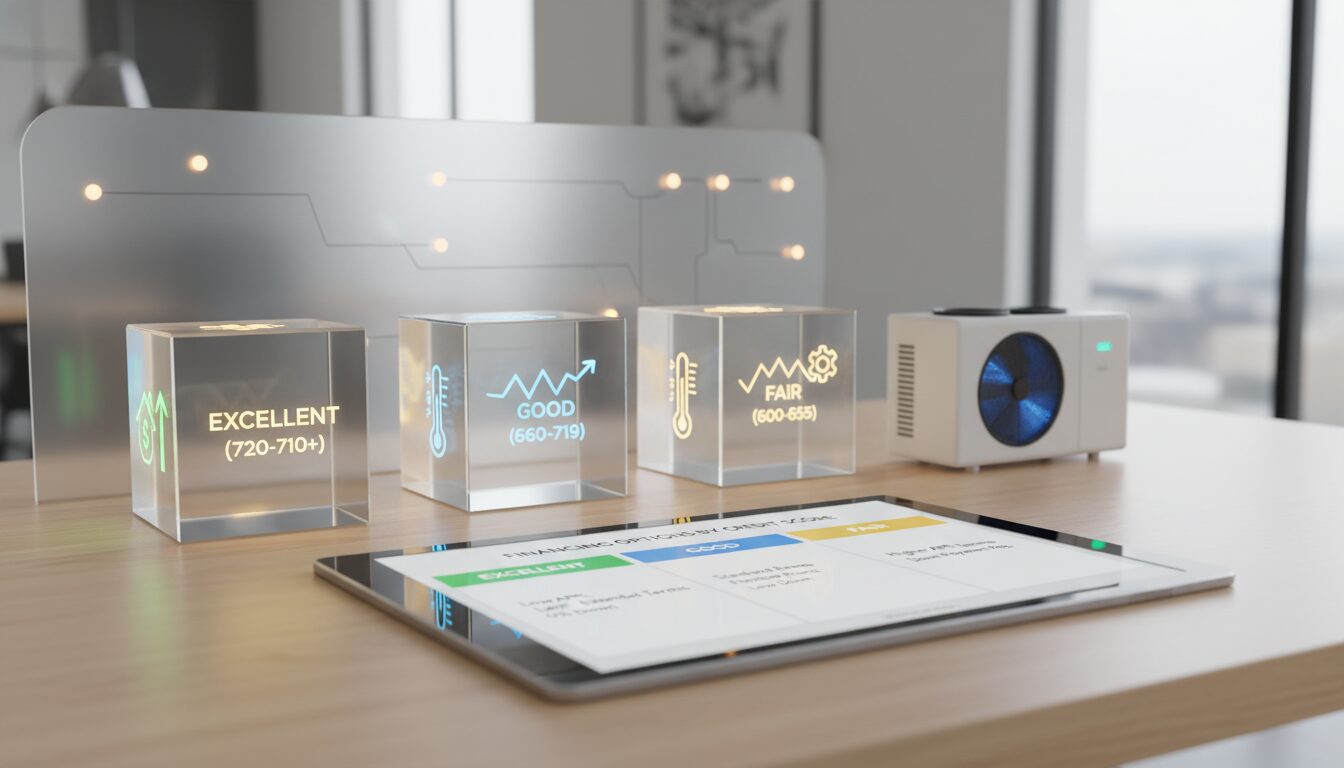
Your credit score determines which options are available when you these system.
Good Credit Financing (670+ Score)
Homeowners with credit scores above 670 can access 0% APR promotions and low-interest personal loans. Wells Fargo’s Home Projects credit card, offered through Trane Comfort Specialists, provides special financing terms. Synchrony HVAC financing also offers competitive fixed rates through partner contractors.
Bad Credit and No-Credit-Check Options
Those with scores below 600 can still finance new hvac system through alternative lenders. Many contractors offer in-house payment plans or partner with third-party financiers that consider income over credit scores. While APRs may be higher, you can still access rebates like Trane’s $900 instant rebates to reduce the financed amount.
Step-by-Step Process to Finance New HVAC System
Follow this proven process to secure the best terms when you finance new hvac system.
Step 1: Get Professional Estimates
Contact at least three licensed HVAC contractors for written quotes including equipment, labor, permits, and efficiency upgrades. This establishes your realistic financing amount.
Step 2: Check Your Credit and Set Your Budget
Review your credit report for free and determine your comfortable monthly payment. Higher credit scores unlock lower APRs when you finance new hvac system. Use online calculators to estimate payments based on different loan terms.
Step 3: Compare Multiple Financing Offers
Collect at least three financing quotes: from your contractor’s preferred lender, your bank, and an online lender. Compare APRs, terms, and fees using the comparison table below.
Step 4: Submit Your Application
Complete applications with your chosen lender. Many online applications through Synchrony or Goodleap provide instant approval. Have your contractor estimate and income documentation ready.
Step 5: Schedule Installation and Set Up Payments
Once approved, coordinate installation with your contractor. Confirm how funds will be distributed and set up automatic payments to avoid late fees. Your new system will provide improved comfort and lower energy bills.
Comparing HVAC Financing Methods
| Financing Type | Typical APR | Term Length | Credit Requirement | Best For |
|---|---|---|---|---|
| Manufacturer Dealer Financing | 0% promotional, then 14.99%–28.99% | 12–60 months | Good to excellent (670+) | Borrowers who can pay off balance within promo period |
| Personal Loan | 6%–36% fixed | 24–84 months | Fair to excellent (600+) | Those preferring fixed monthly payments and no collateral |
| Home Equity Line of Credit (HELOC) | 3%–8% variable | 10–20 years draw period | Good to excellent, plus equity | Homeowners with at least 15% equity seeking low rates |
| Lease-to-Own | No disclosed APR, often higher cost | 12–60 months | No credit check or very low | Those with bad credit who need immediate system replacement |
| Credit Card (standard rewards) | 20%–36% variable | Revolving | Good to excellent | Not recommended; only if you can pay off immediately |
Pros and Cons of HVAC Financing
Pros
- Preserves cash flow and emergency savings for other needs
- Access to 0% APR promotions can make financing cheaper than cash
- Immediate comfort and safety without waiting to save money
- Ability to upgrade to more efficient systems with better features
- Fixed monthly payments help with budget planning
Cons
- Interest charges increase total cost unless you qualify for 0% promotions
- Monthly payment obligations for several years
- Risk of overspending on features you don’t need
- Potential penalties if promotional terms aren’t met
- Credit impact if payments are missed
Maximizing Rebates and Tax Credits
When you finance new hvac system, you can still access rebates and credits that reduce your total cost.
Manufacturer Instant Rebates
Carrier’s Cool Cash rebates provide up to $2,100 off select systems, while Trane offers up to $900 in instant rebates through participating dealers. These discounts apply at the point of sale, reducing the amount you need to finance new hvac system.
Federal and Local Tax Credits
Energy-efficient HVAC systems may qualify for federal tax credits that offset costs when you file taxes. While not direct financing tools, these credits improve affordability. Check the Department of Energy’s website for current efficiency requirements and credit amounts.
Frequently Asked Questions
Can I finance a new HVAC system?
Yes, most HVAC contractors and manufacturers offer financing through banks like Wells Fargo or Synchrony. Personal loans from banks and credit unions are also widely available for HVAC purchases.
What is the $5000 rule for HVAC?
The $5,000 rule suggests that if a repair cost multiplied by the system’s age exceeds $5,000, replacement is more cost-effective. For example, a 15-year-old unit with a $400 repair (15 × $400 = $6,000) would point toward replacement.
What do I do if I can’t afford a new HVAC system?
Explore lease-to-own options, manufacturer financing with promotional rates, or local assistance programs. Companies like Goodleap approve financing without high credit score requirements.
Is HVAC financing worth it?
HVAC financing is worth it when the alternative is living without heating or cooling or paying high repair bills for an inefficient unit. Just ensure monthly payments fit your budget and you understand all terms.
What credit score is needed for HVAC financing?
For prime promotional offers with 0% APR, a score of 670 or above is typically required. However, many lenders offer financing for scores as low as 580, and no-credit-check options exist.
Can I get HVAC financing with bad credit?
Yes, companies like PowerPay and Goodleap specialize in HVAC financing for low-credit applicants. Expect higher interest rates, but payments can still be manageable with available rebates.
Ready to explore your options? Book a free demo at digimeapp.com to see how AI can help you find the best financing terms for your HVAC project.
Disclaimer: Financing terms and rebate offers are subject to change and vary by location and credit approval. Always read the full terms before applying.