- Digital advertising is marketing through online channels like search engines, social media, and websites.
- It offers precise targeting, real-time optimization, and measurable results.
- Key types include search ads, display ads, social media ads, video ads, and native ads.
- Digital advertising can increase brand awareness by 80% and deliver 200% ROI.
- Privacy regulations like GDPR and DAA principles shape how data is collected and used.
Digital advertising is how you promote your business through online channels , search engines, social media, websites, and mobile apps. It uses text, images, video, and audio to reach the exact customers you want and track every dollar you spend.
What Is Digital Advertising?
Digital advertising is marketing through online channels, including websites, streaming content, social media, and mobile apps. Unlike that billboard you can’t change once it’s up, digital ads let you adjust your message in real time, target your ideal customer with laser precision, and see exactly what’s working. According to Statista, global digital ad spending is projected to reach $786 billion by 2026 , and there’s a reason why.
Most small business owners we work with are surprised by how quickly they can get results. You can launch a campaign this morning and have leads by lunch. That’s the power of digital advertising done right.
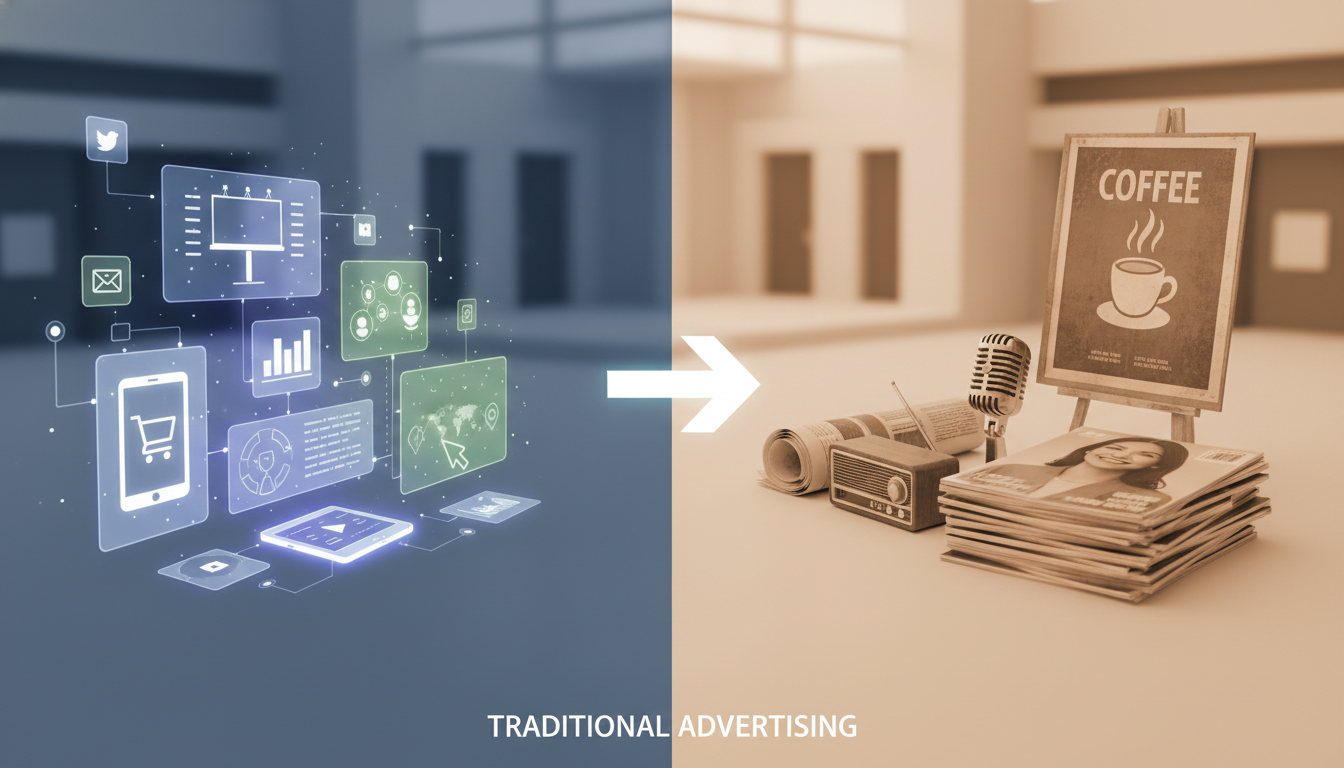
Digital Advertising vs. Traditional Advertising
Flexibility
Digital ads go live in minutes and change whenever you want. Traditional ads? You’re stuck with whatever you approved weeks ago. We’ve seen dental practices pivot their messaging from routine cleanings to emergency care in under an hour when needed.
Precision
Digital advertising lets you target people who searched for “HVAC repair near me” in the last 30 days. Traditional advertising hits everyone , including people who rent apartments and will never need your services.
Cost
You can test digital campaigns with $10 a day. Traditional advertising often demands thousands upfront. One MedSpa client started with $15 daily on Facebook ads and now spends $2,000 monthly because the ROI proved itself.
Measurability
Digital ads show you exactly which keywords brought in customers and how much revenue each generated. Traditional advertising gives you estimates and crossed fingers.
| Feature | Digital Advertising | Traditional Advertising |
|---|---|---|
| Lead time | Minutes to hours | Days to weeks |
| Targeting | Precise (demographics, interests) | Broad (mass audience) |
| Budget flexibility | Low to high (scalable) | High minimums |
| Optimization | Real-time adjustments | Cannot change after launch |
| Measurability | Detailed analytics | Limited (sales data) |
Why Is Digital Advertising Important?
Digital advertising matters because your customers live online now. They Google “best dentist near me” at 11 PM when their tooth hurts. They scroll Instagram looking for MedSpa treatments. They search for emergency HVAC repair on Sunday morning.
Industry reports show digital advertising increases brand awareness by 80% and generates a 200% return on investment. More importantly, 75% of consumers say online ads make finding products easier. We see this daily , small businesses competing directly with corporate chains because digital advertising levels the playing field.
The real advantage? You can start small and scale what works. No massive upfront commitments. No hoping your message reaches the right people.
Types of Digital Advertising

Search Engine Advertising
Search ads appear when someone types exactly what you offer into Google. A florist bidding on “Valentine’s Day flowers” shows up right when customers are ready to buy. It’s intent-based marketing at its finest.
Most local service businesses find search ads deliver the highest quality leads because people are actively looking for solutions.
Display Advertising
Display ads are the visual banners you see on websites and apps. They work best for brand awareness and retargeting people who visited your site but didn’t convert. The Digital Advertising Alliance (DAA) provides the AdChoices icon you’ve probably noticed , it’s there for transparency in how your data gets used.
Social Media Advertising
Facebook, Instagram, LinkedIn, and TikTok ads let you target based on interests, behaviors, and demographics. A MedSpa can target women aged 35-55 interested in skincare within 10 miles of their location. The targeting options are incredibly detailed.
Video Advertising
Video ads run on YouTube, streaming services, and social platforms. They’re perfect for demonstrating services , showing a dental cleaning process or HVAC maintenance tips builds trust before customers call.
Native Advertising
Native ads blend into the platform where they appear. Think sponsored articles on news sites or promoted listings on review platforms. They feel less like ads and more like helpful content, which often means higher engagement.
Email Advertising
Email campaigns to your subscriber list remain one of the highest ROI channels. Automated sequences for new patients or seasonal promotions keep your business top-of-mind without constant manual work.
How Digital Advertising Works: A Step-by-Step Process
- Define your goal: Are you looking for new patients, more bookings, or brand awareness? Be specific.
- Identify your audience: Who’s your ideal customer? Age, location, interests, and pain points matter.
- Choose your platform: Google for high-intent searches, Facebook for lifestyle targeting, LinkedIn for B2B services.
- Create your ad: Write compelling copy that speaks to your audience’s needs. Use clear, benefit-focused headlines.
- Set your budget and bid: Start conservative. You can always increase spending on winning campaigns.
- Launch and monitor: Watch your metrics daily for the first week, then weekly once things stabilize.
- Optimize: Pause underperforming ads, increase budgets on winners, and test new variations constantly.
Digital Advertising Metrics That Actually Matter
Most platforms overwhelm you with data. Focus on these key performance indicators:
- Impressions: How many people saw your ad. Useful for brand awareness campaigns.
- Clicks: People interested enough to visit your website. Quality matters more than quantity.
- Click-Through Rate (CTR): Clicks divided by impressions. Higher CTR usually means better targeting and messaging.
- Conversion Rate: Percentage of visitors who become leads or customers. This is where revenue happens.
- Cost Per Click (CPC): What you pay per click. Lower is better, but not at the expense of quality.
- Return on Ad Spend (ROAS): Revenue generated per dollar spent. Aim for at least 3:1 to account for other business costs.
Best Practices for Digital Advertising Success
Targeting and Personalization
Start broad, then narrow down based on performance data. Retarget website visitors who didn’t convert , they’re already familiar with your brand. According to Forbes, personalized ads can increase conversion rates by up to 10%.
We recommend creating separate campaigns for new customers versus existing ones. The messaging should be completely different.
Creative Optimization
Test everything , headlines, images, calls-to-action, even button colors. A/B testing reveals what resonates with your specific audience. One dental practice increased bookings 40% just by changing their headline from “Professional Dental Care” to “Same-Day Appointments Available.”
Budget Management
Start with small daily budgets and scale winners. Use dayparting to show ads during your business hours or when your audience is most active. Monitor cost metrics weekly to catch overspending early.
Compliance and Privacy
Follow GDPR and CCPA regulations religiously. Use the DAA’s AdChoices icon for transparency. The DAA expects all ad tech participants to integrate with new privacy tools by 2025, so stay ahead of these changes.
What to Look For in Digital Advertising Platforms
Choosing the right platform determines your success more than your budget size. Here’s what matters most when evaluating options:
Audience Match
Google Ads works best for high-intent searches , people actively looking for your services. Facebook excels at lifestyle and interest-based targeting. LinkedIn dominates B2B services like legal or financial advisory.
Budget Requirements
Some platforms have hidden minimums. Google Ads can work with $10 daily budgets. LinkedIn typically requires $50+ daily to see meaningful results. Know the real costs upfront.
Learning Curve
Google Ads has the steepest learning curve but often the highest ROI for local services. Facebook is more intuitive but requires constant creative refreshing. Choose based on your team’s capacity to learn and manage.
Reporting Capabilities
You need platforms that show clear ROI tracking. Avoid any system that can’t connect ad spend to actual revenue. Integration with your CRM or booking system is crucial for accurate measurement.
Digital Advertising Budget Guide for 2026
Most small business owners ask the same question: “How much should I spend?” The answer depends on your goals and market competition.
Budget Tiers
Starter Budget ($300-800/month): Perfect for testing waters and low-competition markets. Focus on one platform and a few key services. Expect 10-30 leads monthly.
Growth Budget ($800-2500/month): Allows multi-platform testing and broader keyword targeting. You can compete for medium-competition terms and run retargeting campaigns. Expect 30-100 leads monthly.
Scale Budget ($2500+/month): Full-funnel campaigns across multiple platforms. Compete for high-value keywords and run sophisticated audience targeting. Expect 100+ qualified leads monthly.
Industry Benchmarks
Based on our client experience, here’s what different industries typically invest:
- Dental practices: $500-1500/month for single-location practices
- MedSpas: $800-2000/month due to higher service values
- HVAC companies: $600-1800/month, seasonal adjustments needed
- Law firms: $1000-5000/month depending on practice areas
- Real estate agents: $400-1200/month per agent
Platform-Specific Strategies for Local Businesses
Each platform requires different approaches. Here’s what works best for local service businesses in 2026:
Google Ads Strategy
Focus on local keywords with buying intent. “Emergency dentist [city]” converts better than “dental care.” Use location extensions and call extensions. Start with exact match keywords, then expand to phrase match as you gather data.
Most successful campaigns combine search ads with Google My Business optimization. The two work together to dominate local search results.
Facebook and Instagram Strategy
Use detailed demographic targeting combined with geographic restrictions. Create separate campaigns for awareness (video content) and conversion (special offers). Retarget website visitors with social proof , reviews, before/after photos, team introductions.
Stories and Reels often deliver better engagement rates than feed posts for local businesses.
LinkedIn Strategy (B2B Services)
Target by job title, company size, and industry. Works exceptionally well for legal services, financial advisors, and B2B consultants. Content should be educational rather than promotional.
LinkedIn’s minimum budgets are higher, but the lead quality often justifies the cost for professional services.
Common Digital Advertising Mistakes to Avoid
We’ve seen these mistakes cost businesses thousands in wasted ad spend:
Targeting Too Broadly
“Everyone needs dental care” sounds logical but wastes money. Target people who’ve searched for dental services or shown interest in health and wellness. Broad targeting works for Coca-Cola, not your local practice.
Ignoring Mobile Optimization
Over 60% of local searches happen on mobile devices. If your landing pages aren’t mobile-friendly, you’re paying for clicks that can’t convert. Test your entire funnel on a smartphone.
Set-and-Forget Mentality
Digital advertising requires active management. Check performance weekly, pause underperforming ads, and test new creative monthly. Successful campaigns evolve constantly.
Focusing Only on Clicks
Clicks don’t pay your bills , conversions do. A campaign with fewer clicks but higher conversion rates always wins. Track leads and revenue, not just website traffic.
Measuring Digital Advertising Success
Success measurement goes beyond platform metrics. Here’s how to evaluate your digital advertising investment properly:
Lead Quality Assessment
Track which campaigns generate leads that actually book appointments. A campaign producing 50 leads that don’t convert is worse than one producing 10 leads that become patients.
Use UTM parameters and call tracking numbers to trace leads back to specific ads and keywords.
Customer Lifetime Value Impact
Calculate the long-term value of acquired customers. A dental patient might be worth $2,000 annually, making a $200 acquisition cost very profitable. Factor in referrals and repeat business.
Market Share Growth
Monitor your visibility for key local searches. Tools like BrightLocal or SEMrush show how your digital advertising impacts overall online presence. Increased ad visibility often improves organic rankings too.
Future of Digital Advertising: 2026 Trends
Digital advertising continues evolving rapidly. Here’s what’s shaping the landscape this year:
Privacy-First Advertising
iOS updates and cookie deprecation are changing targeting capabilities. First-party data collection becomes crucial. Build email lists and customer databases to reduce dependence on third-party tracking.
AI-Powered Optimization
Machine learning algorithms now handle bid optimization and audience targeting more effectively than manual management. Platforms like Google and Facebook automatically adjust campaigns for better performance.
Voice Search Integration
“Hey Google, find a dentist near me” searches are growing. Optimize for conversational keywords and ensure your Google My Business profile is complete.
Video-First Content
Short-form video content dominates engagement across all platforms. Even Google Ads now prioritizes video assets in Performance Max campaigns.
Care & Maintenance: Managing Your Digital Advertising
Successful digital advertising requires ongoing attention. Here’s your maintenance checklist:
Weekly Tasks
- Review campaign performance metrics
- Pause underperforming ads
- Adjust budgets based on results
- Check for new negative keywords to add
- Monitor competitor activity
Monthly Tasks
- Analyze conversion data and lead quality
- Test new ad creative and copy
- Review and update audience targeting
- Assess budget allocation across platforms
- Update landing pages based on performance
Quarterly Tasks
- Comprehensive campaign audit
- Competitor analysis and strategy adjustment
- Platform feature updates and implementation
- ROI analysis and budget planning
- Team training on new features or strategies
What to Expect in Your First 90 Days
Days 1-30: Learning phase. Expect higher costs as algorithms optimize. Focus on gathering data rather than immediate ROI.
Days 31-60: Performance stabilizes. You’ll identify winning ads and audiences. Begin scaling successful campaigns.
Days 61-90: Consistent results emerge. You can predict monthly lead volume and cost per acquisition with confidence.
Most businesses see their best ROI after the 90-day mark when all optimizations compound.
Frequently Asked Questions
What are the 4 types of digital marketing?
The four main types are search engine optimization (SEO), pay-per-click (PPC) advertising, social media marketing, and content marketing. Digital advertising encompasses PPC and social media ads, focusing on paid promotion rather than organic reach.
Is $10 a day enough for Google Ads?
Yes, $10 per day works for small businesses in low-competition markets or when targeting very specific local keywords. It’s perfect for testing campaigns and gathering initial data before scaling up your investment.
What is the 3-3-3 rule in marketing?
The 3-3-3 rule means your marketing message should be understood in 3 seconds, communicate 3 key benefits, and be seen 3 times before customers take action. This applies especially to digital ad creative and landing page design.
What are the 7 types of digital marketing?
The seven types include SEO, PPC advertising, social media marketing, content marketing, email marketing, affiliate marketing, and influencer marketing. Most local businesses focus on the first four for maximum impact.
How does digital advertising target users?
Digital advertising uses cookies, device IDs, and user behavior data to target based on demographics, interests, browsing history, and location. Privacy regulations now require explicit user consent for data collection and use.
What is the average ROI of digital advertising?
Industry data suggests digital advertising delivers roughly 200% ROI on average, meaning $2 earned for every $1 spent. However, ROI varies significantly by industry, targeting accuracy, and campaign optimization. Local service businesses often see higher returns due to customer lifetime value.