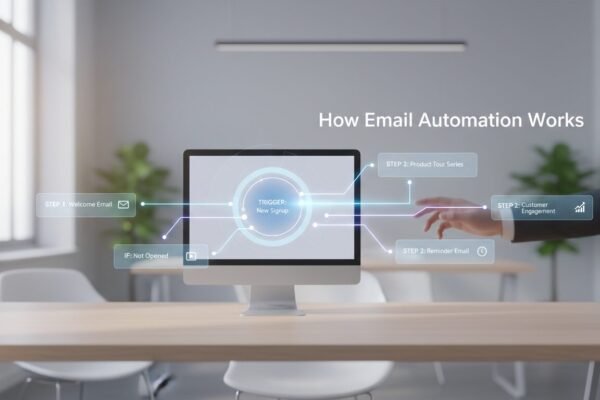
Internet and Marketing: What It Is and How It Works in 2026
Internet and marketing is the use of online channels, including search engines, social media, and email, to promote products and connect with customers. As of 2026, these channels reach billions of people daily and give businesses of every size a direct line to their ideal audience.
Key Takeaways
- Internet and marketing combines data-driven online channels to engage customers and drive measurable revenue growth.
- Content marketing generates roughly 3 times more leads while costing significantly less than traditional outbound methods, according to Adobe research.
- More than 4.6 billion people used the internet in 2021, and that number has grown every year since, making digital presence non-negotiable.
- SEO, social media, and email are the three core pillars of any effective internet marketing strategy.
- AI and automation now make personalization and predictive targeting accessible to small and mid-size businesses, not just enterprise brands.
- A clear, step-by-step approach to internet marketing produces measurable growth and a defensible competitive position.
1. The Evolution of Internet and Marketing

Internet and marketing evolved from one-way broadcast messaging into a real-time, two-way conversation between brands and consumers. In 2021, over 4.6 billion people used the internet worldwide, and that figure has continued climbing every year since. Traditional marketing once relied on TV, radio, and print to push messages outward. Online channels flipped that model entirely.
From Traditional to Digital Channels
Consumers now research, compare, and engage with brands before they ever speak to a salesperson. That shift means businesses must show up where buyers are looking, which is almost always online. The American Marketing Association notes that consumers search, shop, and engage with brands digitally, making a strong online presence essential rather than optional.
For local service businesses, this change is especially significant. A dental practice or HVAC company that relies solely on word-of-mouth or print ads is invisible to the majority of potential customers who start their search on Google. Internet and marketing closes that gap by putting your business in front of people at the exact moment they need you.
The Data Revolution in Marketing
One of the most practical advantages of internet and marketing is speed of feedback. A print ad takes weeks to show results. An online campaign can be adjusted within hours based on click-through rates, conversion data, or cost per lead. That responsiveness turns marketing from a guessing game into a discipline grounded in evidence.
“Internet marketing gives brands a competitive edge by enabling them to connect with customers where they are, on search engines, social media, and websites, and track performance in real time.” American Marketing Association
Platforms like Google Analytics, Meta Ads Manager, and HubSpot give marketers granular visibility into what is working and what is not. Budget can be reallocated in real time, which is something no billboard or TV spot can offer.
2. Core Channels in Internet and Marketing
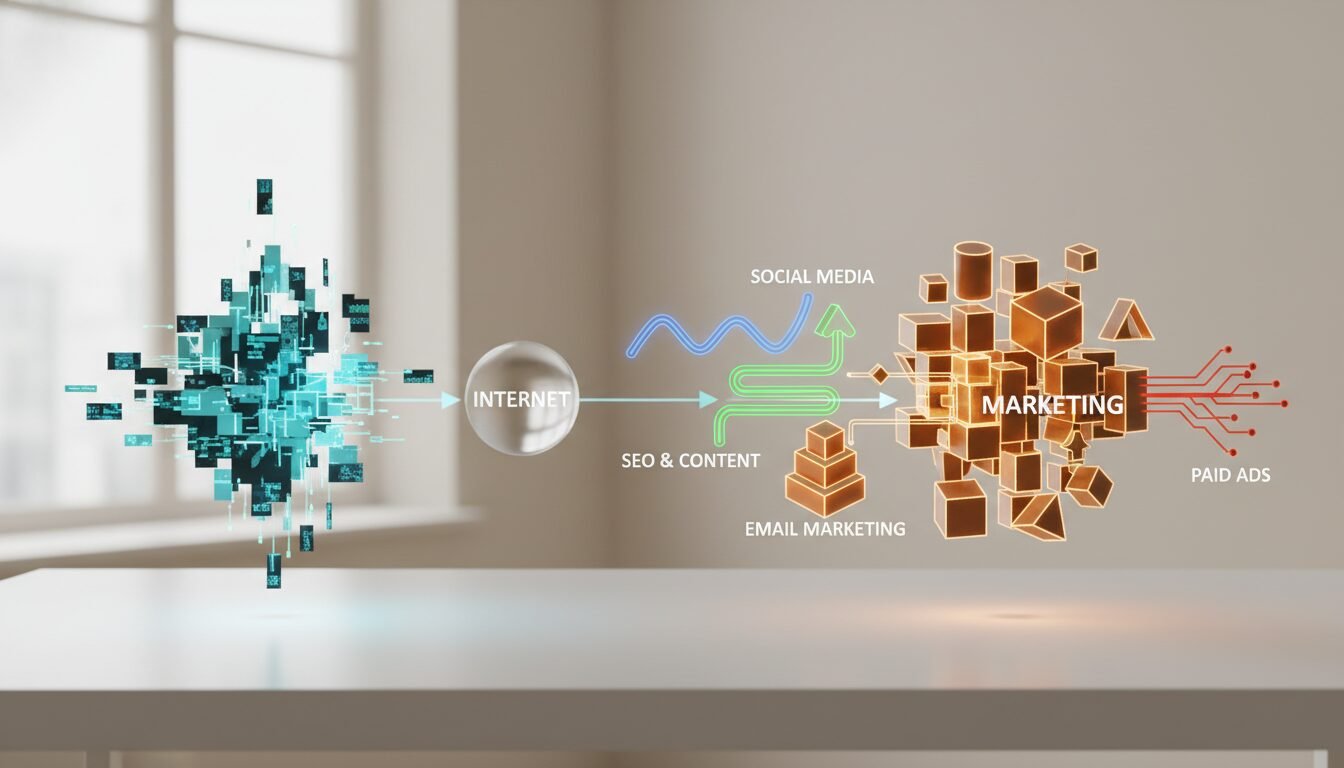
Internet and marketing operates across several distinct channels, each with its own strengths and best-fit use cases. Most successful strategies combine at least three of these channels rather than betting everything on one.
Search Engine Optimization (SEO)
SEO is the practice of optimizing web content to rank higher in search engines like Google, driving organic traffic without paying for each click. It includes on-page elements like keywords and meta descriptions, technical factors like site speed and mobile responsiveness, and off-page signals like backlinks from authoritative sites.
The real value of SEO is that it compounds. A well-optimized page can attract visitors for years with no additional spend. For local businesses, local SEO is especially powerful. Optimizing your Google Business Profile, earning local citations, and targeting location-specific keywords can put a dental practice or MedSpa at the top of results for searches like “teeth whitening near me” or “Botox in [city].” According to BrightLocal research, the majority of consumers use search engines to find local businesses, and a large share of those searches result in a visit or call within 24 hours.
Structuring content with clear headings, bullet lists, and FAQ sections also increases the chance of winning featured snippets, the answer boxes that appear above regular search results and capture a growing share of voice search queries.
Social Media Marketing
Social media platforms including Facebook, Instagram, LinkedIn, and TikTok let brands engage audiences through both organic content and paid advertising. This year, short-form video and influencer partnerships are the formats capturing the most attention in crowded feeds.
For local service businesses, social media serves two purposes. First, it builds awareness and trust with potential customers who are not yet actively searching. Second, it provides a direct channel for customer service and community engagement, which strengthens loyalty among existing clients. A MedSpa sharing before-and-after content on Instagram or an HVAC company posting seasonal maintenance tips on Facebook builds credibility over time without a large ad budget.
Email and Content Marketing
Email marketing remains one of the highest-ROI tools available in internet and marketing. When paired with content marketing, including blogs, videos, and guides, it creates a funnel that educates prospects and moves them toward a decision.
According to Adobe research, content marketing generates roughly 3 times more leads than outbound marketing while costing significantly less. That efficiency matters enormously for small businesses with limited budgets. Opt-in email lists ensure messages reach people who actually want to hear from you, and segmented campaigns based on user behavior consistently outperform generic blasts in both open rates and conversions.
“Content marketing is one of the most cost-efficient strategies available to small businesses because it builds an asset, your content library, that keeps generating traffic and leads long after the initial investment.” HubSpot State of Marketing Report
3. Data-Driven Decision Making

Data-driven decision making is what separates internet and marketing from traditional promotion. Every click, open, and conversion is trackable, which means you can continuously improve rather than repeat the same campaigns and hope for different results.
Analytics and KPIs
Platforms like Google Analytics 4, Meta Ads Manager, and email tools like Mailchimp or Klaviyo provide detailed data on traffic sources, conversion rates, bounce rates, and customer acquisition costs. Marketers track KPIs such as cost per lead, return on ad spend, and customer lifetime value to allocate budgets intelligently.
A/B testing is one of the most practical applications of this data. Testing two versions of a landing page headline or an email subject line produces clear, actionable evidence about what resonates with your audience. Over time, these incremental improvements compound into significantly better performance.
Personalization at Scale
With the right data, brands can deliver personalized experiences without doing it manually for each customer. Dynamic website content, triggered email sequences, and retargeting ads all use behavioral data to serve relevant messages automatically. Consumers respond better to brands that reflect an understanding of their needs, and personalization is how internet and marketing delivers that at scale.
Amazon’s recommendation engine is the most cited example of this approach, but the same logic applies to a dental practice sending appointment reminders based on a patient’s last visit date or an HVAC company targeting homeowners with furnace tune-up offers before the first cold snap of the season.
4. The Role of Artificial Intelligence
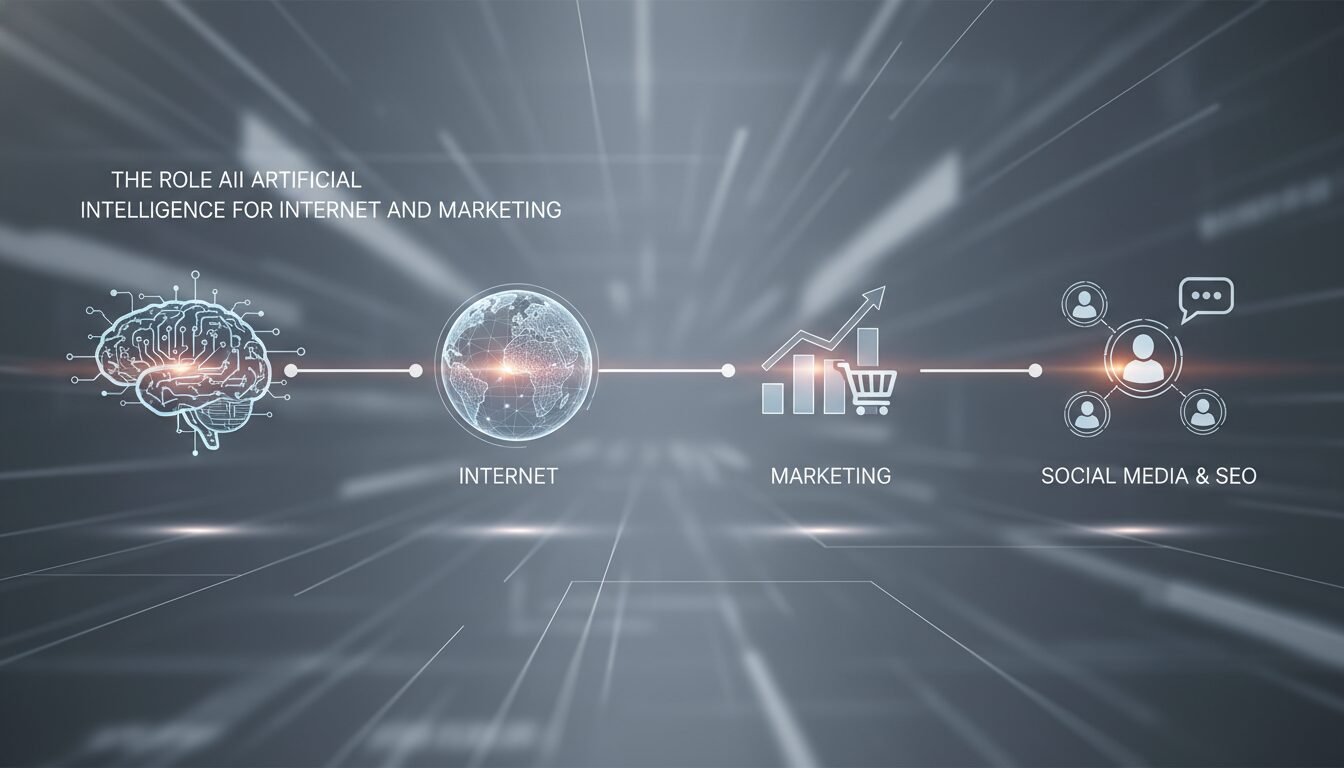 Artificial Intelligence – internet and marketing | DigiMe” class=”wp-image-1073″ loading=”lazy” width=”1792″ height=”1024″ />
AI is making internet and marketing faster, smarter, and more accessible to businesses that do not have large marketing teams. The tools have matured significantly, and the practical applications are real and measurable today, not at some point in the future.
AI-Powered Automation
AI handles repetitive tasks like PPC bid management, content scheduling, lead qualification, and customer service chatbots. This frees up the people on your team to focus on strategy and relationship-building rather than manual execution. For a small business, that efficiency gain can be the difference between a marketing program that runs consistently and one that stalls whenever someone gets busy.
Chatbots now qualify leads and answer common questions around the clock. Automated email sequences nurture prospects through a decision process without requiring manual follow-up at each stage. These tools reduce operational costs while maintaining a consistent experience for every potential customer.
At DigiMe, we have seen local service businesses save 15 or more hours per week by automating their follow-up sequences and appointment reminders alone. That time goes back into the business rather than into repetitive administrative work.
Predictive Targeting and Insights
AI algorithms analyze past behavior to predict future actions, including purchase intent, churn risk, and optimal send times. Predictive analytics power retargeting campaigns and personalized product or service recommendations that arrive when a customer is most likely to act.
Netflix uses this approach to reduce subscriber churn by surfacing content that matches individual viewing patterns. Retailers use it to time promotional offers based on purchase cycle data. Local service businesses can apply the same logic, for example, targeting past HVAC customers with maintenance offers 11-12 months after their last service call.
5. Comparison: Traditional Marketing vs. Internet Marketing
Traditional marketing and internet and marketing serve different purposes and come with very different cost structures. Understanding the tradeoffs helps you allocate budget where it will have the most impact.
Cost Efficiency and Measurability
Traditional channels like TV and print require significant upfront investment and offer limited ability to track what actually drove a sale. Internet marketing gives you granular control over spend and precise attribution. You can set a daily budget for paid search, pause a campaign that is not performing, and reallocate that money to a channel that is converting, all within the same afternoon.
Content marketing, one of the most cost-efficient tactics in internet and marketing, costs significantly less than outbound methods while generating substantially more leads, according to Adobe. SEO compounds that advantage further by delivering organic traffic with no cost per click once the rankings are established.
Reach and Targeting Precision
Traditional marketing reaches a broad audience and hopes the right people are watching. Internet and marketing targets specific audiences by location, age, interests, income level, and online behavior. Facebook Ads, for example, let a MedSpa target women aged 30-55 within a 10-mile radius who have shown interest in skincare, a level of precision that a newspaper ad simply cannot match.
The table below summarizes the key differences:
| Aspect | Traditional Marketing | Internet Marketing |
|---|---|---|
| Cost | High upfront investment, limited flexibility | Low entry point, adjustable in real time |
| Reach | Limited by geography and medium | Global reach, instantly scalable |
| Measurability | Difficult to track ROI directly | Real-time analytics and attribution |
| Engagement | One-way communication | Two-way, interactive conversations |
| Personalization | Mass messaging to broad audiences | Individualized content based on behavior |
| Speed to adjust | Days or weeks to change creative | Changes live within minutes |
Pros and Cons
Pros
- Measurable ROI: Every dollar spent can be tracked to a specific outcome, from clicks to conversions to revenue.
- Precise targeting: Reach the exact audience you want based on demographics, behavior, location, and intent.
- Scalability: Start with a small budget and scale what works without rebuilding your entire approach.
- Speed: Launch a campaign today, see data tomorrow, and adjust by the end of the week.
- Compounding returns: SEO and content marketing build assets that generate traffic and leads long after the initial investment.
Cons
- Learning curve: Platforms like Google Ads and Meta Ads require time and expertise to use effectively without wasting budget.
- Content saturation: Millions of businesses compete for the same keywords and audience attention, making differentiation harder every year.
- Privacy regulations: GDPR, CCPA, and evolving cookie policies add compliance complexity and limit some targeting options.
- Algorithm dependency: Organic reach on social platforms and search rankings can shift with algorithm updates outside your control.
6. How to Integrate Internet and Marketing: A Step-by-Step Process
Building an effective internet and marketing program does not require doing everything at once. A focused, sequential approach produces better results than spreading effort across every channel simultaneously.
Step 1: Define Clear Objectives
Start by setting SMART goals: specific, measurable, achievable, relevant, and time-bound. A dental practice might aim to generate 50 new patient inquiries per month from organic search within six months. An HVAC company might target a 30% increase in service agreement sign-ups through email campaigns by Q3. Clarity at this stage directs every decision that follows.
Document your KPIs and establish baselines using Google Analytics or your CRM before launching anything. You cannot measure improvement without knowing where you started.
Step 2: Select the Right Channels and Tactics
Not every channel fits every business. Analyze where your audience spends time online and match your channel selection to that behavior. For B2B service providers, LinkedIn and email tend to outperform. For consumer-facing local businesses like dental practices or MedSpas, Google Search, Instagram, and local SEO typically deliver the strongest returns.
A balanced internet and marketing portfolio combines owned media (your website and blog), earned media (reviews, press, and shares), and paid media (PPC and social ads). Each layer supports the others. Paid ads drive immediate traffic while SEO builds long-term organic visibility.
Step 3: Execute, Measure, and Optimize
Launch campaigns methodically, use project management tools to stay organized, and monitor performance through dashboards rather than waiting for monthly reports. Run A/B tests on ad creative, landing page copy, and email subject lines to generate continuous improvement data.
The iterative nature of internet and marketing is its greatest strength. You are never locked into a strategy that is not working. Reallocate budget from underperforming tactics to winners on a regular cadence, and document what you learn so each cycle builds on the last.
7. Local SEO and Mobile Marketing
Local SEO is one of the highest-impact applications of internet and marketing for small service businesses, and it deserves more attention than a passing mention. According to BrightLocal’s Local Consumer Review Survey, the vast majority of consumers search online for local businesses regularly, and most of those searches happen on mobile devices.
Local SEO Specifics
Optimizing for local search means more than adding your city name to a few pages. It requires a fully completed and actively managed Google Business Profile, consistent name-address-phone (NAP) information across all directories, a steady stream of genuine customer reviews, and locally relevant content on your website. For a dental practice, that might mean a dedicated page for each service area neighborhood. For an HVAC company, it means seasonal content targeting searches like “furnace repair [city]” before winter hits.
Local pack results, the map listings that appear at the top of local searches, capture a significant share of clicks for high-intent queries. Winning those positions requires consistent local SEO effort over 3-6 months, but the payoff in qualified leads is substantial.
Mobile Internet Marketing
Mobile devices now account for more than half of all web traffic globally, according to Statista. That means your website, your ads, and your email campaigns all need to be designed for a 5-inch screen first, not adapted for it as an afterthought. Page load speed on mobile is a direct Google ranking factor, and a slow-loading site loses potential customers before they ever read a single word of your content.
SMS marketing is also growing as a direct mobile channel. For appointment-based businesses like dental practices and MedSpas, text-based appointment reminders and follow-up messages consistently outperform email in open rates and response speed.
8. Affiliate and Influencer Marketing
Affiliate and influencer marketing represent two of the fastest-growing channels within internet and marketing, and both are now accessible to local and mid-size businesses, not just national brands.
Affiliate Marketing
Affiliate marketing pays a commission to third-party publishers or partners who drive traffic or sales to your business. For e-commerce businesses, affiliate programs can generate a meaningful share of revenue with no upfront ad spend. You pay only when a result is delivered, which makes the cost structure highly efficient. Platforms like ShareASale, Impact, and CJ Affiliate make it straightforward to set up and manage a program.
Influencer Marketing
Influencer partnerships work particularly well for consumer-facing local businesses. A MedSpa partnering with a local lifestyle influencer who has 20,000 engaged followers in the same city can generate more qualified bookings than a broad paid ad campaign reaching 200,000 people with no local connection. Micro-influencers, those with audiences between 5,000 and 50,000 followers, typically deliver stronger engagement rates and more authentic endorsements than celebrity-level accounts.
The key is alignment. The influencer’s audience should match your target customer profile closely. A fitness influencer promoting a MedSpa’s body contouring services to an audience of health-conscious adults in your city is a natural fit. A general lifestyle account with a diffuse national audience is not.
9. Common Challenges and How to Overcome Them
Internet and marketing is not without friction. Understanding the most common obstacles ahead of time helps you build a strategy that accounts for them rather than being surprised by them mid-campaign.
Data Privacy and Regulations
GDPR in Europe and CCPA in California set the standard for how businesses must handle consumer data, and similar regulations are spreading to other states and countries. Brands must implement cookie consent mechanisms, provide clear opt-out options, and handle personal data with documented processes. Violations carry real financial penalties, not just reputational risk.
The practical response is to build your internet and marketing strategy around first-party data: information collected directly from customers through newsletter sign-ups, loyalty programs, and account registrations. First-party data is more reliable, more compliant, and more valuable than anything purchased from a third-party list.
Competition and Content Saturation
The low barrier to entry in digital marketing means every competitor has access to the same channels you do. Standing out requires genuine quality and specificity. Generic blog posts and stock-photo social content get ignored. Content that answers a specific question your target customer is actually asking, written with real expertise, earns both search rankings and reader trust.
Focus on long-tail keywords where competition is thinner and intent is higher. A dental practice ranking for “affordable Invisalign for adults in [city]” will convert far better than one chasing the generic term “dentist.” Internet and marketing rewards specificity.
10. Future Trends in Internet and Marketing
Staying ahead in internet and marketing means watching where consumer behavior and technology are heading, not just optimizing what worked last year.
Voice Search and the Internet of Things
Voice assistants including Amazon Alexa, Google Assistant, and Apple Siri handle a growing share of search queries, and that share is rising as smart speakers and wearables become more common. Voice queries tend to be conversational and question-based, which means content structured around natural language and FAQ formats has a clear advantage. Brands that optimize for featured snippets today are already positioned well for voice search results.
Sustainability and Ethical Marketing
Consumers, particularly younger demographics, increasingly factor a brand’s values into their purchasing decisions. Internet and marketing strategies that highlight genuine sustainability commitments, transparent data practices, and ethical business conduct build stronger long-term loyalty than promotional messaging alone. This is not about greenwashing. Audiences are sophisticated enough to recognize the difference between authentic values and marketing spin.
Blockchain technology is also entering the marketing space as a tool for ad fraud prevention and supply chain transparency. Ethical AI frameworks are being developed to ensure that personalization does not cross into manipulation. These are not distant concerns. They are shaping platform policies and consumer expectations right now.
Frequently Asked Questions
What is internet marketing?
Internet marketing is the use of digital channels including search engines, social media, email, and websites to promote products or services and connect with potential customers. It replaces or complements traditional offline methods with tactics that are measurable, interactive, and adjustable in real time.
What are the 4 types of digital marketing?
The four most commonly cited types are search engine marketing (including SEO and paid search), social media marketing, email marketing, and content marketing. Many practitioners also include affiliate marketing, display advertising, and influencer marketing as distinct categories depending on the business model.
What are the 5 P’s of internet marketing?
The 5 P’s are Product, Price, Place, Promotion, and People. In the context of internet and marketing, Place refers to the digital channels where your audience is present, Promotion covers the tactics used to reach them, and People increasingly includes both your target audience and the internal team executing the strategy.
How can I measure the success of internet marketing?
Track metrics including website traffic, conversion rate, cost per lead, return on ad spend, and customer lifetime value using tools like Google Analytics 4, your CRM, and platform-native dashboards. Regular A/B testing and monthly reporting help you identify what is working and where budget should be reallocated.
Is internet marketing suitable for small businesses?
Yes. Internet and marketing levels the competitive field because entry costs are low and targeting is precise. A small dental practice or local HVAC company can compete effectively against larger players by focusing on local SEO, Google Business Profile optimization, and targeted social ads within a defined geographic area. You do not need a large budget. You need a focused strategy.
Ready to see what a focused internet and marketing strategy can do for your practice or service business? Book a free demo at digimeapp.com and we will show you exactly how AI-powered marketing works for businesses like yours.