Key Takeaways
- Social marketing is a systematic approach that uses commercial marketing techniques to influence voluntary behavior change for individual and societal benefit.
- It is distinct from social media marketing, which focuses on using social platforms to promote brands.
- The core marketing mix (4 Ps) is expanded to include additional elements like publics, partnership, and policy.
- Successful campaigns rely on deep audience research, a clear behavior goal, and a mix of interventions that reduce barriers and increase benefits.
- Real-world examples span public health, safety, and environmental sustainability, proving its effectiveness over more than five decades.
Social marketing is a planned approach that applies commercial marketing strategies to influence voluntary behaviors that benefit individuals and communities. Unlike profit-driven marketing, it focuses on improving public health, safety, and the environment through audience-centered campaigns. This discipline has been refined since the 1970s and today guides programs ranging from smoking cessation to disaster preparedness.
What Is Social Marketing?

Definition and Core Goal
Social marketing is the systematic application of marketing principles and techniques to achieve specific behavioral goals for a social good. According to the National Social Marketing Centre (NSMC), its primary aim is to change or maintain people’s behavior, not just their awareness or attitudes, for the benefit of individuals and society as a whole. The NSMC emphasizes that if your goal is only to raise awareness, you are not doing social marketing.
The concept was formalized in the 1970s when Philip Kotler and Gerald Zaltman recognized that the same principles used to sell products could be used to “sell” ideas and behaviors. Since then, this approach has evolved from simple public service announcements to sophisticated, research-driven programs that operate at individual, community, and policy levels.
A Brief History
The first documented deliberate use of marketing for a social issue occurred in 1963, when K. T. Chandy and colleagues at the Indian Institute of Management in Calcutta launched a national family planning program. They distributed high-quality government-brand condoms at low cost, supported by point-of-sale promotion and trained retailers. This program became a model for many interventions worldwide. Over the following decades, the discipline expanded into HIV/AIDS prevention, environmental protection, road safety, and disaster communication.
Key Characteristics
Several features set this approach apart from other behavior change methods:
- Consumer orientation: It starts with deep understanding of the target audience’s needs, barriers, and motivations, rather than pushing a predetermined message.
- Voluntary behavior change: The goal is always a specific, measurable action, such as using a seatbelt, recycling, or getting vaccinated, not just knowledge or attitude shifts.
- Mutual benefit: The value proposition is defined by the audience, not the sponsoring organization. Benefits must outweigh perceived costs or barriers.
- Competition-aware: Practitioners recognize that their desired behavior competes with existing habits, counter-marketing, and other choices.
The Core Principles of Social Marketing

The Marketing Mix: Product, Price, Place, Promotion
Like commercial marketing, this discipline relies on the “4 Ps” to design interventions:
- Product: The desired behavior (e.g., breastfeeding, exercising) or a tangible object that supports it (e.g., condoms, child car seats). The product must be positioned as a solution to a perceived problem.
- Price: The costs, monetary, psychological, social, or time-related, that the audience incurs to adopt the behavior. Effective campaigns reduce these costs or increase perceived benefits.
- Place: Where and how the product or behavior is made accessible, clinics, online platforms, community centers, to make adoption as easy as possible.
- Promotion: Communication strategies that build awareness, create desire, and motivate action. This includes advertising, social media, public relations, and personal selling.
Additional Ps: Publics, Partnership, Policy, Purse Strings
Social marketing often expands the mix with several more “Ps” to address its unique complexity:
- Publics: The various internal and external groups, volunteers, funders, media, government, whose support is needed.
- Partnership: Collaborations with organizations that share the goal, amplifying reach and credibility.
- Policy: Advocacy for laws, regulations, or organizational rules that sustain behavior change (e.g., smoke-free laws).
- Purse Strings: Securing funding from governments, foundations, or donors to run sustained programs.
These extra elements reflect the systemic nature of social problems and the need to work across sectors.
Consumer Orientation and Research
A defining feature is its relentless focus on the consumer. As noted by Nedra Kline Weinreich, “Rather than dictating the way that information is to be conveyed from the top-down, we’ve learned to listen to the needs and desires of our target audience themselves.” Formative research, surveys, interviews, focus groups, and behavioral testing, shapes every stage of the campaign. This ensures that the product, price, place, and promotion are all designed from the audience’s perspective.
“Social marketing seeks to influence social behaviors not to benefit the marketer, but to benefit the target audience and the general society.” , Kotler and Andreasen, as cited on social-marketing.com
Social Marketing vs. Social Media Marketing: Understanding the Difference

Why the Terms Are Often Confused
The phrases “social marketing” and “social media marketing” look nearly identical, but they refer to very different practices. Social media marketing involves using platforms like Facebook, Instagram, and Twitter to promote products, build brand awareness, and engage with customers. It is a subset of digital marketing and primarily serves commercial objectives. In contrast, the behavior change approach is rooted in public health and social sciences, and it may or may not use social media as one of its channels.
This confusion is so widespread that the NSMC devotes a page to clarifying, “Social marketing is not the same as social media marketing.” Similarly, Wikipedia lists it as “not to be confused with social media marketing.”
A Side-by-Side Comparison
| Feature | Social Marketing | Social Media Marketing | Commercial Marketing |
|---|---|---|---|
| Primary Goal | Voluntary behavior change for social good | Brand awareness, engagement, lead generation | Selling products/services for profit |
| Target Audience | At-risk groups, general public, policymakers | Consumers, followers, online communities | Potential buyers |
| Core Benefit | Improved health, safety, environment, well-being | Customer loyalty, brand equity | Revenue, market share |
| Typical Channels | Community outreach, mass media, digital platforms, policy | Social platforms, influencer partnerships | Advertising, retail, direct marketing |
| Example | Anti-smoking campaign encouraging quitting | Starbucks’ #RedCupContest on Instagram | Nike’s “Just Do It” product ads |
When to Use Each Approach
An organization might use both approaches, but for different purposes. A public health department could run a behavior change campaign to increase flu vaccination rates, while simultaneously using social media to promote its services and build community trust. The key is to separate the behavior change strategy from the channel strategy. For DigiMe’s audience of digital marketers, recognizing this distinction ensures resources are allocated correctly and success metrics are appropriate.
A Step-by-Step Process for Effective Social Marketing

The Six Stages of a Campaign
The NSMC outlines a systematic, six-step process for planning and executing an effort:
- Getting started: Define the scope, secure organizational commitment, and assemble a team.
- Scope: Conduct audience research, analyze barriers and motivators, and segment the market.
- Develop: Design the intervention mix, product, price, place, promotion, plus policy and partnerships.
- Implement: Pilot and roll out the program, ensuring coordination across channels.
- Evaluate: Measure outcomes against baseline data and predefined KPIs.
- Follow-up: Sustain gains through ongoing engagement, policy reinforcement, and scale-up.
Applying the Four Critical Questions
Even if a full campaign isn’t feasible, the NSMC suggests asking four questions to add discipline to any project:
- Do I really understand my target audience and see things from their perspective?
- Am I clear about what I would like my target audience to do?
- For my target audience, do the benefits of doing what I would like them to do outweigh the costs or barriers?
- Am I using a combination of activities to encourage the desired action?
These questions force a shift from a top-down, message-heavy approach to a truly consumer-centered one.
Real-World Campaigns That Drove Change
Public Health: Condom Programs in India
The 1963 family planning program in India is often cited as the first campaign. It used subsidized condoms, mass media promotion, and retail training to increase contraceptive use. This model influenced global HIV prevention efforts decades later, where condom programs became a foundation of behavior change in sub-Saharan Africa and Asia.
Safety: Child Car Seats in Texas
The NSMC highlights a campaign in Texas that combined public awareness with practical support, loaner car seat programs, installation workshops, to increase correct child restraint use. By lowering the “price” (cost, effort, confusion) and making the product available at the right “place” (hospitals, community centers), the campaign achieved measurable increases in seat usage.
Environment: Water Rationing in Jordan
During water shortages, Jordan used these principles to encourage household conservation. The campaign segmented audiences by water use patterns, tailored messages to each segment, and partnered with local organizations to distribute water-saving devices. Policy and infrastructure changes reinforced the behavioral “ask,” demonstrating the power of a multi-level approach.
“Social marketing is not a science, but rather a professional craft which relies on multiple scientific disciplines to create programs designed to influence human behavior on a large scale.” , W. A. Smith, Injury Prevention (2006)
Measuring Success in Behavior Change Campaigns
Key Metrics and KPIs
Unlike commercial marketing, where sales and revenue are clear indicators, success is measured by behavior change. Common metrics include:
- Number of people adopting the target behavior (e.g., quit attempts, vaccine appointments)
- Change in behavioral intention or self-efficacy over time
- Reach and engagement with campaign messages
- Reduction in desired negative outcomes (e.g., smoking prevalence, road fatalities)
Baseline data and control groups are critical to isolate the campaign’s impact from external factors.
Feedback Loops and Continuous Improvement
This approach is iterative. Regular monitoring during implementation allows mid-course corrections. Post-campaign evaluation feeds into future planning, creating a learning cycle. The Community Tool Box emphasizes that evaluation is not just a final step but woven throughout the process, from formative research to outcome assessment.
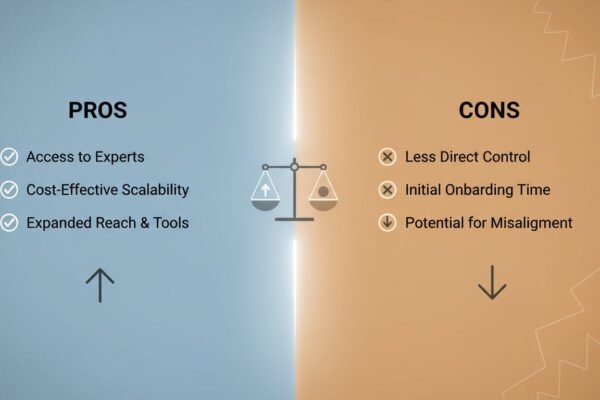
Pros and Cons
Pros
- Proven track record across health, safety, and environmental campaigns spanning five decades
- Consumer-centered approach ensures interventions address real barriers and motivations
- Systematic methodology provides clear steps from research through evaluation
- Can operate at individual, community, and policy levels for comprehensive change
- Uses familiar marketing tools, making it accessible to organizations with commercial experience
Cons
- Requires significant upfront investment in audience research and testing
- Behavior change is inherently difficult and may take years to achieve measurable results
- Success depends on sustained funding and organizational commitment over time
- Ethical concerns about manipulation, even when intentions are positive
- Complex social problems may require policy changes beyond marketing’s reach
Challenges and Ethical Considerations
Balancing Persuasion and Autonomy
Because this approach seeks to influence behavior, it must navigate ethical boundaries. Critics argue that even well-intentioned campaigns can be manipulative. Best practices dictate transparency about the source and purpose of messages, respect for the audience’s right to choose, and a focus on enabling rather than coercing.
Data Privacy and Targeting
Modern campaigns often use digital tools to segment audiences and personalize messages. This raises privacy concerns, especially when dealing with sensitive health data. The General Data Protection Regulation (GDPR) and similar frameworks require explicit consent and robust data protection. Ethical practitioners must balance personalization with privacy.
Avoiding Unintended Consequences
Campaigns can backfire if they stigmatize a behavior or group. For example, anti-obesity messages that shame individuals may lead to disordered eating. Practitioners mitigate this risk through rigorous pre-testing and by involving the target audience in message development.
The Future of Behavior Change Marketing
Integration with Digital and Social Media
While distinct from social media marketing, digital channels are now indispensable. Platforms like Facebook and Instagram, which together host billions of users, enable precise targeting, interactive engagement, and real-time feedback. However, authenticity is paramount: audiences can sense when a brand is forcing relevance. The most effective campaigns engineer participation, turning audiences into advocates.
Systems Thinking and Policy Change
The field is increasingly embracing a systems approach. As the Wikipedia article notes, scholars now argue that “a systems approach is needed if social marketing is to address the increasingly complex and dynamic social issues facing contemporary societies.” This means looking beyond individual behavior to the policies, environments, and social norms that shape it.
Personalization and Behavioral Science
Advances in behavioral economics and data analytics allow for hyper-personalized interventions. Nudges, small environmental tweaks, can be delivered via mobile apps at the moment of decision. However, the craft remains rooted in the same core principle: understand the consumer and make the beneficial behavior the easy choice.
Frequently Asked Questions
What is social marketing in simple terms?
Social marketing is the use of marketing strategies to encourage people to adopt behaviors that improve their own well-being and that of society, such as quitting smoking, using seat belts, or conserving water.
How is social marketing different from social media marketing?
Social marketing aims to change behavior for social good, while social media marketing uses platforms like Facebook and Instagram to promote brands and sell products. The two use different strategies and measure different outcomes.
What are the 4 Ps of social marketing?
The 4 Ps are Product (the desired behavior or supporting item), Price (the costs the audience incurs), Place (how and where the behavior is made accessible), and Promotion (the communication strategies used to encourage it). Many practitioners also add additional Ps such as Policy and Partnership.
Can small organizations use social marketing?
Yes. Even a small nonprofit can apply the core principles, audience research, clear behavior goals, lowering barriers, and using multiple channels, on a limited budget. The four critical questions from the NSMC provide a quick check.
What is an example of a successful social marketing campaign?
A classic example is the condom program in India in the 1960s, which combined subsidized products, mass media promotion, and retailer training to increase contraceptive use. More recent examples include seatbelt campaigns and water conservation efforts in Jordan.
How do you measure the success of a social marketing campaign?
Success is measured by actual behavior change, such as increased vaccination rates or reduced smoking, not just awareness or clicks. Baseline surveys and control groups help determine the campaign’s direct impact.
Book a free demo at digimeapp.com to see how AI can transform your practice.