A digital marketing class is a structured program teaching SEO, social media, email, and analytics skills. This guide compares top 2026 options from Google, HubSpot, Coursera, FIU, and Columbia to help you choose wisely.
Key Takeaways
- marketing classes cover essential skills: SEO, social media, email, analytics, and AI tools.
- Top providers include Google, HubSpot, Coursera, FIU, and Columbia Business School.
- The median entry-level salary for digital marketing roles is $71,000, according to Lightcast U.S. Job Postings data.
- Free courses offer solid fundamentals; paid programs deliver deeper, job-ready training with mentorship.
- AI integration and hands-on projects are now core components of modern curriculums.
- The right course depends on your career stage, learning style, and budget.
Pros and Cons of Taking a Digital Marketing Class
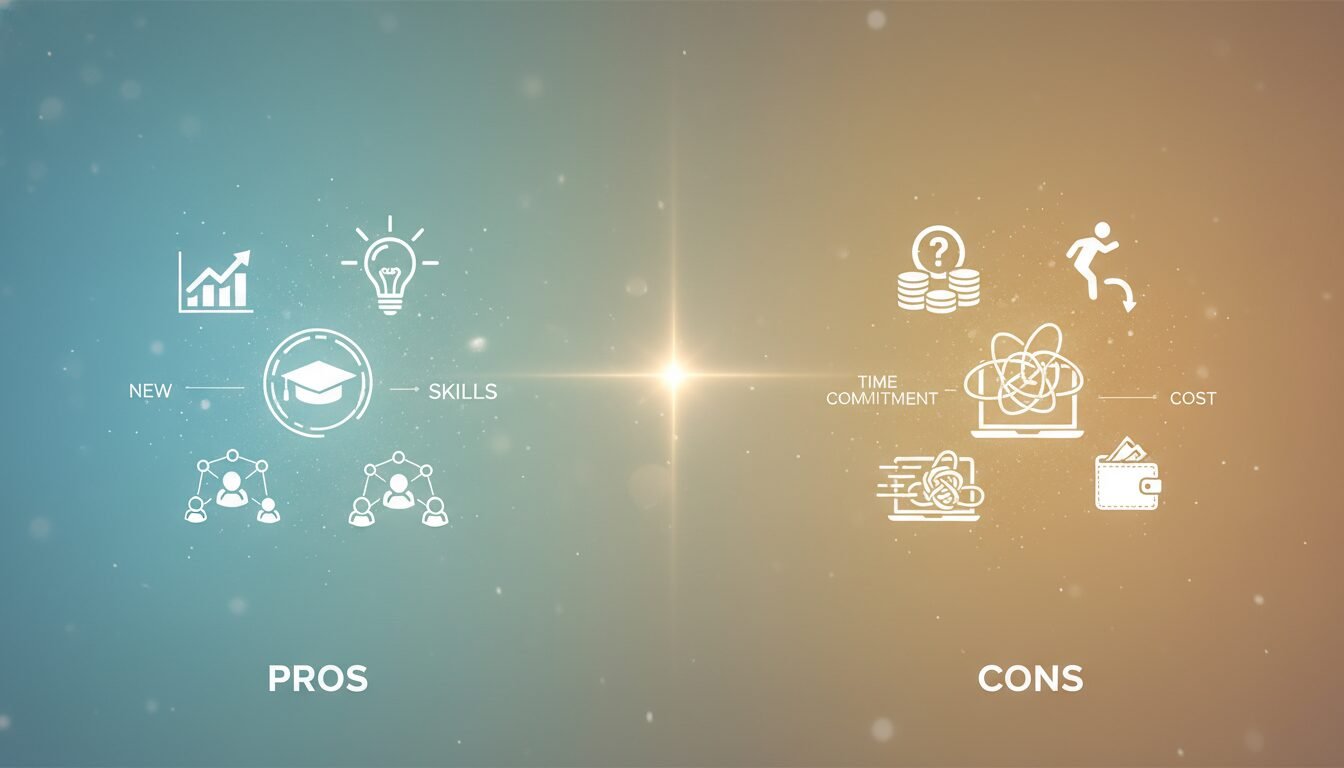
Pros
- Industry-recognized certifications from Google, HubSpot, and accredited universities signal credibility to employers.
- Hands-on projects and AI tool training build a portfolio you can show in interviews.
- Options exist for every budget, from free HubSpot Academy courses to $2,250 university certificates.
- Flexible, self-paced formats make it practical for working professionals to upskill without quitting their jobs.
Cons
- Free courses often lack depth, mentorship, and the recognized credentials that paid programs provide.
- Paid university programs require a meaningful time and financial commitment, typically 8-10 weeks and $2,250 or more.
- The field evolves fast, so a single certification can become outdated within 1-2 years without ongoing learning.
What to Look for in a Digital Marketing Class

Not all courses are created equal. To maximize your investment, evaluate each program across four key dimensions before you commit.
Accreditation and Certification
Accreditation from a recognized university or industry leader adds real credibility to your resume. A certificate from Google, HubSpot, or an accredited institution like Columbia Business School signals quality to hiring managers. The Google Digital Marketing & E-commerce Certificate, for example, is developed by Google experts and built around hands-on projects that mirror real job tasks.
Curriculum and Tools
The best programs teach both strategy and tool proficiency. Look for courses covering SEO, content marketing, social media, email marketing, analytics, and AI applications. Top programs incorporate real-world tools like Google Analytics 4, Google Ads, Canva, Mailchimp, Shopify, and HubSpot. According to Google, its certificate includes training across multiple industry platforms.
Flexibility and Cost
Consider whether you need self-paced learning or live instruction. Many online courses are fully asynchronous, which is ideal for working professionals. Costs range from free (HubSpot Academy) to several thousand dollars for university programs. FIU’s Digital Marketing Science certificate, priced at $2,250 after a $700 discount, offers a 10-week flexible schedule with mentor-led sessions and financing starting at $85 per month.
Top Digital Marketing Classes for 2026

Here are the leading options available as of 2026, each with distinct strengths depending on your goals.
Google Digital Marketing & E-commerce Certificate
Offered through Skills.Google and Coursera, this program is designed for beginners. It covers digital marketing, e-commerce, and AI applications in a format that takes 3-6 months at roughly 10 hours per week. According to Lightcast U.S. Job Postings (2024), certificate holders can pursue roles with a median entry-level salary of $71,000. Pricing starts with a 7-day free trial, then $14.99 per month.
HubSpot Digital Marketing Certification
HubSpot Academy’s free, self-paced certification runs approximately 3 hours and 24 minutes and includes 10 lessons, 30 videos, and 8 quizzes. Over 200,000 professionals have earned this credential, which focuses on inbound marketing, content creation, and platform optimization. For someone testing the waters, it’s one of the most efficient starting points available.
Coursera Digital Marketing Specializations
Coursera hosts programs from universities and major companies. The Google Foundations of Digital Marketing and E-commerce course carries a 4.8-star rating from more than 31,000 reviews. The University of Illinois’ Digital Marketing Specialization goes deeper over 3-6 months and often qualifies for financial aid, making it accessible even on a tight budget.
FIU Digital Marketing Science Certificate
Florida International University’s 10-week program, delivered in partnership with Ziplines Education, blends live mentor sessions with self-paced content. Graduates earn certificates in Google Analytics, Google Ads, and HubSpot Email Marketing alongside the FIU credential. At $2,250 after discount, it’s one of the more affordable university-affiliated options with real career coaching built in.
Columbia Business School Digital Marketing Program
Columbia’s 8-week online program runs 4-6 hours per week and targets experienced professionals ready to move into senior strategy roles. The program has produced 9,000+ alumni from more than 80 countries. It uses real-world ad auction simulations and budget optimization exercises that go well beyond what most introductory courses cover. Estimated cost is around $2,600.
Free vs. Paid Digital Marketing Classes

Your budget often shapes where you start, but both paths can deliver real value if you choose the right program for your current stage.
Free Digital Marketing Classes
Free options from HubSpot Academy, Google Skillshop, and Simplilearn’s YouTube tutorials are excellent entry points. They let you explore the field without financial risk and still result in recognized certifications. The trade-off: they typically lack the depth, mentoring, and portfolio projects that paid programs provide.
Paid Digital Marketing Classes
Paid programs like FIU’s certificate or Columbia Business School’s online program deliver structured learning, live mentorship, and portfolio-ready projects. FIU’s program, for instance, awards three separate third-party certifications alongside the university credential. That combination is harder to replicate through free resources alone.
ROI of Professional Certifications
A program that costs $2,250 but helps you land a role paying $71,000 pays for itself quickly. According to Coursera’s salary guide, experienced digital marketing professionals can earn up to $90,000. Certifications can shorten the path to your first role by giving you job-ready skills and a network to tap into from day one.
“Many people think SEO is only about on-page work, but off-page SEO is just as important. At 92 Skills, we focus on safe and ethical off-page techniques that build lasting authority.” – Majid Ali Boohar, Digital Marketing Specialist
How AI Is Changing Digital Marketing Education
AI is no longer a future trend. It’s embedded in today’s best programs, and any course that ignores it is already behind.
AI-Powered Tools in the Curriculum
Leading programs now cover tools like ChatGPT for content generation, Gemini for data analysis, and AI-driven ad platforms. FIU’s program teaches “AI for Digital Marketing” as a core module, while Google’s certificate includes a dedicated section on effectively using AI in marketing workflows. Graduates who understand these tools have a measurable edge in job applications.
Personalized Learning with AI
Some platforms adapt the learning path based on skill assessments. Simplilearn’s platform, for example, adjusts content delivery based on where you struggle. AI chatbots provide instant support around the clock, letting students clarify concepts without waiting for a scheduled office hour. This kind of personalization accelerates mastery.
AI Marketing Simulations
Advanced programs now include AI-driven simulations. Columbia Business School’s program uses real-world simulation tools to practice ad auction dynamics and budget optimization. Simplilearn offers a comprehensive capstone project that mimics a live campaign from brief to reporting. These experiences build confidence before you’re working with a real client’s budget.
“The integration of AI tools into marketing education isn’t optional anymore. Employers expect new hires to understand how to prompt, evaluate, and apply AI outputs in real campaigns from day one.” – Industry observation, HubSpot State of Marketing Report
Comparing Top Digital Marketing Classes
Use this side-by-side comparison to evaluate the best options for your goals.
| Provider | Course Name | Duration | Cost | Certification | Key Features |
|---|---|---|---|---|---|
| Digital Marketing & E-commerce Certificate | 3-6 months | $14.99/month after 7-day trial | Professional Certificate | AI-enhanced; hands-on with Canva, Google Ads, Analytics, Mailchimp, Shopify; median salary $71,000 | |
| HubSpot Academy | Digital Marketing Certification | 3.5 hours (self-paced) | Free | HubSpot Certification | Inbound-first; 10 lessons, 30 videos, 8 quizzes; 200,000+ professionals certified |
| Coursera (Google) | Foundations of Digital Marketing and E-commerce | 1-4 weeks | Varies (Coursera Plus ~$59/month) | Course Certificate | Bestseller with 4.8 stars (31K+ ratings); covers SEO, SEM, email, analytics |
| FIU / Ziplines | Digital Marketing Science Certificate | 10 weeks | $2,250 (after $700 discount) | FIU Certificate + Google Analytics, Google Ads, HubSpot Email Marketing | AI-powered; mentor-led live sessions; career coaching; financing from $85/month |
| Columbia Business School | Digital Marketing (Online) | 8 weeks (4-6 hrs/week) | ~$2,600 (estimated) | Certificate of Completion | Advanced strategy; ad auction simulations; 9,000+ alumni from 80+ countries |
Cost estimates are subject to change. Check provider websites for current pricing and global availability.
University Specializations Worth Considering
Beyond Google and HubSpot, several universities offer deep specializations that go well beyond a single certificate.
The University of Illinois’ Digital Marketing Specialization on Coursera covers marketing analytics, digital media, and consumer behavior across multiple courses, making it one of the more rigorous academic options available online. The Northwestern University content strategy and social media programs similarly blend academic rigor with practical application.
For professionals in specific industries, some business schools now offer tracks tailored to healthcare marketing, financial services, or retail. These programs typically run 3-6 months and cost between $1,500 and $4,000, but they deliver credentials that carry weight in specialized hiring markets.
Corporate Training Options for Teams
Individual certifications are valuable, but teams often need a shared marketing language to execute consistently.
HubSpot Academy offers free team-level access to its certification library, making it a practical starting point for small business owners who want their entire front desk or marketing coordinator trained on inbound fundamentals. Coursera for Business and LinkedIn Learning both offer team licenses that allow managers to assign specific courses and track completion across a group.
For local service businesses, including dental practices, MedSpas, and HVAC companies, a shared foundation in digital marketing basics can reduce the gap between what the owner knows and what the team executes. Industry benchmarks suggest businesses that invest in team-level training see faster adoption of new marketing tools and fewer execution errors in campaigns.
How to Choose the Right Course for Your Career Goals
Your ideal program aligns with where you are today and where you want to be in 12 months.
Step 1: Define Your Starting Point
Beginners should start with a foundational option like Google’s Foundations course. Career changers may need a comprehensive program like FIU’s 10-week certificate. Entrepreneurs often benefit from quick, actionable courses like HubSpot’s free certification, which delivers practical skills in under 4 hours.
Step 2: Determine Your Learning Style
Some learners thrive with live mentorship; others prefer self-paced video. FIU offers optional mentor-led sessions, while Coursera provides complete schedule flexibility. A program that matches your style will keep you engaged through the harder modules.
Step 3: Set a Budget and Timeframe
If you have $0 and 4 hours, start with HubSpot. If you can invest $2,250 and 10 weeks, FIU offers a deeper credential with career support. Always check for employer reimbursement or payment plans before ruling out a paid program.
How to Apply What You Learn
Knowledge alone won’t land the job. You need a portfolio that proves your skills to a hiring manager or a client.
Build a Portfolio During the Course
Top programs include projects you can keep. Google’s certificate has you analyze a real dataset and build a marketing strategy. HubSpot’s module asks you to design an inbound campaign from scratch. Use these deliverables as your first portfolio pieces before you have client work to show.
Get Hands-On with Marketing Tools
Practice with Google Analytics, Mailchimp, and Canva outside of class time. Many providers offer free trial accounts. Familiarity with these tools will set you apart in interviews, especially when a hiring manager asks you to walk through a campaign you’ve actually built.
Measure Your Success with Analytics
A core skill from any quality program is learning to track KPIs like CTR, conversion rate, and ROAS. Apply these metrics to your own small website or a volunteer project. Concrete results turn theoretical knowledge into a compelling story that’s hard to argue with.
The Future of Digital Marketing Education
The evolution of these programs mirrors the industry itself, and the pace of change is accelerating.
Emerging Trends: Voice Search and AR
Expect curriculums to incorporate voice search optimization and augmented reality advertising as standard topics. According to Global Industry Analysts Inc., the global digital advertising market is projected to reach $786 billion by 2026. Programs that don’t address these channels will leave graduates underprepared for where budgets are heading.
The Rise of Micro-Credentials
Shorter, stackable courses are growing fast. Platforms like Coursera offer skill-specific options (e.g., “SEO for Beginners”) that combine into a full specialization. This modular approach lets professionals upskill continuously without committing to a multi-month program every time the industry shifts.
Lifelong Learning as a Requirement
With algorithms changing yearly, a single certification isn’t enough. Savvy professionals mix free resources like HubSpot Academy and Google Skillshop with advanced paid programs to stay current. Think of it less as a one-time credential and more as an ongoing professional habit.
The right digital marketing class can accelerate your career whether you’re a beginner or an experienced marketer looking to formalize your skills. Evaluate programs based on curriculum depth, cost, and career support. From Google’s industry-recognized certificate to HubSpot’s free certification and FIU’s AI-powered credential, there’s a strong option for every goal and budget. The $786 billion digital advertising market isn’t slowing down, and neither should your education.
Ready to see how AI-powered marketing tools can complement what you learn? Book a free demo at digimeapp.com to see how AI can transform your practice.
Frequently Asked Questions
What is a digital marketing class?
A digital marketing class is a structured learning program that teaches online marketing strategies, including SEO, social media, email, and analytics, often leading to a recognized certificate. Programs range from free 3-hour courses to 10-week university credentials costing $2,250 or more.
How long does it take to complete a digital marketing class?
Duration varies from 3.5 hours for HubSpot’s free certification to 6 months for Google’s professional certificate. Most comprehensive university programs run 8 to 10 weeks at 4-6 hours per week.
Are free digital marketing classes worth it?
Yes, free courses from reputable providers like HubSpot Academy and Google Skillshop offer solid fundamentals and recognized certifications that can genuinely strengthen your resume. They work best as a starting point before investing in a paid program.
What certifications should I look for in a digital marketing class?
Look for industry-recognized certificates from Google, HubSpot, or accredited universities like FIU or Columbia Business School. Many programs also bundle third-party credentials like Google Analytics and Google Ads certifications, which carry weight with employers.
Can I get a job after taking a digital marketing class?
Yes. Job-focused programs like the Google Certificate are designed specifically for employment outcomes, with median entry-level salaries around $71,000 according to Lightcast U.S. Job Postings data. Building a portfolio during the course significantly improves your chances.
How much does a good digital marketing class cost?
Costs range from free (HubSpot Academy) to $2,250 for FIU’s university certificate and approximately $2,600 for Columbia Business School’s program. Financial aid and payment plans are often available, with FIU offering financing from $85 per month.